

Product listings use the word “automatic” loosely, and it can be hard to tell what you are actually getting. An automatic espresso machine measures the water that flows through the brew head and stops the shot at a programmed volume, while you still grind, dose, and tamp the coffee yourself. A super-automatic machine does all of that work for you, from grinding the beans to dispensing the finished shot.
The short answer
In the espresso world, “automatic” usually means volumetric control. The machine has a flowmeter in the water path, and it uses that sensor to shut off the shot once the set amount of water has passed. You are still responsible for grinding, dosing, and tamping, just as you would be with a semi-automatic machine. The automatic part replaces your hand on the switch. It does not replace the grinder or the portafilter.
That is why an automatic machine sits between a semi-automatic and a super-automatic. It offers more consistency than a semi-automatic when you are pulling one drink after another, but it still expects you to prepare the puck. Before buying, check the description for terms like “volumetric,” “programmable shot volume,” or “flowmeter” to confirm what the machine actually does.
How each type works
Semi-automatic
A semi-automatic espresso machine supplies heated water at pump pressure, but you control the extraction from start to finish. After grinding and tamping into the portafilter, you lock it in, start the pump, watch the shot, and stop it when the cup looks right. With practice, you can adjust the timing by eye and ear, but every shot depends on your attention.
Automatic or volumetric
An automatic machine looks similar to a semi-automatic. You still grind, dose, tamp, and lock in the portafilter. The key difference is the flowmeter, which measures the water passing through the machine. You program a button for a single shot and another for a double. Press the button, and the machine runs until the flowmeter tells it that the programmed volume has been delivered. This removes the need to hover over the cup and control the timing yourself. The result is repeatable, provided that your grind, dose, and tamp stay the same from shot to shot. For a broader overview of automatic options, see the automatic espresso machines guide.
Super-automatic
A super-automatic espresso machine includes an integrated burr grinder and a brew unit. It grinds the beans, doses them, tamps them inside the machine, brews the shot, and often discards the spent puck into a bin. Many models also have a steam wand or automatic milk frother. You select a drink or adjust settings, then wait for the machine to finish. Some super-automatics allow you to tweak grind size, brew volume, and temperature, but you give up direct hands-on puck prep. To learn more about that category, take a look at the super-automatic espresso machine guide.
Side-by-side comparison
| Step | Semi-automatic | Automatic | Super-automatic |
|---|---|---|---|
| Grinding | You grind separately | You grind separately | Machine grinds from the bean hopper |
| Dosing and tamping | You dose and tamp | You dose and tamp | Machine doses and tamps inside the brew unit |
| Starting and stopping the shot | You start and stop | Machine stops at the programmed volume | Machine manages the whole cycle |
| Milk frothing | You steam by hand | You steam by hand | Automatic on many models |
| Level of control | Full manual control | High control with consistent volume | Lower control, with presets |
None of these terms is perfectly standardized, so use the table as a starting point and then check the machine’s spec sheet and manual.
Why volumetric control helps consistency
The main benefit of an automatic machine is that it turns the variable of shot time into a programmed value. Once you find a grind, dose, and tamp that taste good, you can lock in the water volume that produced that result. On a busy morning, you do not have to count seconds or watch the cup to stop the shot at the same point every time. The flowmeter keeps the water volume steady, which makes it easier to pull similar shots from one day to the next. That consistency is especially useful if you are making multiple milk drinks in a row or if several people use the machine.
Many machines let you program the single and double buttons separately by holding the button during the pull and releasing it once the cup reaches the target. The exact method depends on the model, so check the manufacturer’s instructions for the proper steps. Keep in mind that the flowmeter counts water, not the actual liquid that lands in the cup. If your puck is inconsistent, the yield and the extraction time can still vary. Many experienced users treat volume as a guide and occasionally confirm the output with a scale. For home use, the important thing is that you can program a repeatable shot and adjust it when needed.
When you still need to dial in grind
Volumetric control does not eliminate the need for grind adjustment. The grind size controls how quickly water moves through the coffee and how much pressure builds in the puck. If the grind is too coarse, the water rushes through and the same volume will extract less flavor. If the grind is too fine, the water stalls and the shot can choke. You still need to dial in the grind when you change beans, when beans age, or when the weather affects the coffee. The programmed volume stays the same, but the taste and extraction time will tell you whether you should adjust the grind and then recheck the shot. A consistent tamp also matters because it supports even flow and reduces channeling.
Who each type suits
When the semi-automatic is the better choice
Choose a semi-automatic if you enjoy being in control of every variable and you want to learn the craft of pulling espresso. It gives you direct feedback, and you can stop the shot the moment it starts to blond or turn bitter. This is the category to pick if you plan to experiment with different beans, doses, and brew ratios and you like to watch the process closely.
When the automatic is the better choice
An automatic machine suits a busy household that still wants a hands-on ritual without the attention required to time each shot. If you like grinding and tamping but you do not want to hover over the cup, the programmed volume gives you consistency with less effort. It is also a good match when more than one person uses the machine, because the buttons make it easy to pull a single and a double with predictable results. Look for an automatic model if your main goal is repeatable espresso for milk drinks and you are willing to keep dialing in when you change beans.
When the super-automatic is the better choice
Pick a super-automatic if you want a one-touch drink and you value convenience over hands-on control. It makes sense for households with limited time or for anyone who wants espresso, lungo, or cappuccino without dealing with a grinder and portafilter. You trade a degree of control for speed and simplicity. Super-automatics also have more moving parts, so they need regular cleaning and maintenance according to the manual.
The confusion in product listings
Many retailers call simple pump machines “automatic” even when they are semi-automatic, and many also describe super-automatics as “automatic espresso machines.” Some listings use “automatic” to mean that the machine has automatic shut-off, a preset pre-infusion, or a solenoid valve. Others use it for machines with a steam wand that froths milk at the touch of a button. For this reason, the word alone does not tell you what the machine does. Read the feature list carefully and look for terms such as “volumetric,” “flowmeter,” “programmable shot buttons,” “integrated grinder,” or “brew unit.” When in doubt, check the manufacturer’s specifications or the product manual. The espresso machines guide can help you compare the categories.
Upkeep and long-term ownership
Flowmeter care and scale
The flowmeter is a small part, but it depends on clean water. Hard water can leave scale deposits that interfere with the sensor, causing the machine to under- or over-deliver water. If your shots start to run short or long for no obvious reason, scale may be the cause. Follow the manufacturer’s instructions for descaling, and consider using filtered water. Descaling schedules vary by machine, so your manual is the final authority.
Cleaning and safety
All espresso machines need regular cleaning. Rinse the group head, wipe the portafilter, empty the drip tray, and keep the steam wand clear of milk residue. Super-automatic machines have additional parts to clean, including the brew unit and sometimes a milk system. Use the manufacturer’s recommended procedure for those components. Remember that espresso machines get hot and the steam can burn. Wait for surfaces to cool before wiping them down, and never touch the steam wand tip while the machine is heating or right after steaming. Keep the machine out of reach of children and follow the manual’s safety directions.
Top Picks to Compare
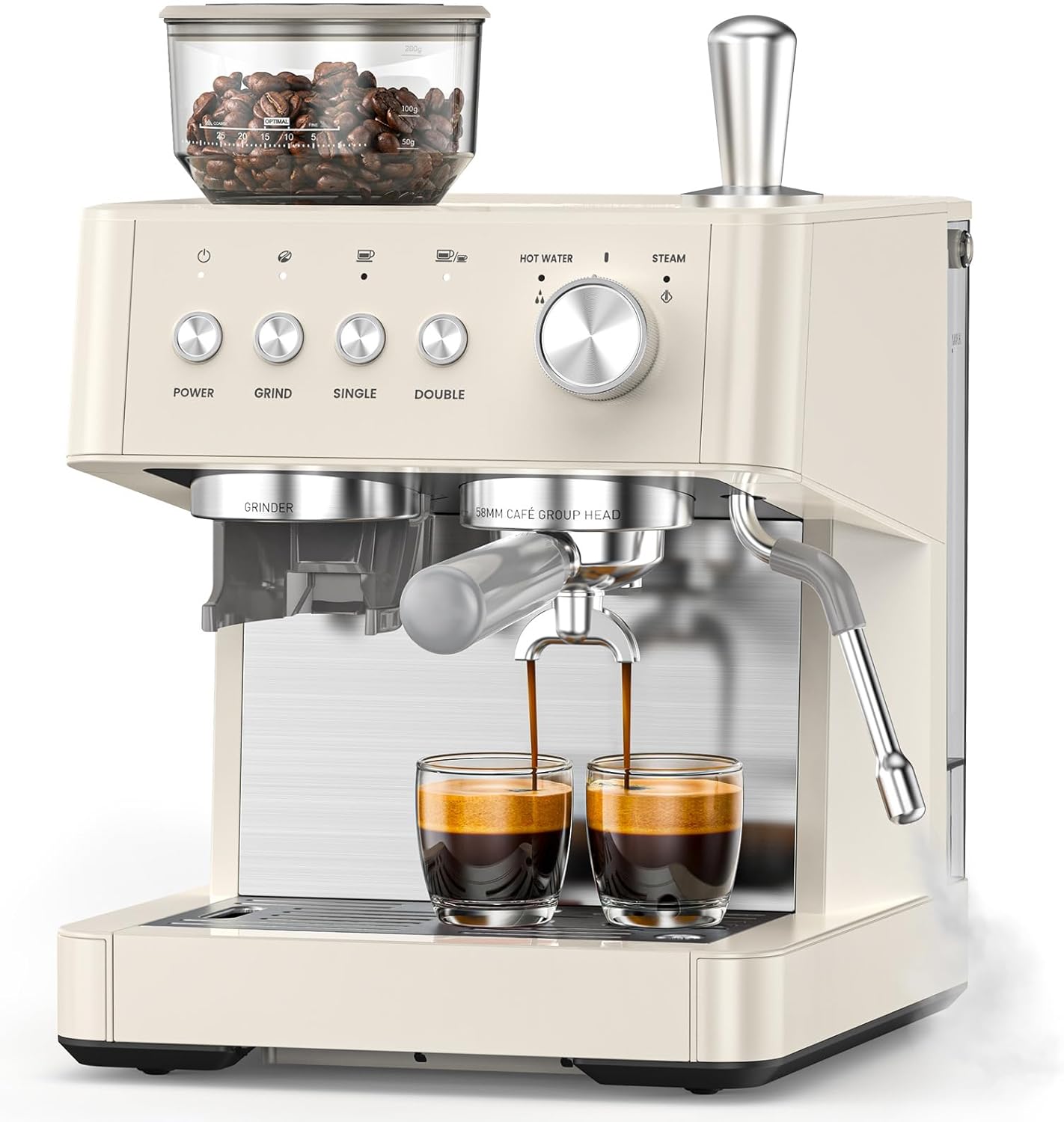
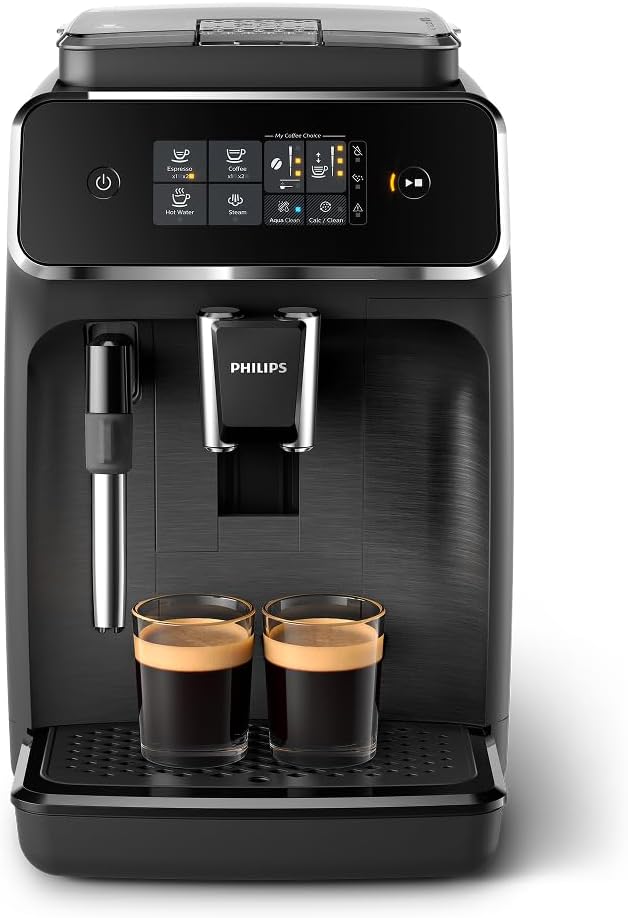
If you would rather start from a short list, these are popular options on Amazon for this search. Check each listing’s details, size and current price before you buy.



FAQ
What is the difference between automatic and semi-automatic espresso machines?
A semi-automatic machine requires you to start and stop the shot manually. An automatic machine uses a flowmeter to stop the shot when a programmed volume of water has passed. Both require you to grind, dose, and tamp the coffee yourself.
Do automatic espresso machines grind the coffee?
Only super-automatic machines grind, dose, and tamp for you. An automatic espresso machine, in the strict sense, expects you to grind the beans and prepare the portafilter. Check the product listing for terms like “integrated grinder” or “brew unit” to see which type you are looking at.
If I have volumetric control, do I still need to adjust the grind?
Yes. The grind affects flow rate, pressure, and extraction, so the same water volume will not produce the same taste if the grind is wrong. You still need to dial in the grind when you change beans or when the coffee begins to age.
How do I program a single or double shot?
The procedure depends on the machine. In many models, you hold the shot button while the machine runs and release it at the desired volume. Others use a setting mode on the control panel. Check the manufacturer’s instructions for the exact steps.
Choosing an espresso machine comes down to how much work you want to do and how much consistency you need. If you enjoy grinding and tamping but want to stop playing barista with a stopwatch, an automatic machine with programmable shot volume is a solid middle ground. Read the feature list carefully, keep the flowmeter clean, and follow the manual for descaling to get years of reliable use.



