By Claire Whitaker
Updated November 2026
A coffee grinder for pour over brewing does one job well: it produces a consistent grind that lets water flow through the coffee at a steady rate. This guide explains which grinder type to choose, how to dial in a grind size for your dripper, and how to avoid the uneven results that cause sour or bitter cups. Whether you are starting from a blade grinder or upgrading to a burr model, you will know what to adjust and why.
Why Grind Consistency Matters More Than Grind Speed
Pour over relies on gravity and filter resistance. Fine particles clog the bed and slow the drawdown, while coarse particles let water rush through underextracted. A burr grinder crushes beans between two surfaces, so particles come out in a much tighter size range than a blade grinder, which chops beans randomly. For pour over, that uniformity is the single biggest factor you can control at the grinder.
Shopping for one? See our guide: Burr Grinder for Chemex: 7 Best Picks for Pour-Over Brewing.
Choosing a Grinder for Pour Over Coffee
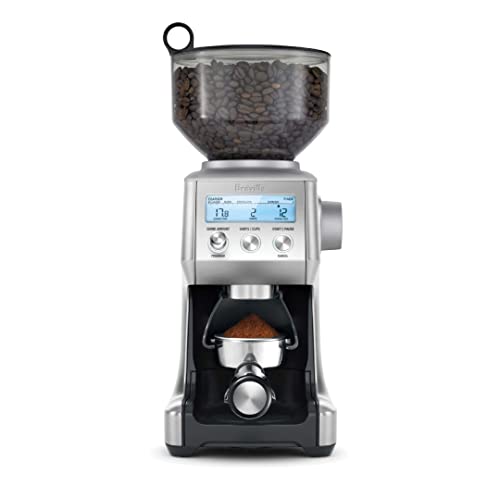
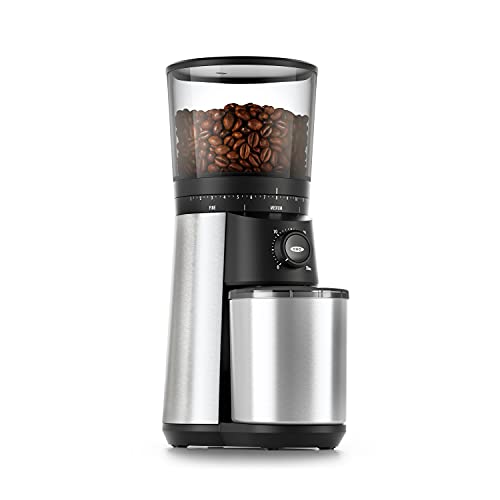
Look for a burr grinder with stepped or stepless grind adjustment and a hopper large enough for your usual batch. Conical and flat burrs both work well for pour over, and the main differences are in retention and cleanup rather than cup quality. If you brew single cups, a smaller hopper with low retention reduces waste between brews. Owners often report that burr grinders in the same class produce similar results when the grind setting is matched, so focus on adjustment range and ease of cleaning.
How to Set Your Grind Size for Pour Over
Start with a medium-fine grind, roughly the texture of table salt, and adjust from there. Your goal is a brew time of about 2:30 to 3:30 for a standard 15-gram dose at a ratio of 1:16 with your dripper.
- Weigh 15 grams of whole beans and grind them at your starting setting.
- Rinse the paper filter with hot water to remove papery taste and preheat the dripper.
- Add the grounds, level the bed, and pour 30 grams of water to bloom for 30 seconds.
- Pour the rest of the water in slow circles, targeting a total brew time near the range above.
- If the brew finishes early and tastes sour or thin, grind finer. If it drags past four minutes and tastes harsh, grind coarser.
Reading the Shot
Sourness usually means underextraction, which points to a finer grind or hotter water. Bitterness or dryness usually means overextraction, which points to a coarser grind or cooler water. Change only one variable at a time so you can tell what made the difference.
Quick Reference for Grind Size
| Dripper style | Typical grind | Target brew time |
|---|---|---|
| Cone dripper (V60 style) | Medium-fine | 2:30 to 3:15 |
| Flat-bottom dripper | Medium | 2:45 to 3:30 |
| Chemex-style brewer | Medium-coarse | 3:30 to 4:30 |
Common Mistakes
- Grinding too far in advance, which lets aromatics fade. Grind just before brewing.
- Skipping a grinder cleaning, since old oils and fines change the flavor of new coffee.
- Using a blade grinder and expecting consistent pour over results.
- Changing grind size and water temperature at the same time, which hides the real cause.
- Ignoring static, which can cling grounds to the grinder and throw off your dose.
Recommended Gear
A kitchen scale helps you weigh beans and water so your dose stays consistent from brew to brew. View on Amazon
A brush or small cleaning tool keeps burrs and the grind chamber free of old oils. View on Amazon
A gooseneck kettle gives you controlled pour speed for the bloom and main pour. View on Amazon
For more on matching a grinder to your brewer, see Grinders for Pour-Over, Drip and French Press and Best Pour-Over Grinders. If you are building a full setup, Complete Pour-Over Setup: Dripper, Kettle, Grinder, Scale and Filters covers each piece. For a step-by-step brewing walkthrough, read How to Make Pour-Over Coffee: A Step-by-Step Guide.
FAQ
Can I use a blade grinder for pour over?
You can, but blade grinders produce a wide mix of particle sizes, which makes extraction uneven. A burr grinder gives you far more control and more repeatable cups.
How fine should a pour over grind be?
Start medium-fine for a cone dripper and adjust based on brew time and taste. Aim for a total brew time around three minutes for a typical 1:16 ratio.
How often should I clean my grinder?
Brush out grounds after each use and do a deeper cleaning according to the manufacturer’s instructions, usually every few weeks for regular home use. Check the manual for guidance specific to your model.
Conclusion
A good coffee grinder for pour over brewing gives you a uniform grind, and uniform grounds are what make the process predictable. Start with a medium-fine setting, track your brew time, and adjust one variable at a time. With those habits, your pour over cups will become more consistent and easier to tune.
Related reading
- How to Make Iced Pour-Over Coffee (Flash Brew Method)
- Hario V60 Coffee Filters: A Step-by-Step Guide to Brewing Clean Pour-Over Coffee
Ready to choose one?
About Claire Whitaker
Claire Whitaker is part of our editorial team and reviews and edits our coffee gear & accessories guides, checking product details against manufacturer specifications and owner feedback.