 By Claire Whitaker
Updated November 2026
A gooseneck kettle is worth it if you brew pour-over and want slow, controlled water flow. A regular kettle works fine for French press, immersion brewing and tea. The gooseneck’s thin, curved spout is the main difference, and it matters most when you’re pouring in small circles over a filter. If you’re weighing a gooseneck kettle vs regular reddit threads, the answer comes down to how you brew.
Why the spout shape changes your pour
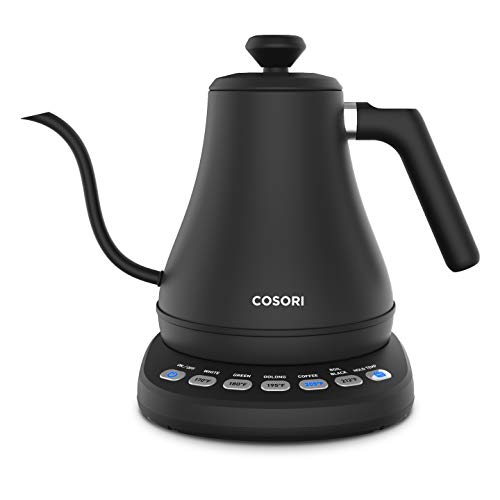
A regular kettle has a wide spout that releases a fast, heavy stream. Once you tilt it, water comes out in volume and is hard to stop cleanly. A gooseneck narrows the outlet and the long neck lets you feel the angle, so the stream stays thin. That gives you control over how much water hits the grounds at once, which affects extraction and how evenly the bed saturates.
Shopping for one? See our guide: Burr Grinder vs Blade Grinder Coffee (2026): Which Is Better for Home Brewing?.
Many owners on coffee forums describe the same experience: once they switched to a gooseneck, their pour-over results became more repeatable, mostly because the pour was easier to control, not because the kettle changed the water itself.
Factors that decide which one you need
- Brew method. Pour-over, Chemex and Kalita-style brewing benefit most from a gooseneck. Immersion methods such as French press don’t need pinpoint control.
- Temperature control. Many goosenecks are sold as variable-temperature models. Manufacturers often list target ranges such as 195–205°F for pour-over, so check that the kettle holds the setting you need. A standard kettle usually just boils.
- Daily use. If you mainly boil water for tea or instant coffee, a regular kettle is simpler to clean and fill.
- Counter space and pouring habits. A gooseneck can feel awkward on a crowded counter, and some people find the narrow spout slower to fill and refill.
Read more about the trade-offs in Stovetop vs Electric Gooseneck Kettles and Gooseneck Kettles for Pour-Over: Stovetop vs Electric.
Tips for getting the most from a gooseneck
- Start with water near 200°F and a 1:16 coffee-to-water ratio for a basic pour-over.
- Pour slowly in small, steady circles, keeping the stream thin and the spout close to the grounds.
- Pause between pours so the bed can drain. Aim for a total brew time of roughly 3 to 4 minutes.
- If you don’t pour over, a regular kettle is fine. Don’t pay for a gooseneck you won’t use.
For technique, see How to Pour with a Gooseneck Kettle for Better Pour-Over and Pour Over Kettle Gooseneck: How to Choose and Use One (Step-by-Step).
What we’d use
For a manual pour-over setup, a simple stovetop gooseneck is a practical starting point: View on Amazon.
If you want set temperatures without guessing, an electric model with a temperature dial suits daily pour-over: View on Amazon.
FAQ
Can I pour-over with a regular kettle?
You can, but the wide spout makes it harder to pour slowly and evenly. Results are usually less consistent than with a gooseneck.
Does a gooseneck make better coffee?
It doesn’t change the coffee itself. It gives you better control over the pour, which can improve consistency if you brew by hand.
Do I need a thermometer on a gooseneck?
It helps if you want to hit a specific temperature. Otherwise, letting boiling water sit for 30 to 60 seconds is a rough way to cool it for most pour-over.
Ready to choose one?
About Claire Whitaker
Claire Whitaker is part of our editorial team and reviews and edits our coffee gear & accessories guides, checking product details against manufacturer specifications and owner feedback.