By Claire Whitaker
Updated November 2026
Large scale coffee brewing means making a full carafe, a dispenser or a pot for a group without losing the balance, sweetness and clarity you get from a single cup. By the end of this guide, you will know how to size a batch, scale your dose and water, adjust grind and extraction, choose the right equipment, and hold coffee at a quality that still tastes good an hour later. The core idea is simple: ratios stay the same, but heat, time, surface area and volume all change, so you need to adjust for them.
Why Large Scale Coffee Brewing Behaves Differently
A small pour-over finishes in about three minutes because the bed of grounds is shallow and the water drains quickly. Scale that same recipe up to a two-liter batch and the bed gets deeper, the water takes longer to pass through, and heat loss across the vessel changes the water temperature over time. Those differences are why a brew that tastes perfect for one mug can come out bitter or flat when poured into a pitcher.
Shopping for one? See our guide: 3 Best Timemore Black Mirror Basic Plus Coffee Scale Picks for Home Brewing.
Think of large scale coffee brewing as three problems you solve in order: making the right amount, extracting it evenly, and keeping it stable until it is served.
Step 1: Decide Your Batch Size and Work Backward
Start with the number of cups you need and the volume of each serving. A common home standard is about 6 fluid ounces per cup, though many people pour 8 ounces. Once you know the total water volume, calculate coffee from a ratio. Specialty brewers often use between 1:15 and 1:17 by weight for filter coffee, meaning 15 to 17 grams of water per gram of coffee. A slightly stronger 1:14 works well for drip-style pots if you find the result thin.
Example: for 64 ounces (about 1,890 grams) of water at a 1:16 ratio, you need roughly 118 grams of coffee. Weigh both. Volume measures drift badly at this scale because grounds vary in density.
Keep in mind that the batch should match what your equipment can hold. Most home drip makers and large batch brewers list a maximum capacity and a minimum fill line. Overfilling causes overflow and uneven saturation, and underfilling can make the machine’s water distribution inaccurate.
Step 2: Choose Equipment Built for Volume
Your method determines how many variables you control. The three most practical approaches for home large scale coffee brewing are:
- Automatic drip brewers with a thermal carafe or large basket. Easy and consistent, but you have less control over bloom and pour timing. Look for a model that reaches the target temperature range (about 195 to 205°F, or 90 to 96°C) and distributes water across the whole grounds bed.
- Cold brew systems or large steeping vessels. These work on time and ratio rather than heat. Coarse grind, cool or room-temperature water, and a 12 to 18 hour steep are typical starting points. Filtration is the key step.
- Manual pour-over or batch dripper setups. A large cone or multi-cup dripper lets you pour in stages. This gives the best control but requires a scale, a gooseneck kettle and attention during the pour.
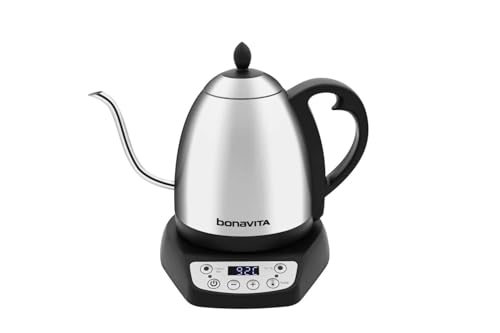
Whichever you choose, the water heating method matters. A kettle with a steady temperature output helps, and a precision scale is useful for both coffee and water. If you want a deeper look at scale choices, see 6 Best Scales for Coffee Brewing in 2026: Our Picks Compared and 5 Best Digital Coffee Scales for Home Brewing (2026).
Step 3: Dial In the Grind for a Larger Bed
Larger batches usually need a slightly coarser grind than a single cup. A deeper bed resists water flow, so a fine grind can stall the drip, over-extract the bottom layer and taste harsh. Start with a grind a notch or two coarser than your single-cup setting, then adjust based on the result.
Quick grind check
- Brew runs longer than about 6 minutes for a drip pot: go coarser.
- Brew finishes very fast and tastes thin, sour or weak: go finer.
- Brew tastes bitter and dry at the end: reduce extraction time or grind coarser.
Grind consistency matters more at scale because uneven particles extract at different rates across a larger volume. A burr grinder gives more uniform results than blade grinders. If you are upgrading, 5 Best Burr Coffee Grinders with Scale for Home Brewing (2026) covers options that combine both tools.
Step 4: Control Water Temperature and Pour Pattern
Heat loss is the biggest hidden problem in large scale coffee brewing. A large brew basket and a carafe sitting on a warming plate can drop the coffee’s temperature quickly, which changes how it tastes. If you are brewing by hand, pre-heat your dripper, filter and vessel with hot water before adding grounds.
For manual batch brewing, a practical sequence is:
- Rinse the paper filter with hot water and discard the rinse water.
- Add the weighed grounds and level the bed gently.
- Bloom with about twice the coffee weight in water (for example, 240 grams of water for 120 grams of coffee) and wait 30 to 45 seconds.
- Pour the remaining water in 3 to 4 even stages, keeping the water level steady and avoiding pouring onto the filter walls.
- Let the brew drain completely. Total time usually falls between 4 and 6 minutes for a large dripper.
Step 5: Hold and Serve Without Losing Quality
Coffee starts to degrade as soon as it finishes brewing. Heat accelerates oxidation and can cook off aromatic compounds, leaving a flat or burnt taste after a long hold. For best results, transfer the brew to an insulated carafe or thermal dispenser as soon as it finishes. Avoid keeping it on a hot plate for more than about 20 to 30 minutes.
If you are serving a crowd over several hours, brew smaller batches in sequence rather than one large pot. You can also keep brewed coffee chilled and reheat small portions, though reheating will still change flavor somewhat.
Batch Size Reference Table
| Total water | Coffee at 1:16 ratio | Suggested grind | Approximate brew time | Best holding method |
|---|---|---|---|---|
| 32 oz (about 950 g) | about 59 g | medium-coarse | 4 to 5 min | thermal carafe, under 30 min |
| 64 oz (about 1,890 g) | about 118 g | medium-coarse to coarse | 5 to 6 min | insulated dispenser |
| 128 oz (about 3,780 g) | about 236 g | coarse | 6 to 8 min, depending on equipment | serve within the hour |
Treat these numbers as starting points. Your beans, roast level and equipment will shift the results, so taste and adjust in small steps.
Common Mistakes
- Scaling by volume instead of weight. Scoops vary widely, and a scoop of light roast weighs far less than a scoop of dark roast.
- Keeping the same grind from a single cup. A fine grind in a big batch often over-extracts and tastes bitter.
- Leaving coffee on a hot plate. Long holds turn sweet, rounded coffee into something dull or burnt.
- Pouring water unevenly. Dry spots and channels extract unevenly, so part of the batch tastes sour while another part tastes harsh.
- Ignoring equipment limits. Filling past the stated maximum can cause overflow, sogginess and poor filtration.
- Skipping cleaning. Mineral buildup and old oils from large brewers affect taste quickly. Descale and wash according to the manufacturer’s instructions.
Tips for Better Results
- Use filtered water with balanced mineral content. Very soft or very hard water changes extraction and taste.
- Keep a brew log with grams of coffee, grams of water, grind setting, time and tasting notes. Repeat what works.
- Make one test batch at a smaller size before committing to a large event batch.
- Taste at the beginning, middle and end of service if you are holding coffee for a while.
- Store whole beans in an airtight container away from heat and light, and grind just before brewing.
Recommended gear
A few tools make large scale coffee brewing far more predictable. A digital scale lets you weigh coffee and water accurately, and many models include a timer that helps you track bloom and drawdown. For example, the View on Amazon is a commonly used option for pour-over work. A burr grinder improves consistency in a deep bed, so the View on Amazon is a well-known home choice. A gooseneck kettle gives you controlled pour flow for manual batches, and the View on Amazon is one widely recognized model. Finally, an insulated thermal carafe helps hold temperature after brewing, so search for a View on Amazon sized for your batch.
FAQ
What is the best coffee ratio for large scale coffee brewing?
A ratio between 1:15 and 1:17 by weight is a good starting point for filter coffee. Adjust toward the stronger end if the brew tastes weak and toward the lighter end if it tastes harsh.
Should I grind coarser for a bigger batch?
Usually yes. A deeper bed resists water flow, so a slightly coarser grind helps prevent over-extraction and bitterness. Make small adjustments and taste each change.
How long can brewed coffee stay warm without going bad?
For best flavor, serve within about 30 minutes of brewing on a warmer, or hold it in an insulated carafe for a bit longer. Coffee stays safe to drink for longer, but its taste declines steadily.
Can I use volume measurements instead of a scale?
You can, but results will be less consistent. Coffee density changes with roast level and grind size, so weighing gives you much better repeatability at larger quantities.
Does water quality affect large batches?
Yes. Water chemistry changes extraction and flavor, and mineral buildup can affect your equipment over time. Filtered water with moderate mineral content tends to give balanced results.
How do I clean a large brewer?
Rinse the carafe and basket after each use, and descale periodically using a product or method the manufacturer recommends. Regular cleaning prevents oily residue and mineral buildup that can ruin the taste of later batches.
Is cold brew a good option for large batches?
It can be. Cold brew uses coarse grounds, cool water and a long steep time, which makes it forgiving and easy to scale. Filter carefully and store the concentrate in the refrigerator.
Should I consult a professional for commercial large scale coffee brewing?
If you plan to serve coffee to the public or sell it, check local food safety rules and speak with your local health department or a food service consultant about equipment, holding times and cleaning requirements.
Conclusion
Large scale coffee brewing comes down to weighing your coffee and water, adjusting grind for a deeper bed, and controlling heat and holding time. Start with a 1:16 ratio, make a small test batch, and taste as you go. Keep a simple log so you can repeat what works. Once your process is steady, larger batches will taste as balanced as a single cup.
Related reading
- Timemore Coffee Scale Mini: 3 Best Picks for Home Brewing
- Timemore Black Mirror Nano Coffee Scale: 5 Best Picks for Home Brewing
- Large Scale Coffee Oil Extraction: A Step-by-Step Guide for Home Roasters
Ready to choose one?
About Claire Whitaker
Claire Whitaker is part of our editorial team and reviews and edits our coffee gear & accessories guides, checking product details against manufacturer specifications and owner feedback.