By Claire Whitaker
Updated November 2026
The fellow stagg gooseneck matte black kettle is a precision electric kettle aimed at home pour-over brewers who want to control water temperature and timing rather than guess at them. It suits people who already own a grinder and scale, brew with a V60, Kalita or similar dripper, and notice when their water sits a few degrees off target. It is less sensible for anyone who only boils water for tea, makes instant coffee, or wants a simple kettle with one button and no settings. Buyers on a tight budget may find the feature set more than they need, while those who want a larger capacity for batch brewing should look elsewhere. This review is based on manufacturer specifications and patterns that owners commonly describe, not on hands-on testing.

Fellow Stagg EKG Pro Gooseneck Electric Kettle for Pour-Over Coffee, Tea | Precise Temp Control, Brew Timer, Scheduling, Temp Hold, LCD Display, Walnut Handle, Matte Black, 0.9 Liter
Product Overview
The listing identifies this model as the Fellow Stagg EKG Pro Gooseneck Electric Kettle for pour-over coffee and tea. It belongs to Fellow’s Stagg line, a family of gooseneck kettles built around a narrow, curved spout that lets you place water precisely on coffee grounds. The “EKG” name refers to the electric version of the design, and the “Pro” tier adds digital controls on top of the basic heating and spout geometry.
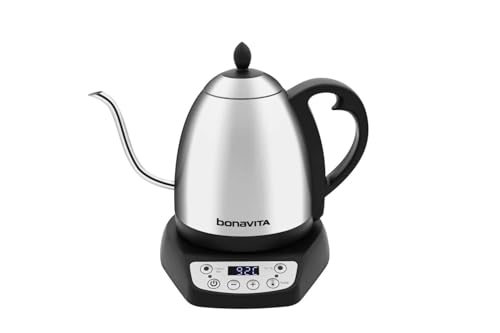
The kettle is finished in matte black with a walnut handle, a combination that has become a signature look for the brand. The 0.9-liter capacity is sized for a single pour-over or a small batch for two people. Most home brewers using a 15 to 30 gram dose will find that volume comfortable, though it is not a good fit for large-format batch brewing or for filling a French press for a group.
In practical terms, the kettle is designed to do three jobs: heat water to a chosen temperature, hold that temperature until you pour, and give you a visual timer for your bloom and pour steps. Whether those features matter to you depends on how much you already control in your brewing routine.
Key Features & Specifications
The table below lists the features named in the product listing and the characteristics that are well established for this model line. Where a detail is not confirmed by the listing, it has been left out.
| Feature | What It Means for You |
|---|---|
| Capacity: 0.9 liters | Enough for one large pour-over or two smaller cups; not suited to large batches |
| Precise temperature control | Lets you set a target temperature rather than relying on a fixed boil point |
| Temperature hold | Keeps water at the set temperature for a period so you are not reheating between steps |
| Brew timer | Built-in timer to track bloom and pour stages without a separate phone timer |
| Scheduling | Lets you set the kettle to heat at a specific time |
| LCD display | Shows current and target temperature and timer readings |
| Gooseneck spout | Narrow, controllable stream for even saturation of grounds |
| Walnut handle | Heat-insulated grip with a natural wood finish |
| Matte black finish | Matches common espresso and grinder colors in a home setup |
Manufacturers in this category typically specify a temperature range that covers the usual pour-over window, roughly the low 180s to just under boiling in Fahrenheit. Check the official Fellow documentation for the exact range and accuracy tolerance before relying on a specific number for a competition-style brew.
Pros & Cons
Pros
- Precise temperature control lets you match water temperature to roast level and recipe.
- The built-in timer and temperature hold reduce the number of separate tools needed at the brew bench.
- The gooseneck spout gives a controllable, narrow stream suited to even extraction.
- The LCD display makes current and target readings easy to read at a glance.
- The walnut handle and matte finish give it a consistent look with other Fellow products.
- Scheduling is useful for brewers who want water ready at a set time each morning.
Cons
- The 0.9-liter capacity is small for households or anyone brewing for a group.
- Advanced controls add a learning curve for people who just want to boil water.
- Owners who prefer a simple one-button kettle may find the menu more than they need.
- Electric gooseneck kettles of this type are not suited to stovetop use or to induction-free outlets.
- Like most precision kettles, the features add cost relative to basic electric kettles, so it is a premium option rather than a budget pick.
Performance Analysis
Performance in a gooseneck kettle comes down to three things: how accurately the kettle hits and holds a target temperature, how steady the pour is, and how well the controls fit your routine. Because this is a research-based review, the observations below draw on the specifications and on patterns that owners of this model class frequently describe, rather than on measurements taken for this article.
On temperature, the central claim is that the kettle lets you target a specific number and keep water near it while you pour. Owners of precision kettles commonly report that this matters most for lighter roasts, which tend to reward slightly hotter water, and for dark roasts, which often taste better a few degrees cooler. A practical test for any kettle is to set a target, wait for it to reach temperature, and check the result with a separate thermometer. Doing this with your own thermometer is the most reliable way to confirm the displayed reading matches reality.
On the pour, the gooseneck design is the main factor. The narrow spout lets you direct water in a thin, steady stream, which helps with even saturation and reduces disturbance of the coffee bed. Owners of gooseneck kettles generally say the stream is easier to control than with a standard kettle, though pour technique still matters more than the spout alone.
On the controls, the timer, temperature hold and scheduling are the features that most separate this model from simpler electric kettles. Brewers who run a repeatable routine often find the built-in timer useful because it keeps the bloom and pour stages on one device. Brewers who prefer a phone timer or who make a single cup occasionally may find these features add little. The temperature hold is especially useful if you pour in stages, since the water does not have to be reheated between pours.
The main limitation to keep in mind is capacity. At 0.9 liters, the kettle suits single brews and small batches. If you regularly brew for several people, the volume will require refills mid-session, which interrupts the flow of a pour-over.
Who Should Buy This Product?
This kettle makes the most sense for home brewers who already have a grinder, a scale and a dripper, and who want to bring more of the variables under control. Coffee enthusiasts who experiment with temperature across different roasts will likely get the most out of the temperature settings. Brewers who like a visual timer on the kettle, and who want water ready at a scheduled time, will also see clear value.
You should probably skip this model if you mainly make tea, instant coffee or French press, or if you want a kettle that does one thing with one button. It is also not a good match for anyone who regularly brews large batches, since the 0.9-liter capacity will require frequent refills. Buyers focused on the lowest possible cost will find simpler gooseneck kettles that cover the basic pour-over need.
Buying Guide
When choosing a gooseneck kettle, start with capacity. Match the volume to your typical brew. A single 300 to 350 milliliter cup needs far less water than a full pot, so a smaller kettle often makes more sense for solo brewers. Next, decide how much control you want. If you only need to boil water, a simple electric gooseneck will do. If you want to set and hold specific temperatures, look for a model with a display and a temperature selector.
Look at the spout and handle as well. Spout shape affects how easily you can make a thin, steady pour, and a comfortable handle matters because you will be holding the kettle through several minutes of brewing. Finally, check how the kettle heats: electric kettles run on a power base, while stovetop versions sit on a burner. Stovetop models offer less precision but do not depend on an outlet near your brew station.
If you are comparing options, consider these well-known alternatives:
Fellow Corvo EKG Pro: A related Fellow model with temperature control, a brew timer and scheduling, in a stainless steel build with a wide spout. It suits brewers who want the same control feature set with a different body style and spout geometry.

Fellow Corvo EKG Pro Electric Kettle for Pour Over Coffee & Tea | Temperature Control, Stainless Steel, Wide Spout, Brew Timer, Smart Scheduling, Quick Heating, Matte Black
Hario V60 “Buono” Drip Kettle: A stovetop gooseneck kettle from a brand closely tied to V60 pour-over. It has no digital controls, so temperature is judged by eye or with a thermometer, but it is a straightforward choice for brewers who prefer a traditional stovetop approach.

Hario V60 "Buono" Drip Kettle Stovetop Gooseneck Coffee Kettle 1.2L, Stainless Steel, Black
For more context on how these kettle types differ, see Stovetop vs Electric Gooseneck Kettles and Gooseneck Kettles for Pour-Over: Stovetop vs Electric. If you are still learning technique, How to Pour with a Gooseneck Kettle for Better Pour-Over covers the basic motions, and Pour Over Kettle Gooseneck: How to Choose and Use One (Step-by-Step) walks through selection in more detail. Readers comparing a range of models may also find 5 Best Fellow Stagg EKG Gooseneck Kettle Models for Pour-Over (2026) and 6 Best Fellow Gooseneck Kettle Electric Models for Pour-Over (2026) useful, along with Top 7 Variable Temp Gooseneck Kettle Picks for Pour-Over (2026).
FAQ
Is the fellow stagg gooseneck matte black kettle worth it for home pour-over?
It can be, if you already control other parts of your brew and want to manage water temperature and timing. Owners who brew one or two cups at a time and value a visual timer tend to find the features useful. Casual coffee drinkers who only want hot water may not get enough from the extra controls to justify the premium positioning.
What temperature should I set for pour-over?
There is no single correct number. Many brewers start in the range of roughly 195 to 205 degrees Fahrenheit and adjust based on roast level, with lighter roasts often tasting better at the hotter end and darker roasts often at the cooler end. Run a few test brews and change one variable at a time so you can tell which change made the difference.
Does the kettle hold temperature after it heats?
The listing includes a temperature hold feature, which keeps water near the set point for a period. The exact duration and accuracy should be confirmed in the official manual, since holding behavior can vary with ambient conditions and how often the lid is opened.
Can I use it to make tea as well as coffee?
Yes. The listing names tea as a use, and the temperature settings let you match water heat to different tea types. Green and white teas generally call for cooler water than black or herbal teas, so the controls can be handy if you drink more than one kind.
Is 0.9 liters enough for a household?
For a single brewer or two people making one pour-over each, usually yes. For a household that wants a full pot or a batch for several people, the capacity will be limiting, and you will need to refill during a session. A larger kettle would be a better match in that case.
Do I need a scale and grinder to get the most from this kettle?
A kettle controls only one variable. Consistent dose, grind size and pour timing all affect the cup as much as water temperature. A scale and a burr grinder are the most common companions in a precision pour-over setup, so the kettle is best viewed as one part of a system rather than a standalone upgrade.
Should I consult a professional about electrical safety?
Electric kettles draw significant power and should be plugged into a properly grounded outlet and used according to the manufacturer’s instructions. If you are unsure whether your outlet or wiring can handle the load, consult a licensed electrician before use.
Final Verdict
The fellow stagg gooseneck matte black kettle is a well-specified precision kettle for pour-over brewers who want control over temperature, timing and pour. Its gooseneck spout, temperature hold and built-in timer address the variables that matter most at the brew bench, and its walnut and matte black finish suits a deliberate home setup. Its 0.9-liter capacity and feature depth make it a better fit for solo and small-batch brewing than for households, and anyone who only boils water will find simpler options that do the job.
If your routine is built around repeatable pour-over and you already own a grinder and scale, this kettle is worth a close look. Compare it against the alternatives above, confirm the specifications in the official documentation, and check that the capacity matches how you actually brew.
View on AmazonAbout Claire Whitaker
Claire Whitaker is part of our editorial team and reviews and edits our coffee gear & accessories guides, checking product details against manufacturer specifications and owner feedback.