
 By Audrey Hayes
Updated November 2026
The bodum bistro conical burr coffee grinder is an electric grinder aimed at home brewers who want consistent grounds without a large footprint or a complicated control panel. It suits people who brew drip coffee, French press or pour-over most mornings, who like having a preset timer, and who prefer a single dial of grind settings over a stepless adjustment. It is a weaker choice for espresso purists who need very fine, repeatable grinds, for anyone who wants a built-in scale or programmable dosing, and for buyers who grind large batches daily and want a bigger hopper and a faster motor. The sections below cover what this model offers, where it falls short, and how to decide whether it fits your routine.

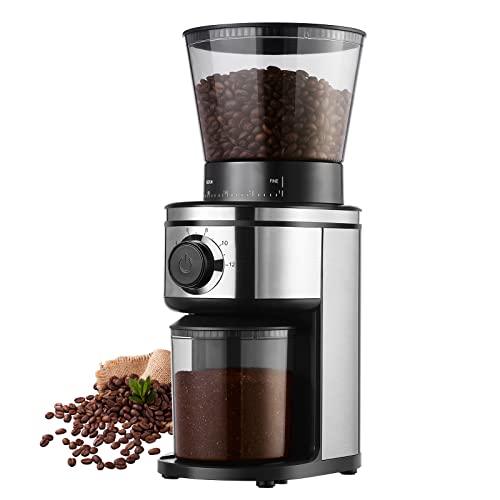
Bodum Bistro Electric Conical Burr Coffee Grinder, Preset Timer, 12 Grind Settings, Black
Product Overview
The Bodum Bistro Electric Conical Burr Coffee Grinder is a countertop grinder built around a conical burr set, the design most home grinders use to produce a fairly even particle size with a manageable motor speed. Bodum is best known for its French presses and glassware, and the Bistro line brings the same minimalist approach to grinding: a simple body, a clear bean hopper, a removable grounds container and a small set of controls.
The model listed here is the black version with a preset timer and twelve grind settings. You choose a grind level on a dial, set how long the grinder runs or let it run on a timed cycle, and it stops when the time is up. There is no weight-based dosing, no touchscreen and no app. That simplicity is the main selling point, and also the main reason some buyers look elsewhere.
Conical burr grinders generally sit between the most basic blade grinders and the more expensive flat-burr machines in terms of flavor consistency and price positioning. Our site has a longer explainer on burr geometry, and it is worth reading if you are new to the category: Burr Coffee Grinders: Flat vs Conical Burrs, Consistency and Retention. For a sense of how this model compares with other Bodum grinders on the market, see Bodum Bistro Electric Burr Coffee Grinder (2026): Which Should You Choose?
Key Features & Specifications
The table below lists the specifications that the product name and common manufacturer descriptions support. Where a figure is not something we can confirm from the listing, we have left it out rather than estimate it.
| Feature | What It Means for You |
|---|---|
| Burr type: conical burr | Produces grounds in a range of sizes with a consistent core, suited to drip, pour-over and French press. |
| Twelve grind settings | A coarse-to-fine dial with twelve positions. Useful for matching method, but finer adjustment between steps is limited. |
| Preset timer | Run time is set in advance so you can grind the same dose repeatedly without watching the machine. |
| Electric operation | Single-button or dial start; no manual cranking required. |
| Black finish | Matte-style body that blends into most kitchens. |
| Bean hopper and grounds container | Beans are loaded in the top; grounds collect in a separate container for easy transfer to the brewer. |
Manufacturers in this category typically recommend cleaning the burrs periodically and keeping the hopper dry. Check the included instructions for the exact cleaning interval and the recommended bean types, since these vary by model revision.
Pros & Cons
Pros
- Conical burrs give a more even particle distribution than blade grinders, which helps with extraction consistency.
- The preset timer makes repeat dosing simple, especially for households brewing the same amount each day.
- Twelve grind settings cover coarse French press through medium drip without requiring technical knowledge.
- The compact footprint suits small kitchens and shared counter space.
- The controls are minimal, so there is little to learn or break.
- The black finish is a neutral choice that does not show fingerprints as strongly as polished metal.
Cons
- Twelve settings are fewer than the stepless or high-count dials on some competing grinders, which limits fine tuning for espresso.
- There is no integrated scale, so dosing by weight requires a separate kitchen scale.
- Owners often report that the grinder is best suited to small to medium batches, and that very large batches take longer than expected.
- Build quality is adequate for home use but is not in the same tier as commercial-style or heavy metal-housed grinders.
- Like most grinders in this class, retention (the grounds left in the chute) can affect the first cup after a change of bean or grind size.
Performance Analysis
Performance for any conical burr grinder depends on three things: burr geometry, motor and grind setting range, and how consistent the particle size is across the dial. Based on the specifications and on the general patterns that owners of this category describe, the Bistro is a sound performer for filter and French press brewing and a less reliable one for espresso.
For drip coffee, a medium setting is a common starting point. Owners of similar conical grinders often describe a workable range from roughly the middle of the dial toward medium-coarse, and recommend adjusting one step at a time while tasting. If your cup tastes sour and thin, move one or two steps finer. If it tastes bitter and dry, move coarser. Changing one variable at a time makes the effect easier to read.
For French press, the coarse end of the dial is where most users start. Grounds should look like coarse sea salt. If you see a lot of fine dust in your press, you are likely too fine, which can cause a muddy cup and a harder plunge.
For espresso, most users find that a twelve-step dial is not fine enough to dial in a shot reliably. Owners who want espresso often use a grinder with a stepless adjustment or a higher number of micro-settings. If espresso is your priority, this is not the right machine.
Consistency across a batch matters as much as the setting itself. Test by grinding a small amount, spreading the grounds on a white plate and looking for an even texture. Large chunks alongside fine powder usually point to a worn burr, a clogged chute or beans that are too oily or too stale. If you see persistent unevenness, see Why Is My Conical Burr Coffee Grinder Producing Uneven Grounds? Causes and Fixes for a troubleshooting walkthrough.
Retention is another factor. Some grounds always remain in the chute after grinding. Owners often recommend running a small amount of waste beans through the grinder after switching grind size or bean type to clear the previous batch. Keep the grinder clean and dry, and avoid oily dark-roast beans when the grinder is not regularly cleaned, since oil residue builds up on the burrs.
Who Should Buy This Product?
This grinder fits a fairly specific buyer. It is a good match if you brew filter coffee or French press most days, you grind a moderate dose each time, and you want a grinder that starts and stops on a timer without any fuss. It also works well if you are upgrading from a blade grinder and want a more even grind without learning a complex machine.
It is a weaker match if you plan to pull espresso shots regularly, if you need to weigh your dose to the decimal, if you grind for a café or a large household every day, or if you want a grinder you can tune finely over many years of experimentation. Those buyers will usually be happier with a grinder that has more settings, a scale, or a larger capacity.
Buying Guide
Before buying any conical burr grinder, decide on three things: which brew methods you use most, how many grams you grind per session, and whether you want to weigh your dose. Those answers narrow the field quickly.
Look at the number of grind settings. Twelve is adequate for drip and French press. For pour-over and espresso you will generally want more granularity. Check whether the dial is stepped or stepless, and read owner reports about how consistent the settings are between steps.
Consider hopper and container size. A small hopper is fine for one or two cups. If you brew for a group, look for a larger bean capacity and a grounds container that matches your typical dose.
Think about whether you need a scale or a more advanced dosing system. A built-in scale adds convenience and repeatability, which matters most for espresso and pour-over ratios.
Several well-known alternatives are worth comparing. The OXO Brew Conical Burr Electric Coffee Bean Grinder with 43 grind settings, one-touch automatic operation and a 12-ounce bean hopper offers far more fine-tuning range for drip, French press and cold brew:

OXO Brew Conical Burr Electric Coffee Bean Grinder – 12 Oz, Silver | Stainless Steel Burrs, One-Touch Automatic, 43 Grind Settings For Drip Coffee, French Press, Cold Brew
The Ollygrin Burr Coffee Grinder, an electric conical model with 30 adjustable settings sized for 2 to 12 cups, is a reasonable choice if you brew larger batches and still want a range of settings:
Ollygrin Burr Coffee Grinder, Electric Conical Coffee Bean Grinder With 30 Adjustable Grind Settings For 2-12 Cups, Sliver & Black
For a broader set of options in this category, our roundup of 5 Best Bodum Bistro Burr Coffee Grinder Models Compared (2026) and 4 Best Bodum Bistro Conical Burr Electric Coffee Grinder Blacks (2026): Our Picks covers how the Bodum line compares with other choices.
FAQ
Is the bodum bistro conical burr coffee grinder good for espresso?
Generally no. With twelve grind settings, it does not offer the fine, repeatable adjustment most espresso brewers need. Owners who want espresso typically choose a grinder with a stepless dial or a higher number of micro-settings.
What grind setting should I start with for drip coffee?
A medium setting, near the middle of the dial, is a common starting point. Adjust one step at a time and taste after each change. Sour, thin cups usually mean the grind is too coarse; bitter, dry cups usually mean it is too fine.
How long should I grind for a typical batch?
Use the preset timer and adjust it based on how many grams you grind. Because the timer controls run time rather than weight, weigh a test batch on a kitchen scale the first few times and note how many seconds give your target dose.
Does it produce uneven grounds?
Conical burrs produce more even grounds than blade grinders, but unevenness can still appear from stale beans, oily residue, retention or worn burrs. Spread a sample on white paper to check, and see the troubleshooting article linked earlier in this review if problems persist.
How often should I clean it?
Owners generally clean the grounds container and brush out the chute regularly, and deep clean the burrs according to the manufacturer’s instructions. Dark, oily beans require more frequent cleaning. Always unplug the grinder before cleaning.
Can I grind spices in it?
Manufacturers of coffee grinders generally advise against grinding spices in a coffee burr grinder, since oils and strong aromas can transfer to coffee and damage the burrs. Use a dedicated spice grinder instead.
Is it suitable for cold brew?
Cold brew uses a coarse grind, which this grinder can produce on the coarse end of the dial. Set it to the coarsest or one step finer than French press, and steep according to your recipe.
Final Verdict
The bodum bistro conical burr coffee grinder is a sensible, uncomplicated choice for home brewers who make drip coffee or French press most days and want a preset timer and a compact footprint. Its conical burrs deliver a more even grind than blade grinders, and its simplicity is a real advantage for people who do not want to tune a grinder every morning. Its limitations are the twelve-setting dial, the lack of a built-in scale and a relatively modest capacity for large batches. If espresso or precise dosing is part of your plan, look at the alternatives above before committing.
View on AmazonRelated reading
- Oxo Conical Burr Coffee Grinder: Why Grounds Come Out Uneven and How to Fix It
- Oxo Conical Burr Coffee Grinder with Scale (2026): Which Should You Choose?
About Audrey Hayes
Audrey Hayes is part of our editorial team and reviews and edits our coffee gear & accessories guides, checking product details against manufacturer specifications and owner feedback.








