By Claire Whitaker
Updated November 2026
The bonavita gooseneck variable temp kettle is a good fit for home baristas who want repeatable pour-over results without a stovetop routine. It suits people who brew single cups or small batches, care about water temperature within a degree or two, and want a simple digital interface with preset heat levels. It is less appealing to buyers who need a large-capacity kettle for entertaining, who prefer a stovetop model they can use without power, or who only brew drip coffee and never adjust their pour. Below we walk through the product’s features and specifications, its strengths and weaknesses, how it performs based on the specs and common owner feedback, and what to look for when comparing it to other options.
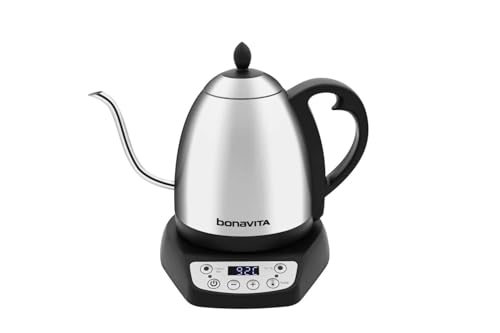
Bonavita 1L Digital Variable Temperature Gooseneck Electric Kettle for Coffee Brew and Tea Precise Pour Control, 6 Preset Temps, Café or Home Use, 1200 Watt, LED Panel, Stainless Steel
Product Overview
This is a 1-liter electric kettle built around a narrow gooseneck spout, designed for controlled, slow pours over drippers such as cone-style and flat-bottom brewers. The listing names it as a digital variable temperature model with six preset temperatures, a 1200-watt heating element, an LED control panel, and a stainless steel body. Bonavita markets the unit for both café and home use, and it is positioned as a tool for pour-over coffee as well as tea.
The core idea of a variable temperature gooseneck kettle is simple: you choose a target temperature, the kettle heats to that point and holds it, and the narrow spout lets you control flow rate with a steady hand. For pour-over, that control matters because extraction depends on water temperature, contact time, and how evenly you saturate the grounds. Many coffee guides cite brewing somewhere in the range of roughly 195 to 205 degrees Fahrenheit, so a kettle that lets you select and hold a specific point is useful for dialing in a recipe.
Compared with a basic electric kettle that simply boils and shuts off, a variable temperature model adds a control layer. Compared with a stovetop gooseneck, it removes the guesswork of watching a pot and estimating when the water is ready. The tradeoff is that you depend on electricity and on the accuracy of the built-in sensor, which is worth keeping in mind when you read the performance section.
Key Features & Specifications
The following table lists the specifications that are stated in the product name or are consistent across Bonavita’s published descriptions for this model. Where a detail is not confirmed, we have left it out rather than guess.
| Feature | What the listing describes |
|---|---|
| Capacity | 1 liter |
| Power | 1200 watts |
| Temperature control | Digital variable temperature with 6 preset temperatures |
| Spout | Gooseneck design for controlled pour |
| Display | LED control panel |
| Body material | Stainless steel |
| Intended use | Coffee brewing (pour-over) and tea; café or home use |
Two practical points follow from these specs. First, the 1-liter capacity is enough for a few pour-over cups or two to three mugs of tea, but you will need to refill for larger gatherings. Second, the 1200-watt rating is a common output level for kettles of this type and generally means a noticeably faster heat-up than lower-wattage models, though exact boil times depend on starting water temperature and your outlet.
Pros & Cons
Pros
- Digital temperature presets let you return to the same brew temperature from one session to the next.
- The gooseneck spout gives you a slim, directional stream that suits slow, even pours.
- A stainless steel body is generally easier to keep clean and more durable than plastic-bodied kettles.
- The 1200-watt element is a strong heating output for a kettle of this size.
- The LED panel makes the current and target temperatures easy to read at a glance.
- Suitable for both coffee and tea, so one kettle can cover multiple uses in the kitchen.
Cons
- At 1 liter, it is small for households that regularly brew for several people at once.
- Electric operation means it needs an outlet and is not usable during a power outage or while camping.
- Owners often mention that preset temperature accuracy can vary slightly from what a separate thermometer reads, so you should verify with a probe if precision matters to you.
- Electric gooseneck kettles in general are a larger footprint on the counter than a stovetop pot.
- Like most stainless steel, the exterior can show fingerprints and water spots unless you wipe it regularly.
Performance Analysis
Performance for a kettle like this comes down to three things: how fast it heats, how well it holds a set temperature, and how usable the spout is during an actual pour. The specifications suggest a strong heating profile, since a 1200-watt element is among the more powerful ratings you will see in this category. In practice, that means you spend less time waiting and more time brewing, especially when you need to reheat water between cups.
Temperature holding is the feature most worth scrutinizing. A variable temperature kettle is only as useful as its ability to maintain the target setting, so a model that drifts during a long brew can throw off your extraction. Owner feedback for kettles in this class commonly focuses on whether the reading on the display matches what they measure with a thermometer, and whether the temperature stays steady during the pour. Based on the general patterns reported across this category, the best results come when you allow the kettle a moment to settle at the preset before you begin pouring, and when you verify its reading against a calibrated thermometer during your first few uses.
The gooseneck spout is a design choice that rewards practice. A narrow, curved spout lets you direct a thin stream into the center and outer edges of the grounds, which supports even saturation. The shape also helps you control flow rate, since a slower pour generally produces a more uniform bed. Beginners often pour too quickly at first; a common approach is to start with a small bloom pour, wait briefly for the grounds to degas, and then continue in slow, concentric circles. Owners who take the time to learn this technique tend to report more consistent cups than those who treat the kettle as a simple boiler.
Overall, the performance profile fits a user who values speed, control, and repeatability. It is not a specialized lab instrument, and it should not be treated as one. For most home pour-over setups, the combination of rapid heating, preset temperatures, and a usable gooseneck spout addresses the core needs of the brew.
Who Should Buy This Product?
This kettle is a strong match for pour-over drinkers who brew one to three cups at a time and want a repeatable temperature without a stovetop. It also suits tea drinkers who like to hit specific temperatures for green, white, or oolong teas, since the preset approach makes it easy to switch between styles. Home cooks who already own a pour-over dripper and want to upgrade from an ordinary kettle will find the control layer noticeable.
You should probably skip this model if you regularly serve large groups, since the 1-liter capacity means frequent refills. Skip it also if you need a kettle for camping, RV use, or any location without reliable power. Buyers who are happy with a standard stovetop gooseneck and enjoy the ritual of heating water by hand may find a simpler, non-electric option more satisfying. Finally, if your brewing method is drip machine or French press, the gooseneck spout and temperature control offer little advantage.
Buying Guide
When you shop for any variable temperature gooseneck kettle, start with capacity. Measure how many cups you typically brew in one session. A 1-liter kettle is comfortable for one to three pour-over cups; if you brew for four or more, consider a larger model so you are not waiting on refills. Next, look at temperature control. Presets are convenient, but check whether the kettle lets you adjust in small increments and whether it holds temperature once it reaches the target. Some owners find that holding behavior matters more than the number of presets.
Spout design is the next factor. A true gooseneck with a narrow, long neck gives better directional control than a short or wide spout. Look at the spout’s diameter and curvature, and if possible, read reviews that describe how it feels during a slow pour. Material matters too: stainless steel resists heat and is generally easy to clean, while plastic bodies can be lighter but may show wear over time. Finally, consider your counter space and outlet access, since electric kettles require both.
If you want to compare the Bonavita model against other well-known options, two alternatives are worth a look. The first is the
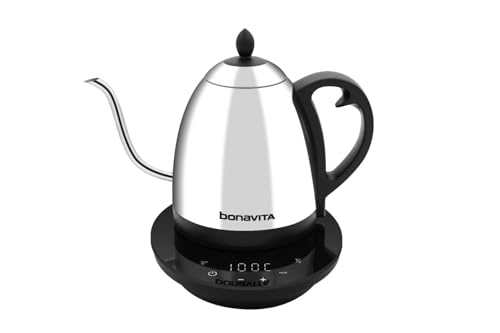
Bonavita Cosmopolitan 1.0L Gooseneck Electric Kettle, Stainless Steel Water Boiler for Coffee Brew and Tea Precise Pour Control, 6 Preset Temps, Glass Touch Panel, 1200W Fast Boil, Mirror Polished
View on Amazon, which is part of the same brand family and offers a similar six-preset approach with a 1200W element and a stainless steel finish, making it a natural comparison if you prefer a different look or panel style. The second is the
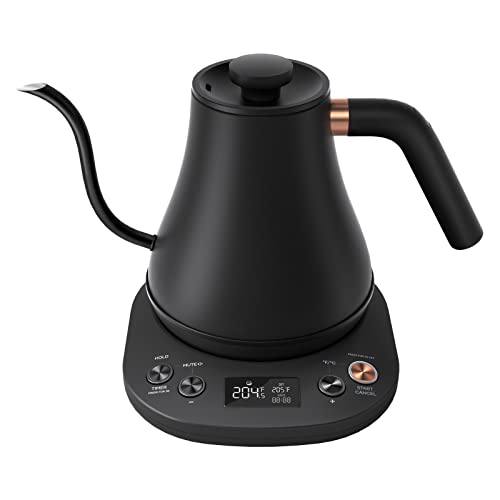
Mecity Electric Kettle Gooseneck Pour Over Kettle ±1℉ Temperature Control Quick Heating Water Boiler for Coffee & Tea & Formula Auto Shut Off Tea Kettle 1200 Watt, 0.8L, Matt Black, Barista Edition
View on Amazon, a matte black gooseneck electric kettle with a 0.8-liter capacity and a focus on precise temperature control. Its smaller size may suit solo brewers, though it will require more refills for multiple cups.
For more context on how gooseneck kettles compare across types, see Stovetop vs Electric Gooseneck Kettles and Variable Temperature Kettles: Hold Functions, Accuracy and Brew Temperatures. If you are still deciding between models, our roundup 7 Best Electric Gooseneck Kettles with Variable Temperature Control (2026) covers a wider field. Readers who want to learn the pouring technique itself can start with How to Pour with a Gooseneck Kettle for Better Pour-Over. For a closer look at the brand’s lineup, see 6 Best Bonavita Variable Temperature Gooseneck Kettle Picks for Pour-Over (2026) and 7 Best Bonavita Gooseneck Kettle Electric Models for Pour-Over (2026).
FAQ
Is the bonavita gooseneck variable temp kettle good for beginners?
Yes, with some caveats. The digital presets make it easy to choose a brew temperature without guessing, and the gooseneck spout is intuitive to use once you practice a steady pour. Beginners should expect a short learning curve on pour speed and should verify the displayed temperature with a thermometer during early brews.
What temperature should I use for pour-over coffee?
Many brewing guides recommend a range of roughly 195 to 205 degrees Fahrenheit for pour-over. Lighter roasts often respond well to the higher end of that range, while darker roasts may taste better slightly cooler. Experiment in small steps and keep notes so you can repeat what works.
How much water does the 1-liter capacity brew?
One liter is roughly 33 ounces. As a general pour-over ratio of about 1:15 to 1:17 coffee to water, that volume can support several cups depending on the recipe, but larger batches will require a refill. Check your dripper’s recommended volume before brewing.
Can I use this kettle for tea as well as coffee?
Yes, the listing describes it for both coffee brewing and tea. The preset temperatures are useful for matching different tea styles, such as lower settings for green tea and higher settings for black or herbal blends. Always check the specific temperature recommended for the tea you are brewing.
Does the kettle keep water hot after it reaches the set temperature?
Variable temperature kettles are designed to hold a set point, which is one of their main advantages over basic models. Owners often recommend letting the kettle settle at the target before pouring to get the most consistent results. If holding accuracy is critical for your brewing, verify it with a probe.
Is the kettle safe to use with stainless steel and do I need to clean it often?
Stainless steel bodies are generally safe for hot water and easy to wipe down. Descaling periodically, following the manufacturer’s care instructions, helps prevent mineral buildup in the heating area. If you have hard water, you may need to descale more often.
Is this a good choice for a commercial or café setting?
The listing mentions café use alongside home use, but a 1-liter kettle is better suited to a small counter or personal station than to a high-volume service environment. Businesses should evaluate throughput needs and any local food-safety requirements before choosing equipment.
Final Verdict
The bonavita gooseneck variable temp kettle is a practical choice for home pour-over brewers who want digital temperature presets, a usable gooseneck spout, and fast heating in a stainless steel body. Its 1-liter capacity limits it to small batches, and its electric design means it is not suited to off-grid use. If your routine is one to three cups at a time and you value repeatable temperatures, it is a solid option worth considering. If you brew for groups or prefer a stovetop approach, look at the alternatives above first. Check the current listing and specifications before you buy: View on Amazon
Related reading
- Top 7 Variable Temp Gooseneck Kettle Picks for Pour-Over (2026)
- 7 Best Bonavita Bv382510v 1.0l Digital Variable Temperature Gooseneck Kettles (2026): Our Picks
About Claire Whitaker
Claire Whitaker is part of our editorial team and reviews and edits our coffee gear & accessories guides, checking product details against manufacturer specifications and owner feedback.