 By Audrey Hayes
Updated November 2026
A burr coffee grinder small enough to fit on a narrow counter can still produce consistent, even grounds that brew well. In this guide, you will learn how to judge burr size and build quality, how to match a compact grinder to your brewing method, how to dial in a grind setting, and how to avoid the mistakes that make small grinders disappoint. By the end, you should be able to pick a grinder that suits your kitchen and your coffee habits.
Why Choose a Small Burr Coffee Grinder?
Small burr grinders appeal to people with limited counter space, apartment kitchens, dorm rooms, and travel setups. The key advantage over blade grinders is consistency. Blade grinders chop beans unevenly, producing a mix of boulders and fines, while burr grinders crush beans between two abrasive surfaces, which yields a more uniform particle size. Compact models give you that uniformity without the bulk of a full-size unit.
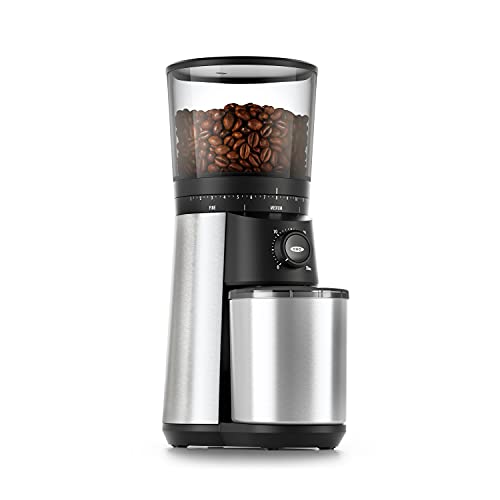
Shopping for one? See our guide: Oxo Brew Conical Burr Coffee Grinder: 7 Best Picks Compared (2026).
The trade-off is capacity and sometimes burr size. A smaller burr set typically grinds fewer grams per minute, and bean hoppers hold less. If you brew one or two cups at a time, that is rarely a problem. If you host guests or brew for a household, check the hopper size and grinding time before you buy.
Understand the Parts That Matter
Before comparing models, know what drives grind quality in a compact grinder.
Burr Type: Conical vs. Flat
Most small electric and manual grinders use conical burrs, which are a cone-shaped inner burr nested inside a ring-shaped outer burr. Conical burrs generally run cooler and produce a good range of particle sizes. Flat burrs, which are two parallel discs, tend to produce a more uniform cut and are common in higher-end machines. Both work well when the burr material and alignment are good.
Burr Material
Steel burrs are the most common in compact grinders. Ceramic burrs are harder but more brittle, and some owners report they dull more slowly. Burr material matters less than burr geometry, alignment, and how consistently the grinder holds its setting.
Adjustment Mechanism
Look for stepped adjustment with clear, numbered settings. Stepped systems let you return to a known setting. Stepless adjustment offers finer control but makes repeatability harder unless you mark your position. Manual grinders often use a stepped dial or a threaded collar.
Motor and Speed (Electric Models)
Electric small burr grinders usually run at low RPMs, which reduces heat and retains aroma. Manufacturers often specify RPM figures; lower speeds generally mean cooler grounds. Check the on-time per dose rather than just the motor wattage, since real-world performance depends on the whole system.
How to Choose the Right Small Burr Grinder
Work through these steps in order to narrow your options.
- Define your brew methods. Espresso requires very fine, consistent grounds, and most small grinders struggle with espresso-level fineness. Pour-over, drip, and French press are much easier to satisfy.
- Measure your counter space. Note the height, especially if you want to fit the grinder under a cabinet.
- Decide on daily dose. Most people brew 15 to 25 grams of coffee per cup-sized batch. Compare hopper capacity and grind time for your typical dose.
- Choose stepped or stepless adjustment. Stepped is easier for beginners and for repeating a recipe.
- Check build materials. Metal bodies feel sturdier, while plastic is lighter and often quieter in use.
- Read owner reports on consistency. Owners often report that consistency varies more with dialing than with the grinder itself, so look for feedback on settings at the middle of the range.
Step-by-Step: Dialing In Your Small Burr Grinder
A small grinder can produce excellent coffee once you find its sweet spot. Follow this process.
Step 1: Start at a Middle Setting
Set the grinder to roughly the middle of its range. For pour-over, begin near a medium setting and brew a test cup.
Step 2: Weigh Your Dose
Use a scale accurate to 0.1 gram. Weigh 15 to 20 grams of beans for a single cup and record the dose. Consistent dosing matters as much as grind setting.
Step 3: Taste and Adjust
If the cup tastes sour, thin, or grassy, the grind is probably too coarse. Move one step finer and brew again. If it tastes bitter, hollow, or harsh, move one step coarser. Change one variable at a time.
Step 4: Log Your Settings
Write down the bean, dose, setting, water temperature, and brew time. Small grinders reward patient tracking because you can quickly repeat a good result.
Checklist: What You Need
- A burr grinder with a stepped or clearly marked adjustment
- A digital scale that reads to 0.1 gram
- An airtight container for whole beans
- A soft brush for clearing fines from the burrs
- A timer for brewing consistency
- Fresh whole beans roasted within the past few weeks
Grinder Comparison by Use Case
| Use Case | What to Prioritize | Adjustment Style |
|---|---|---|
| Pour-over and drip | Even medium grind, clear settings | Stepped preferred |
| French press | Coarse, consistent particles | Stepped or coarse range |
| Travel or camping | Light weight, manual operation | Simple dial or collar |
| Espresso | Fine-range capability, low retention | Stepless or very fine steps |
Common Mistakes to Avoid
- Grinding too much at once. Small burrs can overheat or clog if you push a large dose through. Grind only what you need.
- Ignoring retention. Old grounds trapped in the chute can stale your next cup. Tap or brush out fines between sessions.
- Storing beans in the hopper. Leaving beans in the hopper for days lets them lose aroma. Fill only what you will use soon.
- Judging the grinder by one brew. Dial in over several cups before deciding a setting is wrong.
- Expecting espresso results from a pour-over grinder. Confirm the fine range before buying for espresso.
Tips for Better Results
- Grind immediately before brewing for the most aroma.
- Keep burrs clean; oily residue affects particle size over time.
- Let the grinder rest between long sessions if it feels warm.
- Buy beans in small batches to keep them fresh.
- If grounds seem uneven, check burr alignment before blaming the setting. For troubleshooting ideas, see related guides on grinder performance.
Recommended gear
A consistent dose is easier with a scale that reads in small increments, so a compact digital scale is one of the most useful companions for a small grinder. View on Amazon
A soft brush helps clear fines from the burr chamber and chute, which keeps retention low between sessions. View on Amazon
An airtight canister protects whole beans from light, air, and moisture, which helps you keep your dial-in results repeatable for longer. View on Amazon
For more on specific models and how they perform, you can also read Niche Coffee Grinder Guide: Pick the Right Burrs for Your Brew, Manual Coffee Grinders: Burr Size, Adjustment and Grinding Effort, and Coffee Grinder Burr or Blade: Which Should You Choose? (2026). If you are weighing a budget option, Inexpensive Burr Coffee Grinder: 5 Best Picks for Home Brewing (2026) covers several compact choices. Knowing when to service your grinder also helps, so review When to Replace Coffee Grinder Burrs once you notice a change in flavor.
FAQ
Is a small burr coffee grinder good enough for pour-over?
Yes. Many compact burr grinders produce a consistent medium grind suitable for pour-over and drip brewing, provided they have a stepped or clearly marked adjustment.
Can a small burr grinder make espresso?
Some can, but only if they offer a fine enough range and low retention. Confirm the grinder’s espresso capability before buying for that purpose.
How many grams can a small burr grinder handle at once?
This depends on the model’s hopper and burr size. Check the manufacturer’s specified capacity and avoid grinding large doses in one pass unless the instructions allow it.
Why do my grounds look uneven from a small grinder?
Common causes include a misaligned or worn burr, too much retention, or a setting that is too close to the burr’s limit. Clean the burrs and check alignment first.
How often should I clean a burr grinder?
Brush out fines after each use or every few uses, and do a deeper clean according to the manufacturer’s guidance, usually every few weeks for regular home use.
Do I need a scale to use a small burr grinder well?
A scale is not strictly required, but weighing your dose makes results far more repeatable and helps you dial in faster.
Are ceramic burrs better than steel in compact grinders?
Neither is automatically better. Burr geometry, alignment, and consistency matter more than material. Ceramic can be harder but more brittle.
How long does a small burr grinder last?
Lifespan varies with use and maintenance. Owners often report years of service with regular cleaning, while burrs eventually dull and may need replacement.
Conclusion
A small burr grinder can deliver even, flavorful coffee when you match it to your brew method and dial it in carefully. Focus on burr geometry, a clear adjustment system, and a dose that suits the machine. Clean the burrs regularly, weigh your coffee, and track settings so you can repeat your best cups.
Ready to choose one?
About Audrey Hayes
Audrey Hayes is part of our editorial team and reviews and edits our coffee gear & accessories guides, checking product details against manufacturer specifications and owner feedback.