By Claire Whitaker
Updated November 2026
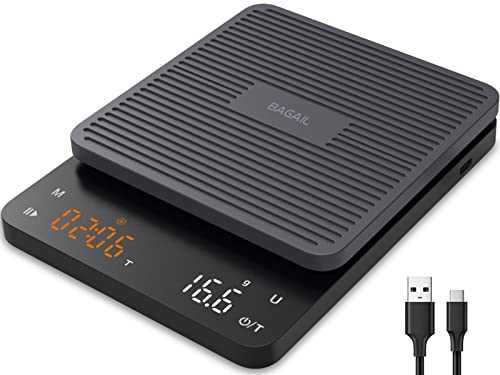
A coffee scale with automatic timer is worth owning if you want repeatable results from brew to brew. It weighs your coffee and water, and the built-in timer starts when water hits the grounds, so you can track bloom time and total brew time without juggling a phone stopwatch. Most home brewers get more consistent cups this way, especially with pour-over and espresso.
Why the Timer Matters More Than You Think
Brewing is a set of timed steps. A pour-over might bloom for 30 to 45 seconds, then finish draining in roughly 2.5 to 3.5 minutes. When you stop a manual stopwatch late or start it early, the numbers you record are off, and you cannot tell whether a sour cup came from grind size or from a rushed pour. A scale with an integrated timer keeps the weight and the clock on one display, so each brew is recorded the same way.
Shopping for one? See our guide: OXO Conical Burr Coffee Grinder with Integrated Scale: 7 Best Picks (2026).
The timer also helps with espresso. Shot times are usually compared against a target window, often around 25 to 30 seconds for a standard double, and the automatic start on many scales syncs with the pump so you see the moment extraction begins.
What to Look for and What to Do About It
Not every scale with a timer behaves the same way. Three factors matter most:
- Resolution: A reading of 0.1 gram is the common standard for brewing. Anything coarser makes small dose changes hard to dial in.
- Response time: A fast scale updates quickly as you pour, which matters for espresso and for pour-over flow control. Manufacturers often list response speed in their specifications, so compare those numbers rather than assuming.
- Capacity and surface: Confirm the platform fits your dripper, carafe or portafilter, and that the maximum weight covers your largest brew.
If you already own a basic kitchen scale, you can still get a timer by using a separate stopwatch app, but you lose the synced start. For more on that tradeoff, see Espresso Scale vs Kitchen Scale for Coffee.
Practical Steps for Using a Timed Scale
- Place your empty brewer or cup on the scale and tare it to zero.
- Add your ground coffee and note the dose, for example 15 grams for a 1:15 ratio with 225 grams of water.
- Start the timer as you begin the first pour, then watch the water weight climb on the display.
- Record bloom time, total brew time and final yield in a notebook or app.
- Change one variable at a time, such as grind size, and compare the logs.
For a full walkthrough of ratios and setup, read Coffee Scale with Timer: How to Brew Consistent Coffee Every Time.
What We’d Use
For pour-over at home, a dedicated pour-over scale with a timer keeps the setup simple and the platform large enough for most drippers. Search for a pour-over scale with timer to see current options.
If you also brew espresso, look for a model with a fast response time and a timer that starts automatically with flow. A compact espresso scale is easier to fit next to a machine.
FAQ
Is a timer on a coffee scale necessary?
No, but it removes guesswork. A separate stopwatch works if you are careful, though an integrated timer makes logs more reliable.
Does the automatic timer start when I pour?
Many models start when they detect a change in weight, so the clock begins with the first water. Check the specific model’s instructions, since behavior varies.
Should I consult a professional about my coffee equipment?
For routine brewing, the manufacturer’s manual and your own logs are usually enough. If a scale or appliance shows electrical problems, stop using it and contact the manufacturer or a qualified repair service.
Related reading
- Best Coffee Scales With Timers for Pour-Over and Espresso
- Kitchen Scale for Coffee: A Step-by-Step Guide to Consistent Brews (2026)
- How to Evaluate Coffee Scales, Frothers and Espresso Tools
Ready to choose one?
About Claire Whitaker
Claire Whitaker is part of our editorial team and reviews and edits our coffee gear & accessories guides, checking product details against manufacturer specifications and owner feedback.