 By Audrey Hayes
Updated November 2026
An electric coffee burr grinder crushes beans between two abrasive surfaces, producing a more even particle size than blade grinders. For most home brewers, that consistency matters more than any other grinder feature, because uneven grounds lead to over-extracted fines and under-extracted chunks in the same cup. Choose a burr type that fits your brewing method, set a grind size you can repeat, and keep the burrs in good condition.
Why burr grinders produce more consistent grounds
A blade grinder chops beans at random, so you get a mix of dust and boulders. A burr grinder meters beans through a gap between two burrs, and the distance between them sets the particle size. Tighter gaps produce finer grounds for espresso, while wider gaps suit French press and cold brew. Because the gap stays fixed once set, every dose of beans comes out at roughly the same size.
Shopping for one? See our guide: Bodum Bistro Electric Burr Coffee Grinder (2026): Which Should You Choose?.
Burr type, size and adjustment
Two burr designs dominate home models. Conical burrs turn in a cone-shaped chamber and generally run cooler and quieter. Flat burrs spin parallel to each other and are often praised for a uniform cut. Burr material matters too: steel burrs are common and durable, while ceramic burrs are harder to heat up but can wear more slowly. Check how the grind adjustment works. Stepped dials are easy to repeat, while stepless adjustment gives finer control but makes it harder to return to an exact setting.
Manufacturers usually list a burr diameter, and larger burrs typically grind faster at a given speed. Pay attention to how the grinder handles retention, meaning how many grounds stay trapped inside. High retention makes it harder to switch between coffee types without purging.
How to dial in your grind
- Match the setting to your brew method. Start espresso near a fine setting, pour-over at medium, and French press at coarse.
- Grind one test dose and taste it. Sour and thin usually means under-extracted, so go finer. Bitter and harsh usually means over-extracted, so go coarser.
- Change only one setting at a time and make a note of the number on the dial.
- Purge the grinder by running a small amount of beans through after changing settings or beans.
- Brush out the chute and burr area every week or so, since leftover oils go rancid and affect flavor.
- Watch for signs of worn burrs, such as inconsistent grind or a sudden change in flavor, and check the burrs when they show signs of wear.
What we’d use
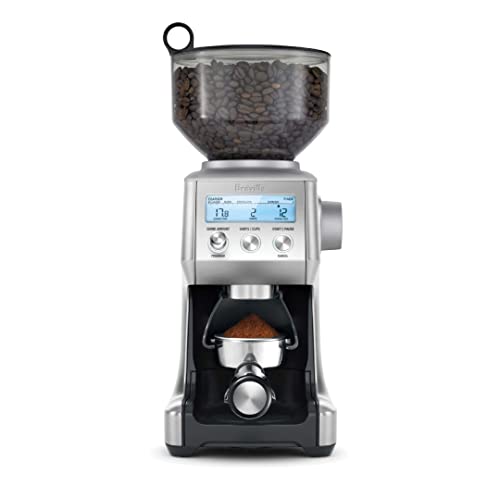
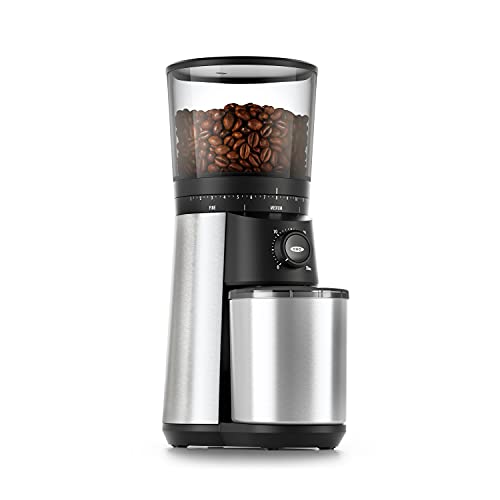
For a compact countertop option with stepped settings that are easy to repeat, a popular choice is the View on Amazon, which many home brewers use for pour-over and French press.
If you brew a range of methods and want a stepless dial for fine espresso work, consider the View on Amazon, which is built around precise grind control.
If you’re still deciding between styles, see Manual vs Electric Coffee Grinder: Which Fits You? and Top 6 Kaffe Electric Burr Coffee Grinders for Home Brewing. For burr wear, read When to Replace Coffee Grinder Burrs, and for conical designs see 6 Best Conical Burr Electric Coffee Grinder Picks for Home Brewing (2026).
FAQ
Is a burr grinder better than a blade grinder?
For most brewing methods, yes. Burr grinders produce a more uniform particle size, which gives more even extraction and clearer flavor.
Do conical or flat burrs make better coffee?
Neither is universally better. Conical burrs are often quieter and cooler, while flat burrs are often noted for uniform particles. Choose based on your brew method and noise tolerance.
How often should I clean an electric coffee burr grinder?
Brush out the grounds weekly if you grind daily, and follow the manufacturer’s full cleaning instructions for a deeper clean. Consult the owner’s manual for model-specific steps.
Related reading
Ready to choose one?
About Audrey Hayes
Audrey Hayes is part of our editorial team and reviews and edits our coffee gear & accessories guides, checking product details against manufacturer specifications and owner feedback.