An electric milk frother in the jug style is one of the easiest ways to make hot foam, cold foam, or gently warmed milk at home. It does the heating and whisking for you, so you can pour a cappuccino-style drink without learning steam wand technique. This guide explains how jug frothers compare with handheld wands and steam wands, which features matter, and where the limits show up in the cup.
What a Jug Electric Frother Is and Who It Suits
A jug electric frother is a countertop appliance made of a motor base and a removable jug with a whisk inside. You pour milk into the jug, select a setting, and the machine heats, whisks, or both according to its cycle. Most models switch off automatically, and the jug rinses quickly under running water.
It suits you if you want automated, repeatable milk prep without standing over a pan with a whisk. It is also a good fit for households that drink iced coffee, because a dedicated cold foam cycle produces a steady foam that stays on top of cold drinks.
It is less ideal if you need barista-level microfoam for latte art, regularly make more than two milk drinks at once, or want complete control over texture and temperature.
Main Types and How They Differ
There are three common ways to get frothed milk at home. The jug frother is the most automated, but each type trades convenience for control in its own way.
Jug-Style Electric Frother
Electric milk frothers in jug form heat the milk with a heating plate and whip it with a whisk. Depending on the settings, they can produce dense hot foam, lightly foamed warm milk, heated milk with no foam, or chilled foam for iced drinks. Because the cycle is automated, the result is consistent batch after batch.
Handheld Milk Wand
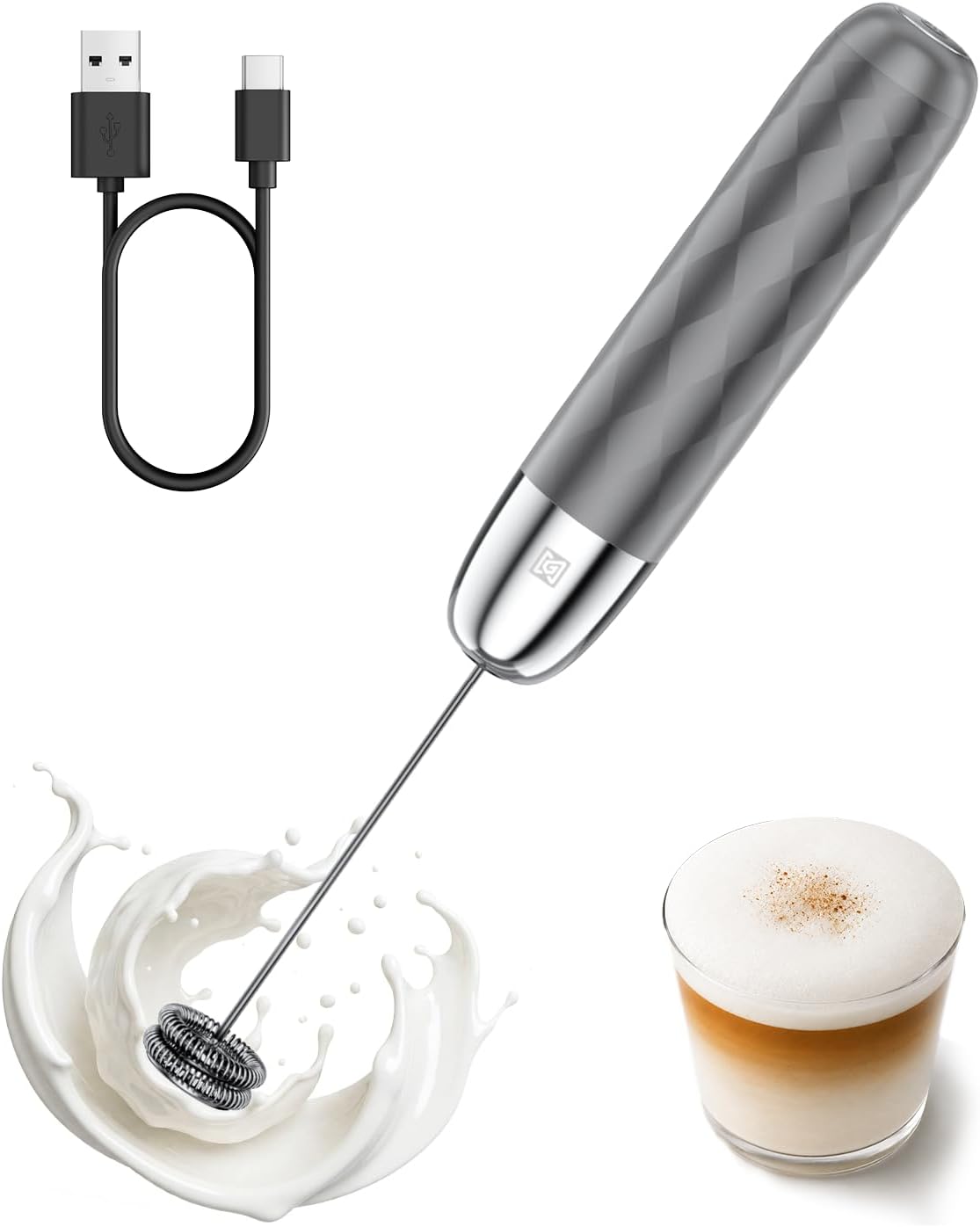
A handheld wand is a small battery-powered whisk with a coil at the end. You hold the wand in the cup and move it up and down to froth the milk. It does not heat the milk, so you would need to warm it first. It is compact, easy to store, and fine for a single serving, but the bubble quality depends on your motion and the result is often airier than what a jug produces.
Steam Wand
A steam wand, either on an espresso machine or a standalone milk steamer, injects hot steam into the milk. It can create the fine, smooth microfoam used for latte art. It takes practice and careful temperature control, but it gives you direct control over texture and heat.
The table below summarizes the key differences.
| Type | What it does | Best for | Limitations |
|---|---|---|---|
| Jug electric frother | Automatically heats and whisks milk in a countertop jug | Consistent hot foam, cold foam, and warm milk with no technique | Limited texture control; not ideal for latte art |
| Handheld wand | Manual whisk you move through a cup of milk | Small batches of foam with minimal equipment | Does not heat milk; texture depends on your motion |
| Steam wand | Injects steam into milk from an espresso machine or standalone steamer | Fine microfoam for latte art and creamy drinks | Requires practice and a steam heat source |
Hot Froth, Warm Milk, and Cold Foam Settings
Most jug frothers label their controls with words such as “hot froth,” “hot milk,” and “cold foam.” The exact names vary by model, so check the control panel or the manual before your first use. What happens inside the jug depends on two things: whether the heating plate runs and how fast the whisk spins.
Hot froth is the default setting for cappuccino-style drinks. The milk heats fully and the whisk folds in air, creating a thick foam that you can spoon over espresso. The mixture is fairly uniform at the start, but it settles into foam and liquid as it sits.
Warm milk without foam is the setting for a flat white, a cafe latte, or a plain hot milk drink. The heater still warms the milk, but the whisk runs gently to keep the milk moving without pulling in air. The result is steaming, silky milk with only a trace of bubbles on the surface.
Cold foam is a separate cycle that skips the heater and runs the whisk until the milk turns into a cool, smooth foam. It is designed for iced coffee and cold brew, and it holds its shape better than hot foam once the drink is assembled. Some models also have a warm milk cycle that stops well short of the boiling point. If you want to check the temperature yourself, a milk frothing thermometer helps you dial in the right range for your drink.
Features That Actually Matter
Capacity and Max Fill Lines
Choose a jug size that matches your mugs, not the language on the box. A small jug suits a single espresso mug, while a larger one can handle two drinks or taller cups. Every jug has a minimum mark and a maximum mark printed inside, and both matter. The max fill line exists because milk expands during frothing. Fill beyond it and you get spillover; fill below the minimum and the whisk cannot reach the liquid. Cold foam usually needs a lower fill line than hot foam because it expands more. If you usually use large cafe-style mugs, compare the jug capacity with your actual mug size before buying.
Whisk Designs
The whisk shape determines the texture. Most jug frothers come with two attachments: a spring-style coil whisk for frothing and a flat or paddle whisk for gentle stirring. Some models use a single whisk that changes speed to change the effect. Before buying, check that the whisk attachments are included and easy to remove for cleaning.
Nonstick Interior
A nonstick coating inside the jug helps milk rinse away instead of baking into a film. It is genuinely useful but needs gentle care. Wash the jug with warm soapy water and a soft sponge, not metal scrubbers or abrasive powders.
Controls and Auto Shutoff
A simple two- or three-button control panel is usually easier to clean than a touchscreen that can get slippery. Many frothers stop automatically at the end of the cycle, which prevents overheating if you walk away. It is also worth checking whether the base has a cord wrap or a short cord that fits under a cabinet.
Dairy Versus Plant Milks
Cow’s milk froths readily because it contains a balance of protein and fat that traps air and holds foam. Whole milk makes a smooth, creamy foam. Low-fat and nonfat milk make more foam but with a thinner, airier mouthfeel. If you are starting out, whole milk is the most predictable choice in a jug frother.
Plant milks are more varied. Oat, almond, soy, and coconut milks have different protein and fat levels, so the same frother can produce very different results from different brands. Many manufacturers sell barista-style versions formulated with stabilizers to create a denser microfoam. They often perform better than the regular version of the same plant milk, but results still vary. For cold foam, plant milks with added gums tend to hold better. If you get thin, watery foam, try another product instead of assuming the frother is faulty.
Shake the carton before pouring. Plant milks and some dairy milks can separate, and a well-mixed carton froths more reliably. Also pay attention to the fill line, because too little milk lets the whisk pull in excess air and create coarse bubbles.
Limitations Compared with a Steam Wand for Latte Art
Can a jug frother make latte art? Usually not the kind you see in a cafe. The automated whisk produces a fairly dry foam with larger bubbles, while latte art needs glossy, pourable microfoam. A steam wand creates that texture by stretching the milk as it heats and by letting you control the airflow by hand.
You can still pour a simple heart or rosetta with practice and whole milk, but the foam will be less forgiving. If latte art is a serious goal, choose equipment with a steam wand and spend time on technique. For alternatives that improve the texture without buying an espresso machine, see our guide to how to froth milk at home without an espresso machine wand.
There is also a heat limitation. With a jug frother, you choose a cycle and let it finish. You cannot stop mid-cycle to hit a precise temperature, and you cannot control the steam pressure the way you can with a wand. If precise temperature and texture control matter, a steam wand is the better tool.
Care, Cleaning and Upkeep
- Rinse the jug immediately after a hot cycle so milk film does not dry onto the surface.
- Remove the whisk and wash it by hand with warm soapy water.
- Wash the jug interior by hand and air-dry it upside down. Dishwashing can damage the nonstick coating.
- Never submerge the motor base. Wipe it with a damp cloth and dry it completely.
- Unplug the base before cleaning the appliance.
- Follow the manufacturer’s instructions for descaling. Do not improvise with vinegar or other solutions unless the manual recommends them.
Hot surfaces and escaping steam can burn. Let the jug cool before removing it, and open the lid away from your face. Keep the appliance out of reach of small children during and right after use. If you notice any unusual smell, smoke, or heating issues, stop using the unit and consult the manufacturer’s instructions.
FAQ
Can I make cold foam in a jug frother?
Yes, if the jug has a cold foam setting. That setting runs the whisk without turning on the heater, so the milk stays cool while it froths. If there is no cold foam mode, a handheld wand can make cold foam, but a jug frother with the right setting is the simplest option.
What is the difference between a jug frother and a handheld wand?
A jug frother heats and whisks automatically, so you pour milk, press a button, and wait. A handheld wand does not heat milk and you provide all the motion by hand. The wand is smaller and takes up less space, but the milk must already be warm for a hot drink, and the texture depends on your technique. For a broader look at your options, visit the milk and frothing equipment guide.
Why is my oat milk not foaming?
Plant milk formulas vary widely. Try a barista-style product, shake the carton well, and use milk from a freshly opened container. Also check the fill line, because too little milk creates large bubbles that collapse quickly. If one brand gives weak foam, another brand of the same milk type may work much better.
Can I get latte art from a jug frother?
Not reliably. The automatic whisk creates airy foam rather than fine microfoam, so patterns tend to blur or sink. A steam wand is the better tool for latte art. If you only want a casual design, practice with whole milk and pour in a slow, steady stream, but expect the texture to be less cooperative than steam-frothed milk.
The right choice comes down to your routine. A jug electric frother is a dependable, low-effort tool for hot foam, cold foam, and warm milk at home, and the cleaning steps are simple if you respect the motor base. Compare capacities and settings on the spec sheet, follow the manual, and you will get steady results with minimal effort.