By Claire Whitaker
Updated November 2026
A mhw-3bomber formula coffee scale is a small digital scale built for weighing coffee beans and water, so you can repeat the same brew ratio every time. In this guide you will set up the scale, weigh a dose and water, and avoid the errors that make batches taste different from one day to the next. The steps below assume a pour-over or drip brew, but the same logic applies to most methods.
Why Weight Beats Volume for Coffee
Scoops vary with bean density, roast level and how packed the grounds are, so two scoops of the same bag can hold noticeably different amounts of coffee. Weighing removes that variable. Most brewing guides express strength as a ratio of water to coffee, such as 1:16, which means 16 grams of water for every gram of coffee. A scale lets you hit that ratio exactly. If you are new to weighing, the broader overview in Kitchen Scale for Coffee: A Step-by-Step Guide to Consistent Brews (2026) covers the basics of why a kitchen scale works so well for brewing.
Shopping for one? See our guide: OXO Conical Burr Coffee Grinder with Integrated Scale: 7 Best Picks (2026).
Setting Up and Calibrating the Scale
Before your first brew, set the scale on a flat, stable surface away from vibration and check that it reads zero with nothing on it. Many digital scales include a tare function, which resets the display to zero after you place a container. Follow the manufacturer’s instructions for calibration, since the method varies by model. Check the battery level too, because a low battery can cause readings to drift.
Weighing Your Dose and Water Step by Step
A simple workflow keeps your measurements repeatable. Use the same steps each time and only change one variable when you experiment.
- Place your empty brewer or vessel on the scale and press tare so it reads 0 g.
- Add whole beans or ground coffee until the display shows your target dose, for example 20 g.
- Place your water vessel on the scale, tare it, then pour water until the display shows your target, such as 320 g for a 1:16 ratio.
- Start your timer as you begin pouring and aim for a total brew time that suits your method, commonly around 2.5 to 4 minutes for pour-over.
- Record the dose, water weight and time in a notebook so you can adjust next time.
Adjusting Your Brew Using Ratios
Once your scale is part of your routine, changes become easy to track. If a brew tastes sour and thin, you may be under-extracted, so try a finer grind or slightly more contact time. If it tastes harsh or bitter, try a coarser grind or a shorter brew. Change one thing at a time, and keep the ratio in mind when you adjust water.
| Goal | Dose (g) | Water (g) at 1:16 |
|---|---|---|
| Single cup, small mug | 15 | 240 |
| Standard cup | 20 | 320 |
| Large pot for two | 30 | 480 |
Common Mistakes
- Forgetting to tare the vessel, which adds the container’s weight to your reading.
- Weighing on an uneven surface, which can cause unstable numbers.
- Changing grind, dose and water all at once, which makes results hard to compare.
- Ignoring battery warnings, since low power can produce inconsistent readings.
- Skipping notes, so you cannot repeat a brew you liked.
Recommended Gear
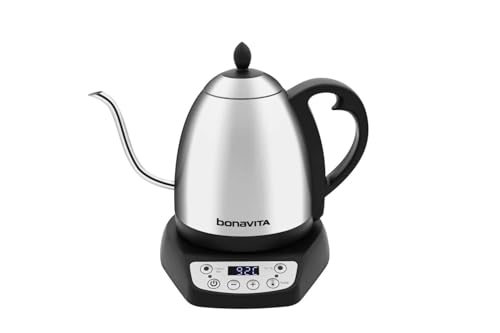
A scale is the core tool, but a few accessories make weighing more accurate. A timer helps you track bloom and total brew time, and a gooseneck kettle gives you steadier pours. Owners often report that pairing a scale with a burr grinder produces the most repeatable results, since a consistent grind matters as much as a precise dose.
- Digital timer scale: combines weighing and timing in one unit so you track both at once. View on Amazon
- Gooseneck kettle: gives controlled, slow pours that keep water flow even during brewing. View on Amazon
- Burr grinder: produces a uniform grind so your weighed dose extracts evenly. View on Amazon
FAQ
Do I need to weigh my beans or can I use a scoop?
Weighing is more consistent because scoops vary with bean density and grind size. A scoop can work for casual brewing, but a scale makes it easier to repeat a recipe exactly.
What ratio should I start with?
A ratio around 1:16 is a common starting point for pour-over. Adjust from there based on how the coffee tastes and how strong you prefer it.
How do I know if my scale is accurate?
Check that it reads zero when empty and test it with a known weight, such as a standard calibration weight. For model-specific calibration steps, follow the manufacturer’s instructions.
Conclusion
Using a mhw-3bomber formula coffee scale gives you control over dose and water, which is the foundation of consistent brewing. Start with a simple ratio, record your results, and change one variable at a time. Over a few brews, the notes you keep will tell you exactly how to make your coffee taste the way you want.
Related reading
- Mhw-3bomber Cube Coffee Scale 2.0 Mini: Is It Worth Buying?
- Oxo Conical Burr Coffee Grinder with Scale (2026): Which Should You Choose?
Ready to choose one?
About Claire Whitaker
Claire Whitaker is part of our editorial team and reviews and edits our coffee gear & accessories guides, checking product details against manufacturer specifications and owner feedback.