 By Audrey Hayes
Updated November 2026
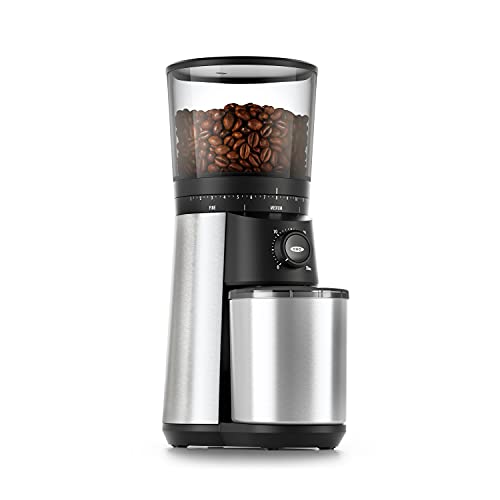
An oxo conical burr coffee grinder usually produces uneven grounds for one of a few reasons: burrs that are dull or misaligned, a grind setting that is too fine for the brewer, beans that are stale or oily, or a grinder that is still holding old grounds inside. Most of these problems can be fixed at home in under ten minutes without buying new parts.
Uneven grounds show up as a mix of fines (powdery particles) and boulders (large chunks), and the result is usually a cup that tastes bitter and hollow at the same time. Before changing anything, it helps to understand how a conical burr grinder actually works, because the fix depends on which factor is causing the problem.
Shopping for one? See our guide: Oxo Brew Conical Burr Coffee Grinder: 7 Best Picks Compared (2026).
Why a Conical Burr Grinder Can Still Produce Uneven Grounds
A conical burr set has an inner cone that rotates against a fixed outer ring. Beans are pulled between the two surfaces, and the gap between them determines particle size. Because the burrs are angled, the grounds tend to be more uniform than what a blade grinder produces, but that uniformity depends on the burrs being sharp, seated correctly and set to a grind size that suits your brew method.
Owners often report that the grind looks fine at a glance but becomes inconsistent when they switch between coarse and fine settings. That is usually a sign that the burr alignment has drifted or that retained grounds are being pushed into the wrong part of the chamber.
The Main Factors Behind Inconsistent Grounds
Grind setting mismatched to the brew method
A pour-over using a cone dripper needs a medium-fine grind, while a French press needs something coarse. If the setting is too fine for the method, the water slows down, extraction becomes uneven, and you get a mix of over-extracted fines and under-extracted boulders in the same cup. Start with a midpoint setting and adjust one step at a time rather than making large jumps.
Worn or misaligned burrs
Burrs lose their edges over time, and a grinder that has been used heavily for a long period may begin to produce more fines. Manufacturers generally recommend inspecting burrs periodically and replacing them when the grind quality degrades. If you notice a sudden increase in dust after a cleaning, check that the burr carrier and retaining ring are seated correctly, since a small shift can change the gap across the burr face.
Stale, oily or dark-roasted beans
Beans that are past their peak freshness can grind unevenly because their structure becomes brittle and they shatter into more fines. Dark roasts with visible oil on the surface also tend to clog the burr gap and create clumps. Buy smaller bags, store beans in an airtight container away from heat and light, and grind only what you need for each brew.
Retained grounds and static
Grounds left in the grinder from a previous session can mix with fresh grounds and cause uneven particle sizes at the start of a new batch. Static buildup can also make fine particles cling to the chute and then release in clumps. A brief tap of the hopper or a light brush around the burrs often helps.
What to Do About It
- Empty the hopper and run a small amount of rice or a dedicated grinder cleaning product through the burrs to clear old oils and fines.
- Brush out the burr chamber and the grounds chute with a dry brush, then wipe the outer surfaces with a barely damp cloth. Let everything dry fully before reassembling.
- Check that the burr carrier is fully seated and that the retaining ring is tight without forcing it.
- Set the grinder to a middle position and grind a test dose. Spread the grounds on a white plate and look for a uniform texture with few large chunks or powder clouds.
- Adjust the setting one step at a time based on the brew method, then taste and adjust again.
- Store beans in an airtight container and use them within a few weeks of roasting for the most consistent results.
If the grind is still uneven after these steps, the burrs may be worn. Consider a burr replacement or contact the manufacturer for service guidance.
What We’d Use
A clean, soft brush helps keep the burr chamber free of retained grounds, which is one of the simplest ways to improve consistency. Search for a grinder brush designed for burr grinders: View on Amazon.
A set of cleaning pellets or a bag of dedicated grinder cleaning product can clear oils from the burrs without damaging them: View on Amazon.
A digital scale helps you measure dose consistently, which makes it easier to tell whether the grinder or your technique is causing the problem: View on Amazon.
Related Questions
How often should I clean my oxo conical burr coffee grinder?
Brush out the burr chamber after each use or every few days, depending on how often you brew. Deep clean with grinder pellets about once a month, or sooner if you use oily dark-roast beans regularly.
Why does my grinder make a rattling sound?
A rattle usually means a loose component, a stone or debris has entered the burr set, or the burr carrier is not seated properly. Stop grinding, unplug the unit, and check the burr assembly before running it again.
Can I use pre-ground coffee in a burr grinder?
No. Burr grinders are designed for whole beans. Pre-ground coffee can clog the burr gap and does not improve consistency.
Is an uneven grind always a sign that the grinder is broken?
Not necessarily. Stale beans, a mismatched grind setting, or retained grounds can all cause uneven results. Work through the steps above before assuming a mechanical fault.
Should I read more about burr types before buying a new grinder?
Yes. Our guide to Burr Coffee Grinders: Flat vs Conical Burrs, Consistency and Retention explains how burr geometry affects particle size, and When to Replace Coffee Grinder Burrs covers the signs that a burr set has worn out.
Related reading
- OXO Conical Burr Coffee Grinder with Integrated Scale: 7 Best Picks (2026)
- OXO Brew Conical Burr Coffee Grinder Stainless Steel Review (2026)
Ready to choose one?
About Audrey Hayes
Audrey Hayes is part of our editorial team and reviews and edits our coffee gear & accessories guides, checking product details against manufacturer specifications and owner feedback.