
Choosing between a manual and an electric coffee grinder comes down to how you brew, how much coffee you make at once, and where you want to use it. Manual grinders are quiet, portable, and give you full control over grind size with a stepless adjustment in many models. Electric grinders are faster and require less physical effort, making them a better match for high-volume mornings or espresso routines that need quick, repeatable adjustments. Both can produce excellent grind consistency, but the key factor is the burr quality, not the power source.

How each type of grinder works

Manual coffee grinders

Manual grinders use a hand crank that spins a set of burrs, typically conical, inside a cylindrical body. The coffee beans are fed from a hopper above the burrs, and the ground coffee falls into a catch cup below. The user controls the speed and therefore the heat generated, though most modern manual grinders are designed to minimize any temperature rise during a typical one- or two-cup dose. The adjustment mechanism is often a threaded ring or a collar that moves the outer burr up or down relative to the inner burr. Many manual grinders feature stepless adjustment with a numbered dial, allowing you to dial in very fine increments, which is especially helpful for espresso. Others use stepped adjustments that click into pre-set positions.

Electric coffee grinders

Electric grinders come in two main form factors: blade grinders and burr grinders. For consistent grind quality, a burr grinder is the only meaningful choice. Electric burr grinders use either flat or conical burrs, driven by a motor that spins at a constant speed. The grind size is set by adjusting the gap between the burrs, usually via a stepped or stepless adjustment ring on the side or top of the machine. Stepped adjustments are common in many entry-level and mid-range electric grinders, offering discrete settings (for example, from fine to coarse in twenty or thirty clicks). Stepless adjustments are more often found on higher-end electric grinders and allow infinite variation, ideal for fine-tuning espresso. Electric grinders typically have a larger hopper for storing beans and can grind a full dose in seconds.

Side-by-side comparison: manual vs electric burr grinder

The following table highlights the main differences between a typical manual burr grinder and an electric burr grinder, as they relate to home use. Keep in mind that individual models vary, so check the product’s spec sheet for specific features.

Factor Manual burr grinder Electric burr grinder
Grind consistency Depends on burr quality; high-end manuals rival any electric Depends on burr quality; good electric grinders produce uniform grounds
Speed per dose 30–90 seconds for a typical 15–20g dose 5–15 seconds for the same dose
Effort required Some elbow grease; fine grinds take more effort Minimal; press a button
Noise level Very quiet; mostly a gentle crunching sound Moderate to loud; motor noise plus burr chatter
Portability Compact, lightweight; no cord, battery, or outlet needed Heavy, bulky, requires AC power (or battery in rare travel models)
Counter space Small footprint, often fits in a cupboard Requires dedicated area, especially with a tall hopper
Adjustment system Often stepless or fine steps; many offer external adjustment Stepped or stepless; external adjustment common on higher-end models
Espresso suitability Excellent for espresso with stepless models; good for dialing in Good; stepless is ideal, stepped can work if increments are small enough
Filter brew suitability Good; coarse settings are consistent if burrs are quality Good; many electric grinders cover drip to French press easily
Dosing flexibility Single-dose only (weigh beans, grind, dump) Single-dose or timed/weighed from hopper; some have grind-by-weight
Cleaning Easy to disassemble; fewer parts to access burrs Often more complex; requires removing hopper and chute, sometimes shims
Initial cost Lower entry price for good burr quality Higher entry price for comparable burr quality
Durability Long-lasting with simple mechanics Motor and electronics are wear items; typical lifespan varies

When a manual coffee grinder is the better choice

You brew one or two cups at a time

Manual grinders are built for single-dose operation. You weigh the beans, pour them into the hopper, crank, and the grounds fall directly into the catch cup or portafilter. There is no need to clear a chute of leftover grounds or deal with a hopper full of beans going stale. For a pour-over, a single-cup immersion brew, or a single espresso, the short grinding time (usually under a minute) feels manageable.

You value quiet mornings

If you often grind coffee while others are sleeping, the near-silent operation of a manual grinder is a major advantage. Even the most refined electric grinders create a noticeable whir, and some are loud enough to wake a light sleeper. A manual grinder produces only the sound of beans cracking and burrs spinning, which is surprisingly soft.

You travel or camp frequently

Manual grinders are small, lightweight, and require no electricity. Many fit inside a backpack or camping kit. You can grind fresh coffee anywhere you have beans and water. Electric travel grinders exist, but they rely on batteries or a power source, adding weight and the need to charge. A manual grinder is the most reliable option for off-grid brewing.

You want precise control for espresso without spending heavily

Good manual grinders with stepless adjustment are surprisingly affordable compared to electric grinders with similar capability. If you are dialing in a new espresso bean often, being able to make micro-adjustments without paying for a high-end electric grinder is a clear benefit. The effort of hand-grinding a fine espresso dose is real, but many home baristas find it worthwhile for the control and quality per dollar.

When an electric coffee grinder is the better choice

You make multiple cups back to back

If you brew a full carafe of drip coffee or serve several espresso drinks in a row, an electric grinder saves significant time and effort. Grinding forty or fifty grams of beans by hand gets tiring, whereas an electric grinder handles it in under fifteen seconds without any fatigue. Some electric models also have a large bean hopper, letting you skip weighing each dose if you are brewing at a consistent setting.

You need speed in the morning

When every minute counts before work, pressing a button is faster than cranking. Even a fast manual grinder takes about half a minute to grind a typical espresso dose. An electric grinder can be done in ten seconds. If your routine is short on time, the electric route is hard to beat.

You are primarily a filter coffee brewer with a medium to coarse grind

For French press, pour-over, or drip coffee, the grind size is larger and therefore less physically demanding to grind by hand. However, if you regularly brew a full pot (say, 40–60g of coffee), an electric grinder eliminates all the cranking. Many electric grinders have a simple stepped adjustment with a large range, making it easy to switch from coarse to fine as needed.

You prefer a hopper-based workflow

Some electric grinders allow you to fill the hopper with beans and use a timer or weigh sensor to dose automatically. This can streamline mornings: you set the grind size and dose once, then just put your portafilter or basket under the chute and start the grinder. For households that drink the same coffee daily, this convenience is appealing.

Upkeep and long-term ownership

Both types of burr grinder need periodic cleaning to remove retained oils and stale coffee dust. The frequency depends on how often you use the grinder; a good rule of thumb is to clean the burrs and the grinding chamber every few weeks if you use it daily. Follow the manufacturer’s instructions for disassembly and cleaning, as designs vary. Never wash burrs with water unless the manufacturer explicitly says they are safe to rinse; metal burrs can rust. Instead, use a brush, and use grinder-cleaning tablets only if the manufacturer approves them.

Manual grinders have fewer parts that can fail. The bearings and the axle may need occasional lubrication if the grinder becomes stiff, but many users never need to service them. Electric grinders have a motor, a power switch, and sometimes a magnetic or microswitch safety mechanism. Over time, the motor brushes (if present) may wear out, and the burrs themselves will eventually need replacement after heavy use. Check the manufacturer’s guidelines for burr replacement intervals; actual lifespan depends on use.

For a deeper look at different grinder types and how they compare side by side, see the Coffee Grinder Comparisons guide. If you are also deciding between espresso machine types, the article on semi-automatic vs super-automatic espresso machines can help you choose the right setup for your grinder.

Top Picks to Compare

If you would rather start from a short list, these are popular options on Amazon for this search. Check each listing’s details, size and current price before you buy.
1
Best Seller

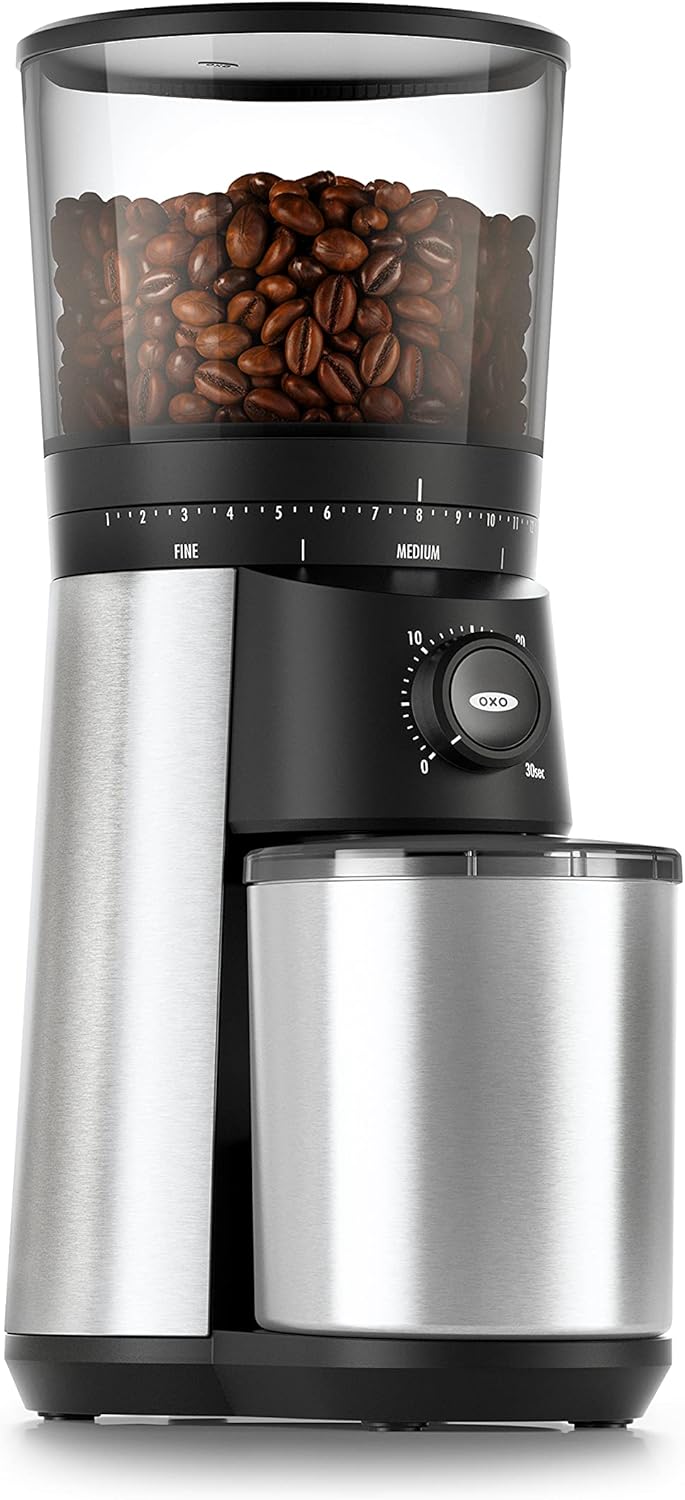
OXO Brew 40mm Conical Burr Electric Coffee

9.6 /10
AI Score
AI score rating is a scoring system developed by our experts. The score is from 0 to 10 based on the data collected by the AI tool. This score doesn't impact from any manufacturer or sales agent websites. Learn more ›
The OXO Brew Conical Burr Grinder delivers consistent, uniform grounds across 15 grind settings with 43 micro-adjustments, making it ideal for espresso, drip, French press, and cold brew enthusiasts. Its one-touch memory function and UV-blocking hopper make it a reliable choice for home coffee lovers seeking barista-quality results without the complexity.
Pros & Cons

Pros

  • Exceptional consistency and uniformity in grind quality across all 15 settings ensures better extraction and superior coffee flavor
  • Memory function saves time by automatically recalling your preferred grind time, perfect for weekday routines
  • Generous 12-ounce hopper capacity reduces refilling frequency and accommodates multiple brewing sessions
  • Stainless steel construction with UV-blocking hopper protects beans from light exposure and maintains freshness
  • Versatile grind range supports every brewing method from fine espresso to coarse French press grounds

Cons

  • 100-watt motor may generate moderate noise during grinding, which could be disruptive in quiet morning environments
  • Entry-level pricing point means some premium features found in higher-end grinders are not included
  • 12-ounce hopper capacity may require frequent refilling for households with multiple daily coffee drinkers
Detailed Review

The OXO Brew Conical Burr Electric Coffee Grinder is a mid-range burr grinder designed for coffee enthusiasts who want consistent results without excessive complexity. It's perfect for home brewers transitioning from blade grinders to burr grinders, or for anyone seeking reliable daily performance across multiple brewing methods including espresso, drip coffee, French press, and cold brew.

The standout feature is the precision 40mm stainless steel conical burr system, which creates uniformly sized grounds essential for even water extraction and balanced flavor. With 15 primary grind settings plus 43 micro-adjustments, you have granular control to dial in your perfect grind. The one-touch memory function is genuinely useful for busy mornings, automatically recalling your last grind time and setting so you get consistent results without manual adjustments each time.

Build quality is solid throughout, with a durable stainless steel construction that feels professional and compact enough for most kitchen countertops. The 12-ounce hopper features UV-blocking tint to protect beans from light degradation, preserving freshness and flavor. The removable hopper makes cleaning straightforward, and the overall design balances functionality with aesthetic appeal in a silver finish.

The main drawbacks are the 100-watt motor, which produces moderate noise during grinding, and the 12-ounce hopper capacity that may require frequent refilling in multi-coffee-drinker households. The grinder also lacks some premium features like variable speed control or advanced timer displays found in higher-end models.

Overall, the OXO Brew Conical Burr Grinder is a reliable, well-engineered option that delivers exceptional value for home coffee makers. It successfully bridges the gap between budget blade grinders and expensive premium models, making it an excellent choice for anyone serious about improving their daily coffee quality.

Specifications

Burr System: 40mm stainless steel conical burrs for precision grinding and uniform grounds consistency.

Grind Settings: 15 primary settings plus 43 micro-adjustments, totaling 58 grind size options from fine espresso to coarse French press.

Hopper Capacity: 12 ounces (0.34 kg) with UV-blocking tint protection for bean freshness.

Power Specifications: 100 watts, 120 volts AC, electric powered with one-touch automatic start function.

Physical Dimensions: 7.5 inches length, 5.3 inches width, 12.9 inches height, weighing 4.5 pounds for compact countertop placement.

Materials: Stainless steel construction throughout for durability and professional appearance.

Warranty: Two-year manufacturer warranty covering defects and performance issues.

Model: OXO 8717000, ASIN B07CSKGLMM, UPC 719812093611.

Buyer Guide

Best For: Home coffee enthusiasts who brew multiple methods daily, including espresso, drip coffee, French press, and cold brew. Ideal for upgrading from blade grinders or as a reliable everyday grinder for households with 1-2 regular coffee drinkers.

Brewing Method Compatibility: The 15 grind settings with 43 micro-adjustments provide sufficient precision for all common brewing methods. Fine settings work well for espresso and Moka pots, medium settings for drip coffee makers and pour-overs, and coarse settings for French press and cold brew.

Hopper Capacity Consideration: The 12-ounce hopper holds approximately 2-3 days of coffee beans for typical daily drinkers. Households brewing 3+ cups daily may need to refill every 1-2 days, which is normal for mid-range grinders at this price point.

Maintenance Tips: Clean the hopper and burrs regularly by running uncooked rice through the grinder monthly, then discard the rice. Wipe the exterior with a damp cloth. The removable hopper can be hand-washed with warm soapy water.

Noise Level: Expect moderate grinding noise typical of 100-watt burr grinders. If noise is a primary concern, consider running the grinder earlier in your morning routine or looking at more powerful models with better sound dampening.

2
Editor's Pick

Aromaster Conical Burr Coffee Grinder

Aromaster
9.7 /10
AI Score
AI score rating is a scoring system developed by our experts. The score is from 0 to 10 based on the data collected by the AI tool. This score doesn't impact from any manufacturer or sales agent websites. Learn more ›
The Aromaster CG204 is a versatile electric burr grinder offering 48 grind settings from espresso-fine to French press-coarse, with anti-static technology and a large 3.9-ounce capacity. Ideal for coffee enthusiasts and offices seeking consistent grinding without static mess and heat damage to beans.
Pros & Cons

Pros

  • Excellent grind consistency across all 48 settings for various brewing styles
  • Anti-static design eliminates messy static cling that plagues many grinders
  • Durable stainless steel construction with slow-grinding burrs preserve bean quality
  • Easy cleaning with removable burr and dedicated brush prevent blockages
  • Quiet operation and compact footprint fit most kitchen countertops

Cons

  • Requires 120V, 60Hz power, limiting portability and international use
  • 3.9-ounce capacity may feel limiting for daily use in large households
  • Conical burr requires careful drying before reassembly to prevent electrical issues
Detailed Review

The Aromaster CG204 is an electric burr grinder designed for coffee lovers who want consistency without the mess. Whether you're brewing single-cup espresso or filling a French press for the office, this grinder's 48 settings deliver precision across the entire grind spectrum. It's built for anyone tired of static-clogged grounds and inconsistent particle sizes from blade grinders.

The standout feature is the anti-static technology paired with slow-grinding conical burrs. These burrs work methodically to preserve the coffee's natural oils and aromatic compounds, preventing the heat damage that compromises flavor. The large 3.9-ounce hopper means fewer refills during your morning routine, and the adjustable timer gives you control over exactly how much ground coffee you produce.

Build quality is solid with premium stainless steel burrs and a thoughtfully designed tawny hopper that shields beans from UV light degradation. The removable burr and included cleaning brush make maintenance straightforward, though you'll need to ensure the conical burr is completely dry before reassembling to avoid electrical hazards.

The main limitations are its 120V requirement and moderate hopper size. High-volume users in large offices might find themselves refilling frequently, and the need for careful drying after cleaning adds a minor maintenance step. Still, the grinder's quiet operation and compact 8x5x16-inch footprint make it practical for most kitchens.

The Aromaster CG204 delivers reliable, flavorful grinding at a mid-range price point. With strong build quality, thoughtful anti-static engineering, and versatile settings, it's an excellent choice for home users and small offices seeking to elevate their coffee experience beyond blade grinders.

Specifications

Model: CG204

Brand: Aromaster

Grind Settings: 48 adjustable levels

Burr Type: Conical stainless steel

Capacity: 3.9 ounces

Dimensions: 8 inches L x 5 inches W x 16 inches H

Power: Electric, 120V, 60Hz

Material: Premium stainless steel

Features: Anti-static technology, adjustable timer, removable burr, included cleaning brush, UV-protective tawny hopper

Warranty: 12-month repair service

Buyer Guide

Best For: Home coffee enthusiasts, small offices, and anyone wanting to upgrade from blade grinders to burr grinding without breaking the bank.

Consider If: You brew multiple coffee styles (espresso, pour-over, French press) and want one grinder that handles them all. The 48 settings provide flexibility for experimentation.

Skip If: You need maximum capacity for high-volume grinding, require portability across different power standards, or prefer fully automatic operation without manual timer adjustment.

Maintenance Tip: The cleaning brush is located on the back of the bean hopper lid. Always ensure the conical burr is completely dry before reassembling to prevent electrical issues. Regular cleaning prevents blockages and maintains consistent grind quality.

3
Limited Time

Coffee Grinder, Electric Burr Coffee Grinder

HAUSCAFE
9.7 /10
AI Score
AI score rating is a scoring system developed by our experts. The score is from 0 to 10 based on the data collected by the AI tool. This score doesn't impact from any manufacturer or sales agent websites. Learn more ›
Pros & Cons

Pros

  • 38 adjustable grind settings
  • Conical burr reduces heat buildup
  • Compact space-saving design
  • One-touch easy operation

Cons

  • Espresso cup holder fits loosely
  • Manual lacks clear instructions
  • Motor may overheat if run long
4
Top Rated

Coffee Grinder, Electric Coffee Bean Grinder

Novalifeinyourkitchen!
9.7 /10
AI Score
AI score rating is a scoring system developed by our experts. The score is from 0 to 10 based on the data collected by the AI tool. This score doesn't impact from any manufacturer or sales agent websites. Learn more ›
Pros & Cons

Pros

  • 38 adjustable grind settings
  • 60s timer with memory function
  • Anti-static design reduces mess
  • Integrated chamber blower for cleaning

Cons

  • Plastic outer construction
  • Indoor use only
  • Requires 120V outlet
5

Conical Burr Coffee Grinder, Anti-Static

Cusinice
9.6 /10
AI Score
AI score rating is a scoring system developed by our experts. The score is from 0 to 10 based on the data collected by the AI tool. This score doesn't impact from any manufacturer or sales agent websites. Learn more ›
Pros & Cons

Pros

  • 0.1s timer with smart memory
  • 40mm stainless steel conical burr
  • Anti-static design reduces mess
  • 34 grind settings for various brews

Cons

  • Requires AC adapter (corded)
  • Touchscreen may show fingerprints
  • Large footprint on counter

FAQ

Can a manual grinder produce a grind as consistent as an electric one?

Yes. The consistency of a burr grinder depends almost entirely on the precision of the burrs and the stability of the adjustment mechanism. High-quality manual grinders use precise burrs and stable bearings and can produce equally uniform grounds. The key is the burr quality, not the power source.

Is a manual grinder good for espresso?

It can be excellent for espresso if the grinder offers fine, precise adjustment. Stepless manual grinders allow you to dial in the exact grind size needed for a given bean and espresso machine. The trade-off is the physical effort required to grind a fine espresso dose, which is noticeably harder than a coarse filter grind.

Which type is quieter?

Manual grinders are much quieter. They produce a gentle crunching sound that is unlikely to disturb others. Electric grinders, even the best, generate motor noise and the sound of beans being crushed, which can be loud enough to be heard in adjacent rooms.

How do I decide between stepped and stepless adjustment?

Stepped adjustment is common on many electric grinders and on some manual models. It offers set positions, making it easy to return to a known grind size. Stepless adjustment, common on higher-end manual and electric grinders, lets you make infinite fine changes, which is valuable for espresso dialing. For filter coffee, stepped is usually sufficient. Choose stepless if you frequently switch beans or need to fine-tune your espresso.

Whether you choose manual or electric, the most important step is to invest in a grinder with quality burrs. A good manual grinder can outperform a cheap electric one, and vice versa. Consider your daily volume, noise tolerance, and willingness to spend a little time grinding, and you will find the right tool for your home coffee routine.
