 By Claire Whitaker
Updated November 2026
A made in USA gooseneck kettle is a pour-over kettle whose final assembly or manufacturing takes place in the United States. To choose one well, you need to look past the label and check the things that actually shape your brew: spout control, heating method, materials, and how easy the kettle is to clean and descale. This guide walks you through each factor so you can match a domestic-made kettle to the way you brew.
What “Made in USA” Actually Tells You
The phrase “made in USA” is governed by the Federal Trade Commission, and a company generally has to show that the product is “all or virtually all” made domestically for the claim to be unqualified. Some products carry a qualified claim such as “assembled in USA” or “made in USA with imported parts.” Read the packaging or product listing closely, because those qualifiers tell you where the work happened, not where every component came from.
Shopping for one? See our guide: Bodum Bistro Gooseneck Kettle (2026): Which Should You Choose?.
For a home brewer, the origin matters less than what the kettle does at the spout and what it is made of. A domestic label is a reasonable signal about build quality and warranty support, but it is not a substitute for checking performance. Treat it as one factor among several.
Step 1: Decide Between Stovetop and Electric
Before you look at any specific model, decide how you will heat the water. Stovetop gooseneck kettles sit on a burner and give you a simple, low-cost setup with no power cord. Electric gooseneck kettles have a heating base and usually offer a set temperature, which removes guesswork when you want water at a specific point for a light roast or a delicate origin. If you already own a reliable burner and do not need precise temperature control, a stovetop model may be enough. If you brew multiple times a day or want repeatable results, an electric model with temperature settings is often the better fit.
For a deeper comparison, see Stovetop vs Electric Gooseneck Kettles and Gooseneck Kettles for Pour-Over: Stovetop vs Electric.
Step 2: Check the Spout and Pour Control
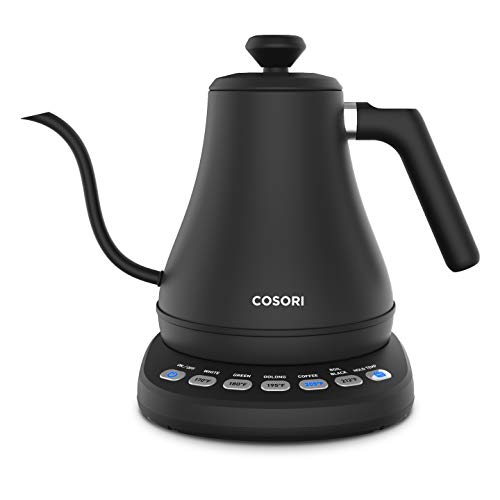
The spout is the feature that defines a gooseneck kettle. A narrow, curved spout lets you control flow rate and direct the stream precisely over the coffee bed. When evaluating a made in USA gooseneck kettle, look at these points:
- Spout length and angle. A longer reach keeps your hand farther from the steam and makes it easier to pour in controlled circles.
- Opening diameter. A smaller opening gives a thinner, more consistent stream at low flow.
- Drip behavior. Check whether the spout tends to dribble after you lift the kettle. Reviewers and owners often mention this as a daily annoyance.
To learn how to use the spout once you have one, read How to Pour with a Gooseneck Kettle for Better Pour-Over.
Step 3: Evaluate Materials and Finish
Most gooseneck kettles use stainless steel for the body and a mix of stainless steel, glass or polymer for handles and lids. Stainless steel is durable and easy to wipe down. Some owners prefer glass or plastic-free designs because they worry about taste transfer. If that concern matters to you, look for a kettle that lists food-grade stainless steel and avoids plastic in the water path. For more on this, see Plastic Free Gooseneck Kettle: How to Choose One That Keeps Water Clean.
Check the interior finish too. Polished interiors tend to show mineral scale more clearly, which can help you spot buildup early.
Step 4: Look at Temperature Control and Hold Settings
If you choose an electric model, check whether it offers adjustable temperature settings and how long it holds a temperature once reached. Manufacturers typically specify a range in Fahrenheit. Many brewers use roughly 195 to 205°F for medium roasts and a little cooler for light roasts, but your recipe should drive the final choice. A hold function keeps water at temperature between pours, which helps when you brew several cups back to back.
A built-in thermometer is useful even on a stovetop kettle. It removes the guesswork of waiting for a boil. For a closer look at this feature, read Gooseneck Kettle with Thermometer: 6 Factors to Check Before You Buy.
Step 5: Confirm Capacity and Footprint
Gooseneck kettles come in a range of capacities. A smaller kettle suits one or two cups and heats faster. A larger kettle is better if you brew for a group or use a bigger dripper. Measure your counter space and check that the kettle fits under your cabinets if you store it there. The base of an electric model should also fit where you plan to keep it plugged in.
Step 6: Plan for Cleaning and Descaling
Hard water leaves mineral scale inside every kettle, and a gooseneck spout is especially prone to buildup because of its narrow passage. Before buying, make sure the kettle has a wide enough interior and an opening you can reach with a brush or cloth. Descaling with a mild acid such as diluted white vinegar or citric acid is common practice, and the manufacturer’s manual should specify what is safe for that model.
See How to Clean Gooseneck Kettle: Step-by-Step Guide for Home Brewers and How to Descale Gooseneck Kettle: A Step-by-Step Guide for Home Brewers for the routines.
Quick Checklist Before You Buy
- Confirm the exact “made in USA” wording and whether it is a full or qualified claim.
- Choose stovetop or electric based on how you heat water and how precise you need to be.
- Check spout length, opening diameter and drip behavior.
- Confirm materials are food-grade stainless steel and that the water path avoids unnecessary plastic.
- If electric, check temperature range, hold function and whether the thermometer is accurate for your recipes.
- Measure counter and storage space, and pick a capacity that matches how many cups you brew.
- Make sure the interior and spout are easy to clean and descale.
- Read the warranty and check whether the manufacturer lists replacement parts.
Common Mistakes to Avoid
- Buying on origin alone. A domestic label does not guarantee the spout pours well or the controls suit your brewing.
- Ignoring the water you use. Hard water will scale any kettle quickly. Plan for regular descaling.
- Picking the wrong capacity. A large kettle for one cup wastes time and energy, while a small one forces you to refill mid-brew.
- Skipping the manual. Cleaning agents, heating limits and warranty terms are listed there. Follow them.
- Assuming any spout suits every dripper. Check how the kettle pours before committing to a single brewing method.
Recommended gear
A few accessories make a domestic-made gooseneck kettle more useful for pour-over. A digital scale lets you weigh water and coffee for consistent ratios, and a thermometer helps you verify temperature on a stovetop model.
- Digital kitchen scale with a timer. Weighing water by grams keeps your recipe repeatable from day to day. View on Amazon
- Stovetop-safe kettle thermometer. It gives you a reading on a non-electric gooseneck kettle so you know when to pour. View on Amazon
- Soft-bristle cleaning brush for kettle spouts. A narrow brush reaches the spout passage better than a sponge. View on Amazon
FAQ
Does “made in USA” mean the kettle is better?
Not necessarily. The label describes where manufacturing or assembly happened. Performance depends on spout design, heating, materials and controls, so judge the kettle on those features too.
Is a stovetop or electric gooseneck kettle better for pour-over?
Either can work well. Stovetop kettles are simple and need no power. Electric kettles give you set temperatures and a hold function, which helps with repeatable brewing.
What temperature should I use for pour-over?
Many brewers start around 195 to 205°F and adjust by roast level. Lighter roasts often benefit from slightly hotter water, while darker roasts may need a bit less. Taste and adjust.
How often should I descale my gooseneck kettle?
It depends on your water hardness and how often you use the kettle. Check the manufacturer’s guidance and descale whenever you see mineral buildup or slower heating.
Can I use vinegar to clean my kettle?
Diluted white vinegar is a common choice for descaling, but confirm it is safe for your model in the manual. Rinse thoroughly afterward so no taste lingers.
Why does my kettle spout drip?
Some spouts retain a small amount of water after pouring. Lifting the kettle slowly and wiping the spout after each use usually helps. Persistent dripping can point to a design issue or buildup.
Do I need a gooseneck kettle for pour-over?
You can brew pour-over with a regular kettle, but the narrow spout gives better control over flow rate and placement. Whether it is worth it depends on how much control you want.
Where can I check current details on a specific model?
Check the manufacturer’s official website for current specifications, warranty terms and care instructions, since these can change over time.
Conclusion
A made in USA gooseneck kettle can be a solid choice, but the label is only the starting point. Decide how you will heat water, then judge the spout, materials, temperature control and cleaning needs. Matching those features to your brewing habits will give you a kettle you actually enjoy using every morning.
Ready to choose one?
About Claire Whitaker
Claire Whitaker is part of our editorial team and reviews and edits our coffee gear & accessories guides, checking product details against manufacturer specifications and owner feedback.