By Claire Whitaker
Updated November 2026
The Cuisinart digital gooseneck kettle black is a 1.0-liter electric kettle aimed at home baristas who brew pour-over and want more control over water temperature and flow than a standard electric kettle offers. It suits people who already own a dripper such as a V60, Kalita or Chemex, want repeatable pours, and prefer a compact countertop footprint. It is a weaker fit for households that need to boil large volumes at once, anyone who wants a kettle with a built-in scale or app, or buyers who need a wide range of temperatures for tea and other specialty drinks. Read on for specifications, a balanced look at strengths and limitations, and alternatives worth comparing before you buy.

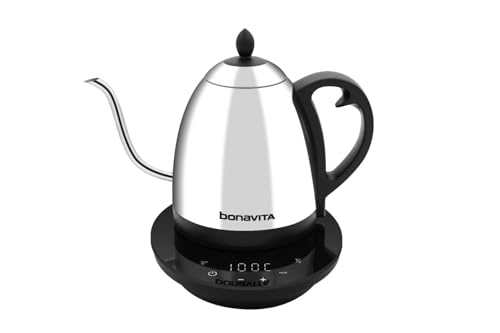
Cuisinart GK-1C Digital Gooseneck Kettle 1.0L | 5-degree precision control and slow pour spout for hot water, matte black stainless steel kettle, electric, 1.0 L.
Product Overview
The Cuisinart GK-1C is a digital gooseneck kettle with a matte black stainless steel body and a 1.0-liter capacity. It is built around two things pour-over brewers care about most: a narrow, curved spout that lets you direct a thin stream of water onto the coffee bed, and a digital control panel that lets you set the water to a specific temperature. The kettle is electric, so it heats itself rather than sitting on a stovetop burner, which makes it easy to keep water at a steady temperature while you work through a brew.
Because the body is stainless steel instead of plastic, owners often mention that it looks more like a piece of countertop equipment than an appliance. The matte finish resists fingerprints better than glossy surfaces, which matters if the kettle lives on an open counter next to a grinder and scale. The 1.0-liter capacity is sized for one to two pour-over cups at a time, which covers most solo or couple brewing sessions without leaving you with a large volume of water that cools down before you use it.
It is worth being clear about what this kettle is not. It is not a multi-preset tea kettle with a long list of modes, and it is not a large family-size kettle. It is a focused tool for controlled pour-over. If your brewing revolves around drip coffee in a carafe or a French press, a standard electric kettle may serve you just as well at a lower complexity.
Key Features & Specifications
The table below lists the specifications that the product name and listing describe. Where a detail is not clearly established, we have left it out rather than guess.
| Feature | Specification |
|---|---|
| Model | Cuisinart GK-1C Digital Gooseneck Kettle |
| Capacity | 1.0 L |
| Type | Electric gooseneck kettle |
| Temperature control | Digital, in 5-degree increments |
| Spout | Gooseneck with slow pour design |
| Body material | Stainless steel |
| Finish | Matte black |
The 5-degree temperature increment is the feature that most separates this kettle from basic models. Many pour-over guides recommend water in the range of roughly 195°F to 205°F depending on roast level and brewing method, so being able to set a specific number instead of a generic boil gives you a real variable to adjust. Confirm the exact temperature range and heating behavior in the manufacturer’s manual before purchasing, since those details can vary between revisions.
Pros & Cons
Pros
- Digital control in 5-degree steps lets you hold a chosen brewing temperature rather than guessing from a boil.
- The gooseneck spout is designed for a slow, controllable pour, which helps with even saturation of the coffee bed.
- Stainless steel construction feels sturdier than plastic-bodied alternatives and is easier to keep looking clean.
- A 1.0-liter capacity is a practical size for one or two pour-over cups without excess water sitting around.
- The matte black finish hides fingerprints and fits well with most kitchen and coffee-bar setups.
Cons
- The capacity is small if you regularly brew for a group or want to fill a large carafe in one session.
- It is a single-purpose pour-over-oriented kettle, so it offers less versatility than multi-preset tea kettles.
- Owners who compare it with larger premium kettles sometimes mention that the interface is simpler than a touchscreen, with fewer mode options.
- Electric gooseneck kettles need a power outlet near your brewing station, which can be a constraint in a small kitchen.
- Like all stainless steel kettles, mineral buildup can appear over time in hard-water areas and needs periodic descaling.
Performance Analysis
Performance in pour-over comes down to three things: whether the water is at the temperature you set, whether the flow is controllable, and whether the kettle makes the process repeatable from one brew to the next. On paper, this model addresses all three. The digital control and 5-degree increments target temperature accuracy, the gooseneck spout targets flow control, and the stainless body with a 1.0-liter capacity keeps the setup compact enough to brew the same way each morning.
Owner feedback patterns for kettles in this category tend to follow a consistent theme. Buyers who value the control often report that being able to hold a specific temperature changes how they dial in a coffee, especially when switching between light and dark roasts. Lighter roasts are commonly brewed at the hotter end of the typical range, while darker roasts are often brewed slightly cooler, and having a precise setting makes those adjustments simple to repeat. Owners also commonly note that the slow pour spout is easier to control than a wide-mouth kettle, which helps when building a steady bloom and pulse pattern.
Feedback in this category also tends to raise the same practical points. Some users find the 1.0-liter capacity right for their routine, while others wish for more volume. A recurring observation is that the kettle is most satisfying when it is part of a deliberate, repeatable brewing routine: a scale, a timer, a grinder with consistent output, and a fixed pour sequence. Used that way, the kettle’s control is a meaningful advantage. Used as a casual boiler, many of its features go underused. As always, the results you get depend heavily on your grind size, coffee dose, water quality and technique, so treat any kettle as one part of the system.
Who Should Buy This Product?
This kettle makes the most sense for a home brewer who already has a pour-over setup and wants to move from approximate to repeatable. If you weigh your coffee, keep a brew log, and adjust grind size or temperature based on how a cup tastes, a kettle with a set temperature and a controllable spout will fit naturally into that habit. It also suits people with limited counter space who want a single, focused tool rather than a multi-function appliance.
It is a weaker choice if you brew for a crowd, since the 1.0-liter capacity will require refills. It is also not the best pick if your main need is hot water for tea across many temperature presets, or if you want a kettle with a built-in hold timer and a larger display. If you are just starting out and mostly make drip coffee in a machine, a simpler and less specialized kettle may give you more value for how you actually brew.
Buying Guide
When you shop for a gooseneck kettle, start with how you brew. Pour-over at home usually calls for a kettle that holds a steady temperature and pours slowly. Check whether the temperature control is in fine increments, since 5-degree steps are useful for dialing in, and confirm that the spout is a true gooseneck with a narrow outlet. Capacity matters too: match it to your typical brew size, and remember that a slightly larger kettle keeps water hot for longer, while a smaller one heats faster and takes up less room.
Build quality and maintenance deserve attention. Stainless steel bodies are durable and easy to wipe down, but they show mineral deposits in hard water, so plan on regular descaling. Look at the lid and the base as well: a kettle that is easy to fill and easy to set down on a stable base will get more daily use. Finally, consider the power setup. Electric models need an outlet near your brew station, while stovetop kettles do not, which can be the deciding factor in a compact kitchen.
If you want to compare the Cuisinart GK-1C with other well-known options, two alternatives are worth a look. The first is a programmable electric kettle with multiple temperature presets and a keep-warm function, which suits people who brew both coffee and tea:

Cuisinart 1.7 L. Programmable Electric Kettle, Tea Kettle, CPK-17P1 | 6 temperature presets for hot water, 30-minute Keep Warm, 2-minute memory, stainless steel
The second is a glass variable-temperature electric kettle with a touchscreen, illumination and a wider temperature range, which appeals to buyers who want a visual interface and broader control for tea and other drinks:

Cuisinart 1.7L Glass Variable Temperature Control Electric Kettle 110°F–212°F with Touchscreen Controls, Illumination, Dual‑Layer Cool‑Touch Design & Nondrip Spout
If you are still deciding between electric and stovetop designs, the comparison in Stovetop vs Electric Gooseneck Kettles lays out the trade-offs clearly. For a broader look at what to prioritize, Cuisinart Digital Gooseneck Kettle: How to Choose and Use One Well (2026) walks through selection criteria, and How to Pour with a Gooseneck Kettle for Better Pour-Over covers technique so you get the most from any model. Owners who want to see what others discuss can also review Cuisinart Gooseneck Kettle Reddit: What Owners Discuss and How to Choose Well.
FAQ
Is the Cuisinart digital gooseneck kettle black good for pour-over coffee?
Yes, it is designed for pour-over. The gooseneck spout supports a controlled, slow pour, and the digital temperature control lets you hold a specific setting. Results still depend on your coffee, grind and technique.
How much water does the 1.0-liter capacity hold?
The kettle holds 1.0 liter, which is enough for roughly one to two pour-over cups in a typical session. For larger batches, you will need to refill or choose a bigger kettle.
What temperature should I set for pour-over?
Many pour-over guides suggest a range of roughly 195°F to 205°F, with lighter roasts often brewed hotter and darker roasts often brewed slightly cooler. Start in the middle of that range and adjust based on how the cup tastes.
Can I use this kettle for tea?
You can heat water for tea, but this model is oriented toward pour-over. If you want many temperature presets for different teas, a multi-preset kettle may suit you better.
How do I clean and descale the kettle?
Follow the manufacturer’s care instructions. In hard-water areas, periodic descaling with a mild descaling solution or diluted white vinegar helps remove mineral buildup. Always rinse thoroughly afterward.
Is the stainless steel body safe for everyday use?
Stainless steel is widely used for food-contact kitchen equipment. For specific safety guidance about your model, consult the manufacturer’s manual, and contact a qualified professional if you have concerns about electrical installation.
Does the kettle keep water hot for long?
Electric kettles vary in how well they retain heat, and insulation and lid design both matter. Check the manual for keep-warm behavior if you plan to hold water for an extended period.
Related reading
- Cuisinart GK-1 Digital Gooseneck Kettle Review: Features and Performance
- 7 Best Bonavita Bv382510v 1.0l Digital Variable Temperature Gooseneck Kettles (2026): Our Picks
- 6 Best Cuisinart Gooseneck Electric Kettle Models for Pour-Over (2026)
About Claire Whitaker
Claire Whitaker is part of our editorial team and reviews and edits our coffee gear & accessories guides, checking product details against manufacturer specifications and owner feedback.