By Evelyn Lawson
As an Amazon Associate I earn from qualifying purchases. This page may contain affiliate links.
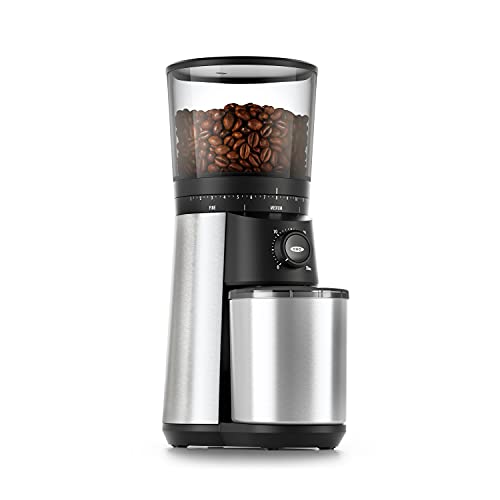
The fellow opus conical burr coffee grinder is a compact, electric grinder aimed at home brewers who want consistent grind size without the bulk or complexity of a commercial machine. It uses 40 mm conical burrs and offers a stepped adjustment system with a wide range of settings, which suits pour-over, drip, and French press brewing. It is a strong fit for people who brew several cups a day, care about repeatability, and want a grinder that looks at home on a countertop. It is less suited to espresso purists who need very fine, micro-adjustable control, and to anyone whose budget is tightly limited, since premium grinders of this type rarely sit at the entry level. Before deciding, compare its burr geometry and adjustment style against the other options covered on this site.
Product Overview
The Opus is a standalone electric burr grinder from Fellow, a brand known for brewing accessories like kettles, carafes, and scales. Its design is minimal: a rounded body, a single dosing chute, a removable hopper, and a front-mounted control for selecting grind size and starting the grind. Fellow positions it as a grinder that prioritizes ease of use and clean output over feature density.
The core idea is conical burrs paired with a motor sized for home volumes. Conical burrs are commonly associated with lower retention and a grind distribution that many brewers find forgiving across methods. For background on how that compares to flat designs, see Flat vs Conical Burr Grinders: What Actually Differs and Burr Coffee Grinders: Flat vs Conical Burrs, Consistency and Retention.
Because the Opus is designed for everyday use rather than dosing for espresso, its appeal centers on drip, pour-over, and immersion brewing. If you are new to burr grinders in general, Burr Coffee Grinder Guide: How to Choose and Use One explains the basic trade-offs before you commit.
Key Features & Specifications
The table below lists the specifications the manufacturer publishes. Where a detail is not confirmed in published material, it is left out rather than estimated.
| Feature | Specification |
|---|---|
| Grinder type | Electric conical burr |
| Burr size | 40 mm conical burrs |
| Grind adjustment | Stepped dial with multiple grind settings |
| Hopper | Removable bean hopper |
| Dosing | Single-dose and bulk grinding supported |
| Intended use | Drip, pour-over, French press, and similar methods |
| Design | Compact countertop footprint |
Burr size matters because it affects grind uniformity and throughput. A 40 mm conical set sits in the range many home grinders use, large enough for consistent results without the footprint of commercial burrs. For a deeper look at how burr size relates to adjustment and effort, see Manual Coffee Grinders: Burr Size, Adjustment and Grinding Effort, which covers the same principles even though it focuses on hand models.
Pros & Cons
Pros
- Conical burrs are a sound choice for consistent drip and pour-over grinds.
- Compact footprint suits small kitchens and countertops.
- Stepped adjustment makes it easy to return to a previous setting.
- Removable hopper simplifies bean changes and cleaning.
- Clean, minimal design that pairs well with Fellow’s other brewing accessories.
Cons
- Not designed for fine espresso work requiring very precise micro-adjustment.
- Premium positioning means it is not a budget pick.
- Like most burr grinders, retained grounds can carry flavor between batches if not purged.
- Limited appeal for users who want programmable timers or extensive digital controls.
Performance Analysis
This review is based on published specifications and recurring patterns that owners tend to describe in feedback, not on hands-on testing. Owners often report that the grinder produces a uniform, fairly even grind across mid-range settings, which is where most drip and pour-over brewing sits. Conical geometry generally produces fewer extreme fines and boulders than some flat designs, and that is a common reason owners cite for smoother cup balance.
Owners often report that the stepped dial is intuitive, though some note that the gap between adjacent steps can feel coarse when chasing a very small change in extraction. This is a real consideration if you dial in by small increments. Pairing the grinder with a scale and a logging routine helps you isolate the effect of each step. The principles in How to Adjust a Manual Coffee Grinder apply equally when you are working with a stepped electric grinder.
Retention, the amount of ground coffee left inside the grinder after a run, is a factor with every burr design. Owners frequently mention purging a small amount of coffee between different beans to avoid flavor carryover. Routine cleaning also matters. For a step-by-step approach, see How to Clean a Coffee Grinder.
Throughput and noise are typical for a home electric grinder. Expect a brief whir and a grind time scaled to dose size. Owners who grind a full bag weekly tend to find the workflow comfortable, while those who grind very large batches may prefer a higher-capacity machine.
Who Should Buy This Product?
The Opus fits home brewers who make drip coffee, pour-over, or French press regularly and want a dependable grinder with a tidy footprint. It also suits people who value a consistent, repeatable grind more than an extensive list of programmable functions. If you want to step up from a blade grinder but are not ready for a large commercial unit, it is a logical middle option.
You should skip it if your main brew is espresso and you need fine, micro-adjustable control, or if your budget only allows an entry-level machine. Owners who grind very large volumes every day may also find a larger grinder more practical. For a broader comparison of home options, Best Burr Coffee Grinders for Home Brewing lays out the field.
Buying Guide
When evaluating any burr grinder, start with the brew method. Drip and immersion methods tolerate a broader range of grind sizes, while espresso demands fine, stable adjustment. Next, consider burr type, adjustment resolution, hopper and retention behavior, and how easy the grinder is to clean. How to Choose a Coffee Grinder for Your Brew Method walks through that decision in more detail.
Look at adjustment style closely. Stepped dials are quick and repeatable. Stepless designs give finer control but take longer to dial in. Neither is universally better, so match the choice to how often you change settings. Burr Coffee Grinder Guide: How to Choose and Use One covers this trade-off.
Several well-known alternatives are worth comparing against the Opus:
- Baratza Encore ESP, a widely recognized home burr grinder with a compact body and a fine-adjustment option. View on Amazon
- Breville Smart Grinder Pro, a home grinder with multiple grind settings and a dose control feature. View on Amazon
- Timemore C3 hand grinder, a manual conical option for those who prefer a smaller, quieter workflow. View on Amazon
For a guide to picking among electric options specifically, see Electric Coffee Grinder Guide: How to Choose and Use One.
FAQ
Is the Fellow Opus good for espresso?
It is primarily positioned for drip, pour-over, and immersion methods. Espresso requires very fine and stable adjustment, which is not the grinder’s main focus. Check the manufacturer’s current guidance before buying if espresso is central to your routine.
Does the Opus use conical or flat burrs?
It uses conical burrs. For a comparison of the two designs, see Flat vs Conical Burr Grinders: What Actually Differs.
How often should I clean the grinder?
Owners commonly brush out the burr chamber and chute regularly and do a deeper clean periodically, especially when switching between oily and light roasts. Follow the manufacturer’s instructions for disassembly, and avoid water on electrical components.
Is it a good choice for beginners?
Owners often describe the controls as simple, which helps newcomers. Beginners should still learn basic dialing in, since grind size drives most of the taste difference in drip coffee.
How do I know when the burrs need replacing?
Signs include inconsistent grind size, a rise in fines, or changes in flavor clarity. When to Replace Coffee Grinder Burrs describes the warning signs in detail.
Does retention affect flavor?
Yes, retained grounds from a previous coffee can carry into the next brew. Purging a small amount between different beans reduces this effect. For a general primer, How to Evaluate a Coffee Grinder Before You Buy covers retention and related metrics.
Can I grind for a French press with it?
Yes. Set a coarser step and grind a fresh dose right before brewing. Owners who brew immersion coffee often report good results with the coarser end of the range.
Final Verdict
The Opus is a thoughtfully designed home grinder with conical burrs, a compact footprint, and a simple stepped adjustment. It is well suited to drip, pour-over, and French press brewers who want consistency and a clean countertop look, and it is a weaker choice for espresso-focused users or anyone working with a tight budget. Weigh its adjustment style against your workflow, and compare it with the alternatives above before you buy. You can find the current listing here: View on Amazon.

About Evelyn Lawson
Evelyn puts together our coffee gear & accessories guides, digging through specifications, manufacturer details and owner reviews so you don't have to.