By Evelyn Lawson
As an Amazon Associate I earn from qualifying purchases. This page may contain affiliate links.
A flat burr espresso grinder is one of the most useful upgrades a home barista can make, because espresso is unforgiving about particle size. Flat burrs tend to produce a more uniform grind distribution than many conical designs, which can translate into more even extraction and clearer shot flavor. This guide covers five flat burr options that fit different kitchens and workflows. Our selection criteria were built on published specifications, brand reputation and patterns in owner feedback: burr size, adjustment range, retention, dosing style, and how well each unit fits a standard espresso portafilter. We did not run these grinders ourselves, so treat the picks as a research-based shortlist rather than hands-on verdicts.
Our Top Picks
Quick Comparison
| Product | Best for | Key feature |
|---|---|---|
| AMZCHEF Burr Coffee Grinder, 48 Settings | Budget-minded beginners who want espresso-capable settings | 48 grind settings with a 40mm burr and low retention |
| MOKKOM 64mm Flat Burr Coffee Grinder | Home baristas who want a larger flat burr and fine control | 64mm flat burr with 100 grind settings |
| Viesimple Gen 4 Electric Burr Coffee Grinder | Single-dose enthusiasts in small kitchens | Magnetic dosing cup and anti-static design |
| MiiCoffee DF64 II Single Dosing Coffee Grinder | Users who prioritize a single-dose workflow | 64mm flat burr built for single dosing |
| Tuni G3 Commercial 64mm Flat Burr Coffee Grinder | Users who want an all-metal, high-capacity build | 64mm flat burr, 100 settings, all-metal body |
AMZCHEF Burr Coffee Grinder, 48 Settings, Less Static Mess, Metallic Silver
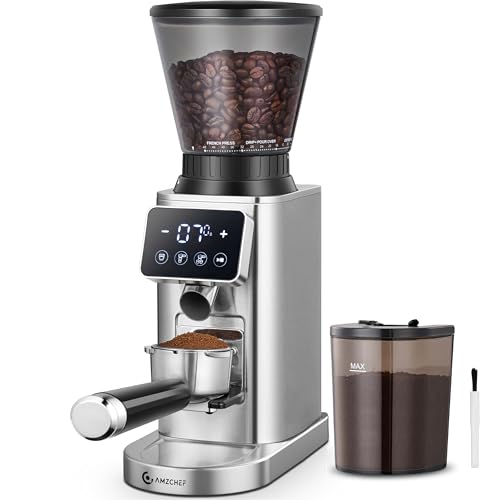
AMZCHEF Burr Coffee Grinder, 48 Settings, Less Static Mess, Metallic Silver | 40mm Burr, Low Retention, 0.5s LED Timer, Stainless Steel Body, Fit 51-54/58 Espresso Portafilter, Cleaning Brush Included
This grinder suits someone starting out with espresso who wants a compact unit with a clear, usable range of settings and a portafilter-compatible design. It is a sensible entry point if you are still learning how grind size affects your shots.
Key specs
- 40mm burr
- 48 grind settings
- Stainless steel body
- Fits 51-54/58 espresso portafilter
- 0.5-second LED timer
- Cleaning brush included
Pros
- Stepped settings are easy to log and repeat.
- Low retention means less stale grounds between brews.
- Includes a cleaning brush for routine maintenance.
Cons
- A 40mm burr is smaller than many dedicated espresso flat burrs, which can limit consistency at very fine settings.
- Owners often mention that the adjustment dial requires some patience to dial in exact espresso settings.
MOKKOM 64mm Flat Burr Coffee Grinder, Espresso Grinder, 100 Grind Settings

MOKKOM 64mm Flat Burr Coffee Grinder, Espresso Grinder,100 Grind Settings | Coffee Bean Grinder with Electronic Timer,Stainless Steel Body&Anti-Static for espresso, pour over and French press brewing
This model is aimed at home baristas who want a larger flat burr and fine, granular control for espresso as well as pour-over and French press. If you plan to dial in shots frequently, the 100-setting range gives you room to make small adjustments.
Key specs
- 64mm flat burr
- 100 grind settings
- Electronic timer
- Stainless steel body
- Anti-static design
Pros
- The 64mm burr is a common size for dedicated espresso grinders.
- Fine settings support espresso as well as other brew methods.
- Electronic timer helps standardize dose time.
Cons
- Owners sometimes report that a high number of settings takes time to learn.
- Static can still appear with very dry beans, so a grinding puck or anti-static tool may help.
Viesimple Gen 4 Electric Burr Coffee Grinder, Single Dose, Espresso, Black

Viesimple Gen 4 Electric Burr Coffee Grinder, Single Dose, Espresso, Black | Magnetic dosing cup, anti-static design and compact quiet workflow help keep daily home brewing cleaner and more consistent
This grinder is designed around a single-dose workflow, where you weigh or measure beans for each shot and grind them all at once. It suits a small kitchen or a home barista who values cleaner counters and minimal retention.
Key specs
- Single-dose design
- Magnetic dosing cup
- Anti-static design
- Compact footprint
Pros
- Magnetic dosing cup simplifies transferring grounds.
- Anti-static design helps reduce grounds scattering.
- Compact size fits limited counter space.
Cons
- Single-dose workflow requires weighing beans for each shot, which adds steps.
- Owners may want more detailed burr specifications before buying, as they are not always prominent in the listing.
MiiCoffee DF64 II Single Dosing Coffee Grinder (Black)

MiiCoffee DF64 II Single Dosing Coffee Grinder (Black)
The DF64 line is widely associated with single-dose espresso grinding. This version suits a home barista who wants a dedicated espresso-oriented flat burr and is comfortable with a single-dose routine.
Key specs
- 64mm flat burr
- Single-dose design
Pros
- 64mm flat burr is a common espresso-grade size.
- Single-dose design minimizes retention and stale grounds.
- Compact enough for most home counters.
Cons
- Single dosing can be less convenient for multi-cup mornings.
- Fine adjustment takes practice to master.
Tuni G3 Commercial 64mm Flat Burr Coffee Grinder, 100 Grind Settings, Ivory
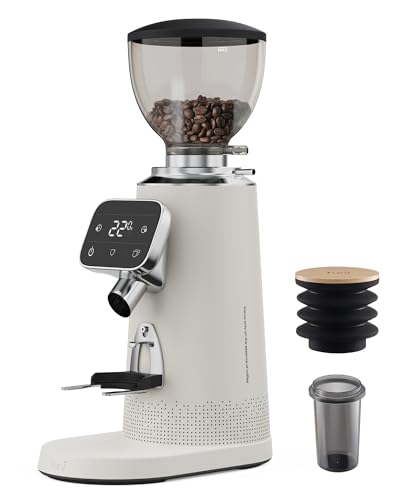
Tuni G3 Commercial 64mm Flat Burr Coffee Grinder, 100 Grind Settings, Ivory | Electric Espresso Grinder with Single Dose, Anti-Static Tech, All-Metal Stainless Steel Body for Drip/Cold Brew/French Pre
This grinder targets users who want an all-metal, heavier-feeling build with a 64mm flat burr and wide settings range. It fits a home barista who wants a sturdier machine for frequent espresso and batch brewing.
Key specs
- 64mm flat burr
- 100 grind settings
- All-metal stainless steel body
- Anti-static technology
- Single-dose capable
Pros
- All-metal body suits frequent use.
- 100 settings allow fine espresso adjustment.
- Works across espresso, drip, cold brew and French press.
Cons
- Heavier build means less portability.
- Owners sometimes note that the settings dial needs careful calibration for espresso.
Buying Guide
Selection Criteria for a Flat Burr Espresso Grinder
When comparing a flat burr grinder for espresso, start with the burr size. Dedicated espresso grinders commonly use burrs in the 58mm to 64mm range, while smaller burrs are often sized for drip or general use. Next, look at adjustment: espresso needs very fine, repeatable control, so a high number of settings or stepless adjustment matters. Retention, the amount of ground coffee left inside the grinder after use, affects freshness and how easily you can change beans.
Important Features
- Burr size and material: Larger flat burrs generally produce a more even grind distribution for espresso.
- Adjustment range: Look for fine settings that are repeatable, not just a high number on paper.
- Dosing style: Hopper-fed grinders suit multi-shot routines, while single-dose designs suit weighed, one-shot workflows.
- Static control: Anti-static features help keep grounds out of your workspace.
- Portafilter fit: Confirm the grinder’s chute or cup fits your portafilter size (commonly 51–54mm or 58mm).
Specs to Check Before You Buy
Check burr diameter, number and type of settings, dosing method, body material, and whether the chute fits your portafilter. Also review the manufacturer’s stated maintenance guidance, since burrs wear over time. The Burr Coffee Grinders: Flat vs Conical Burrs, Consistency and Retention article explains how retention and burr geometry affect the grind you get.
Choosing by Need
- New to espresso: A compact unit with clear, stepped settings keeps the learning curve manageable.
- Serious dialing-in: Prioritize a larger flat burr and a fine, repeatable adjustment range.
- Small kitchen or single-dose fans: A compact single-dose design with a dosing cup can keep the workflow tidy.
- Multi-method brewing: Choose a grinder with a wide settings range that also handles drip and French press.
For more on how adjustment style affects espresso, see Espresso Grinders: Fine Adjustment, Stepless Settings and Single Dosing and Flat vs Conical Burr Grinders: What Actually Differs.
Things to Watch Out For
- Do not judge a grinder by setting count alone; check whether the fine end is repeatable.
- Single-dose workflows require weighing beans, which adds time to each shot.
- Static can make grounds cling to the chute, especially in dry climates.
- Burrs wear over time. Learn the signs before grind quality declines; see When to Replace Coffee Grinder Burrs.
FAQ
What is a flat burr espresso grinder?
A flat burr espresso grinder uses two flat, parallel burr surfaces to crush coffee beans into particles. Many home baristas prefer flat burrs for espresso because they can produce a more uniform grind distribution than some conical designs.
Is a flat burr grinder better than a conical burr grinder for espresso?
Flat burrs are often favored for espresso because of grind uniformity, but conical burrs also perform well and are common in quality grinders. The difference depends on burr geometry, size, and how well the grinder is calibrated. See Flat vs Conical Burr Grinders: What Actually Differs for a fuller comparison.
What burr size should I look for?
Many espresso-focused grinders use burrs in the 58mm to 64mm range. Smaller burrs can still work, but larger flat burrs are generally associated with more even espresso grinds.
Do I need a single-dose grinder?
Not necessarily. Single dosing suits weighed, one-shot routines and minimizes stale grounds. If you make several shots at once or want a faster morning routine, a hopper-fed grinder may suit you better.
How do I reduce static with a flat burr grinder?
Anti-static features help, and a grinding puck or a light tap on the chute can also reduce clinging grounds. Dry beans and low humidity tend to increase static.
How often should I clean my espresso grinder?
Owners often brush out grounds after each session and perform a more thorough cleaning periodically, following the manufacturer’s instructions. Regular cleaning protects flavor and keeps the grinder performing consistently.
Should I consult anyone before buying a grinder?
Grinders are consumer kitchen appliances, so no professional consultation is required. If you have a physical limitation affecting how you handle heavier equipment, consider an occupational therapist or a retailer with a clear return policy.
Conclusion
For most home baristas, the right flat burr espresso grinder comes down to workflow and counter space. The AMZCHEF unit suits beginners who want stepped, approachable settings. The MOKKOM and Tuni G3 models, both with 64mm flat burrs and 100 settings, suit users who want finer control and a sturdier build. The Viesimple Gen 4 and MiiCoffee DF64 II lean toward single-dose routines, which reward careful weighing and minimal retention. Match the grinder to how you actually brew, and you will get the most from your espresso.

About Evelyn Lawson
Evelyn puts together our coffee gear & accessories guides, digging through specifications, manufacturer details and owner reviews so you don't have to.