
 By Audrey Hayes
Updated November 2026
The bodum bistro conical burr electric coffee grinder suits home brewers who want a simple, budget-friendly way to move from pre-ground coffee to fresh grounds without learning a complicated machine. It is a good match for people brewing drip coffee, French press, or pour-over a few times a day, and who want a timer and a range of grind sizes. It is a weaker choice for espresso purists who need very fine, repeatable dosing, anyone who wants a built-in scale or dosing workflow, or buyers who grind large batches every morning for a household and want a bigger hopper and faster throughput.

Bodum Bistro Electric Conical Burr Coffee Grinder, Preset Timer, 12 Grind Settings, Black
Product Overview
The Bodum Bistro Electric Conical Burr Coffee Grinder is a countertop grinder built around a conical burr set rather than the flat burrs found in many entry-level blade-free models. Conical burrs are generally described by owners and reviewers as producing a more even particle distribution at coarser settings, and they tend to run cooler than flat burrs at equivalent speeds. The grinder is listed with a preset timer and twelve grind settings, which lets you dial in a repeatable amount of coffee per brew cycle without weighing each dose.
The unit is styled to match Bodum’s Bistro line of kitchen products, with a black finish and a compact footprint that fits on most counters under a cabinet. It is aimed at the home brewer who has outgrown blade grinders and wants something more consistent without moving into a higher-end prosumer grinder with stepless adjustment and a larger bean capacity. Because the listing names its preset timer and twelve settings, those are the features you can count on; anything beyond that should be verified against the manufacturer’s manual before purchase.
If you are new to burr grinding, it helps to understand the basic trade-off. Burr grinders crush beans between two abrasive surfaces, so the spacing between burrs controls particle size. Conical burrs, which have a cone-shaped inner burr nested inside a ring-shaped outer burr, are often favored for home use because they are forgiving across a wide range of settings. For background on how the two main burr geometries differ, see Flat vs Conical Burr Coffee Grinder: Which Gives Better Brew? (2026).
Key Features & Specifications
The table below lists only the specifications the product name and standard descriptions make clear. Confirm dimensions, bean capacity, and voltage on the product page or in the included manual before buying, as those details can vary by listing and region.
| Feature | What It Means for You |
|---|---|
| Burr type | Conical burr set; generally associated with even grounds and lower heat during grinding |
| Grind settings | 12 settings, enough for drip, pour-over, French press, and similar brew methods |
| Preset timer | Lets you set a grind duration for repeatable dose sizes |
| Power | Electric operation; plug in and grind without manual cranking |
| Color | Black finish |
| Brand line | Bodum Bistro series |
The timer is the feature that most separates this grinder from simpler, timer-free models. Setting a consistent grind time, combined with a fixed grind setting, gives you a more predictable dose from one morning to the next. You will still want to check your dose by weight the first few times, since bean density, roast level, and humidity all change how much coffee a given time produces.
Pros & Cons
Pros
- Conical burr design, which owners commonly describe as producing a more uniform grind than blade grinders.
- Twelve grind settings give room to adjust between coarse French press and medium drip.
- Preset timer supports repeatable doses once you find your preferred time.
- Compact, countertop-friendly footprint suited to smaller kitchens.
- Electric operation saves effort compared with manual hand grinders.
- A solid entry point for home brewers upgrading from pre-ground coffee or blade models.
Cons
- Twelve settings are fewer than many stepless or 40-plus-setting grinders, so fine-tuning espresso or pour-over can be limited.
- Timer-based dosing is less precise than weighing beans, and output can drift with bean type and roast.
- Owners who grind large batches may find the capacity modest for a whole household.
- No integrated scale, so you will need a separate kitchen scale for consistent recipes.
- Retention (coffee left inside the grinder after a cycle) is a general characteristic of burr grinders, and you should expect some carryover between batches of different beans.
Performance Analysis
Based on the listed specifications and the general patterns reported by owners of conical burr electric grinders in this class, the Bistro is best judged on consistency for medium-coarse to medium brewing. Conical burrs tend to produce a fairly even distribution of particle sizes at these settings, which generally means cleaner extraction and less bitterness from over-extracted fines. Owners of comparable grinders often report that the biggest source of inconsistency is not the burr itself but how they set the timer and how stale the beans are, so the variables you control matter as much as the hardware.
For drip and pour-over, a medium setting combined with a timed dose is the most common starting point. Many owners recommend starting at a middle setting, brewing a test cup, and adjusting one step at a time. If your cup tastes sour and thin, the grind is likely too coarse; if it tastes harsh or bitter, it is likely too fine. The Bistro’s twelve settings give enough range to correct these issues across most brew methods, though very fine espresso work may push past what this grinder is designed for.
Throughput is modest. For a single pot or a couple of cups, the wait is short and the experience is comfortable. For a household brewing several pots daily, you may find yourself grinding in multiple batches. The timer helps here because you can set the same duration every time and avoid guessing. As with any burr grinder, let the machine run through its full cycle and tap out residual grounds if you switch between beans of very different flavor profiles. For a deeper look at why uneven grounds occur and how to address them, see Why Is My Conical Burr Coffee Grinder Producing Uneven Grounds? Causes and Fixes.
Who Should Buy This Product?
This grinder fits best if you brew one to three cups a day using drip, French press, or pour-over, and you want a timed, repeatable dose without a large investment in equipment. It also suits someone replacing a blade grinder who wants a noticeable step up in consistency and is willing to dial in the timer a few times to find a sweet spot. Office kitchens, small apartments, and guest-friendly setups are natural fits because of the compact size and simple controls.
You should skip this grinder if you plan to pull espresso regularly, since espresso needs finer, more repeatable adjustment than twelve settings and timer dosing typically provide. Skip it also if you grind for a large family or café-style volume, or if you want an integrated scale and weight-based dosing. Buyers in those situations are generally better served by a grinder with more settings, a bigger hopper, or built-in weighing.
Buying Guide
Before buying any electric conical burr grinder, decide what you brew most often. Drip and French press are forgiving and work well on entry-level burrs. Espresso demands finer control, so if that is your main method, look for a grinder with more settings or stepless adjustment. Next, consider capacity: a small bean hopper is fine for daily single pots but becomes tedious if you refill often. Finally, think about cleaning. Burr grinders accumulate oils and fines, and models with easy-to-remove burrs or a brush included make upkeep simpler.
Several well-known alternatives are worth comparing. The OXO Brew Conical Burr Electric Coffee Bean Grinder offers a larger bean capacity and a wider set of grind options with one-touch operation, which may appeal to buyers who want more flexibility than the Bistro provides.

OXO Brew Conical Burr Electric Coffee Bean Grinder – 12 Oz, Silver | Stainless Steel Burrs, One-Touch Automatic, 43 Grind Settings For Drip Coffee, French Press, Cold Brew
The Ollygrin Burr Coffee Grinder is an electric conical burr model with thirty adjustable grind settings, a noticeably wider range than the Bistro’s twelve, and it is sized for two to twelve cups. It suits buyers who want more granularity for pour-over and similar methods without moving to a premium price tier.
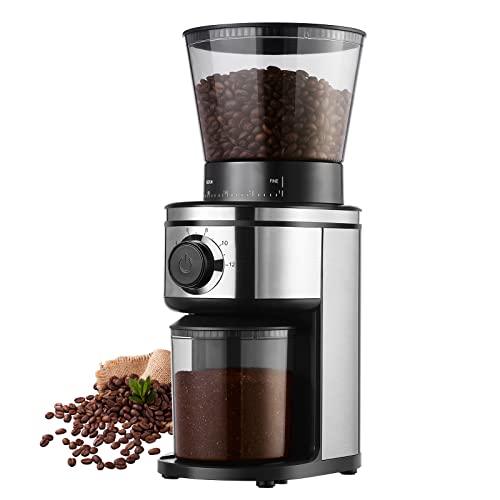
Ollygrin Burr Coffee Grinder, Electric Conical Coffee Bean Grinder With 30 Adjustable Grind Settings For 2-12 Cups, Sliver & Black
For a wider look at how these grinders stack up across features and use cases, you may find 5 Best Bodum Bistro Burr Coffee Grinder Models Compared (2026) helpful, along with Electric Coffee Burr Grinder: Which Type Should You Buy and How to Use It? for general selection advice.
FAQ
Is the Bodum Bistro conical burr grinder good for espresso?
It is generally better suited to drip, French press, and pour-over. Espresso needs very fine and highly repeatable adjustment, and twelve settings with timer dosing may not give you the control you want. Owners who do pull espresso often report needing a grinder with more settings or stepless adjustment.
How do I set the preset timer?
Start with a medium grind setting and a timer duration that yields enough coffee for one cup or pot. Weigh the output the first few times to learn how many grams a given time produces, then keep the setting and time consistent for repeatable results. Refer to the manufacturer’s manual for the exact button sequence on your unit.
What grind setting should I start with for drip coffee?
A middle setting is a common starting point for drip. Brew a test cup, then adjust one step at a time. Sour or thin coffee usually means the grind is too coarse, and harsh or bitter coffee usually means it is too fine.
How often should I clean a conical burr grinder?
Clean the hopper and grinding area regularly, and brush out fines and oils at least weekly if you grind daily. Check the manual for guidance on removing burrs, since cleaning methods differ by model. Avoid submerging electric components in water.
Does the grinder produce uniform grounds?
Conical burrs are generally associated with a more even particle distribution than blade grinders. Consistency also depends on the setting you choose, the bean’s freshness, and whether the burrs are clean. Owners commonly find that results improve once they settle on a fixed setting and timer.
Can I grind spices in it?
Manufacturers of most burr grinders advise against grinding spices, because oils and strong aromas can transfer to later coffee batches and may affect the burrs. Use a dedicated spice grinder instead.
Is it suitable for a large household?
It can work, but the capacity is modest for brewing several pots a day. Households with heavy coffee use may prefer a grinder with a larger hopper and more throughput.
Final Verdict
Should you buy it?
The Bodum Bistro Electric Conical Burr Coffee Grinder is a sensible, budget-friendly choice for home brewers who make drip, French press, or pour-over coffee for one to three cups a day. Its conical burrs, twelve grind settings, and preset timer give you a meaningful step up from blade grinding without a steep learning curve. It is not the right tool for daily espresso, large-batch households, or anyone who wants weight-based dosing. If your brewing fits the first profile, it is a practical place to start. You can view current listing details here: View on Amazon.
Note: specifications and feature details are drawn from the product listing and general owner-reported patterns. Confirm dimensions, capacity, and warranty terms with the manufacturer before purchase.
Related reading
About Audrey Hayes
Audrey Hayes is part of our editorial team and reviews and edits our coffee gear & accessories guides, checking product details against manufacturer specifications and owner feedback.








