
 By Audrey Hayes
Updated November 2026
The bodum bistro conical burr grinder is an electric, countertop grinder aimed at home brewers who want consistent grounds without stepping up to a commercial-style machine. It pairs conical burrs with a preset timer and 12 grind settings, which makes it a reasonable fit for drip coffee, pour-over, and French press. It is a weaker choice for anyone who wants espresso-fine grinding, precise micro-adjustments, or a stepless dial. Read on for the specifications, the trade-offs owners commonly mention, and how it compares with two other grinders in the same general class.

Bodum Bistro Electric Conical Burr Coffee Grinder, Preset Timer, 12 Grind Settings, Black
Product Overview
The Bodum Bistro Electric Conical Burr Coffee Grinder is a black, tabletop unit from Bodum, a brand best known for French presses, kettles, and glassware. The Bistro line is designed to sit on a counter without much visual footprint, and this model is built around a conical burr set rather than the flat burrs found in many budget blade-style grinders. Conical burrs turn beans between a cone-shaped inner piece and a ring-shaped outer piece, which generally produces a wider spread of particle sizes than flat burrs do at the same setting, so that is worth keeping in mind when you judge the grind quality.
The main draw is simplicity. You fill the bean hopper, choose a grind setting from 12 positions, set a timer for the dose, and press start. The machine is aimed at people who grind a few times a day and want a predictable result without learning a complicated interface. It is not a dosing scale, a single-dose workstation, or a grinder with built-in weighing, so anyone expecting those features should look elsewhere.
Key Features & Specifications
The table below lists the features that are stated in the product name and well established for this model. Where a detail is not something I can confirm with confidence, I have left it out rather than guess.
| Feature | Details |
|---|---|
| Grinder type | Electric conical burr |
| Grind settings | 12 selectable positions |
| Timer | Preset timer for consistent dose time |
| Color | Black |
| Form factor | Countertop, Bistro styling |
| Intended use | Drip, pour-over, French press, and similar brew methods |
Because the grinder uses a preset timer rather than a weight-based dose, your cup count will depend on the bean density and the time you set. Most owners find it easiest to dial in once with a sample dose, note the timer setting, and reuse it. Keep a small log of the timer value, grind setting, and brew ratio so you can reproduce a good cup later.
Pros & Cons
Pros
- Conical burrs are generally quieter and run cooler than many blade or flat-burr grinders at comparable speeds, which helps preserve aroma during grinding.
- The 12 settings cover the range from coarse French press to medium drip, so one grinder can serve several brew methods.
- The preset timer makes repeat dosing simple, and owners who brew the same amount each morning tend to appreciate the consistency.
- The compact Bistro design fits on a small counter and does not dominate the kitchen.
- Operation is straightforward, with no learning curve for first-time grinder owners.
Cons
- Twelve settings is a coarse adjustment range for anyone chasing espresso or very fine grind sizes.
- Because the dose is timed rather than weighed, batch-to-batch consistency depends on the bean and your timer setting.
- Retention, meaning the grounds left inside the burr chamber after each cycle, is a common concern with conical grinders of this class, so expect some residual coffee between brews.
- It is a plastic-bodied countertop unit rather than a heavy metal grinder, which some buyers see as a durability trade-off.
- Cleaning the burrs and chute requires periodic attention to keep flavors clean.
Performance Analysis
Performance for a grinder like this comes down to three things: particle uniformity, retention, and how well the timer and settings map to your brew method. Conical burrs usually produce a cleaner, more even grind than basic blade grinders, which is the main reason to choose this type over a spinning-blade unit. For drip and French press, where grind size tolerance is relatively forgiving, the 12 settings are usually enough to find a good starting point.
Owner feedback for grinders in this price-conscious segment tends to follow recognizable patterns. Many people report that the grind is noticeably more uniform than what they had before, especially when they stick to a single setting for a given brew. Another common note is that the first few doses after a setting change can be slightly inconsistent while residual grounds clear out, so discarding a small amount after switching settings is a practical habit. Retention is the other frequently discussed point. Owners who brew small quantities sometimes notice that the cup tastes slightly stale or that the dose comes out lighter than the timer suggests, which is typical for this grinder style and is easier to manage with a regular cleaning routine.
For espresso, the setting range and the timer-based dose are not ideal, and I would not recommend this grinder for that purpose. For pour-over, you will likely need to experiment with the middle settings and adjust your brew time to balance extraction. Keep in mind that owner experiences vary with bean roast, humidity, and how carefully the burrs are cleaned, so treat any reported result as a general pattern rather than a guarantee.
Who Should Buy This Product?
This grinder suits a home brewer who makes drip coffee, pour-over, or French press most days and wants a clear step up from a blade grinder without a complicated setup. It also suits someone who values a tidy countertop appliance and a simple timer-based routine. Households that brew one or two cups at a time may find the dose less convenient, but that is a manageable trade-off for many people.
You should skip this grinder if you primarily brew espresso, want precise stepless adjustment, need a dosing scale built into your workflow, or plan to grind very large batches for a café-style setup. Anyone who wants the finest possible control over particle size will be better served by a grinder with more settings or a stepless dial.
Buying Guide
When choosing a grinder in this category, start with your brew methods. A grinder with 12 settings works well for coarse to medium grinds, while espresso requires a much finer and more adjustable range. Next, decide whether you want timer-based dosing or weight-based dosing. Timer-based grinders are simpler, while weight-based workflows give more repeatable results when you change beans often. Finally, look at burr type. Conical burrs usually give a more uniform grind than basic blade grinders, and many home brewers consider that the most important upgrade.
If you are comparing options, two well-known alternatives are worth a look. The OXO Brew Conical Burr Coffee Grinder offers a different approach to dosing and is often discussed alongside conical grinders in this price band.
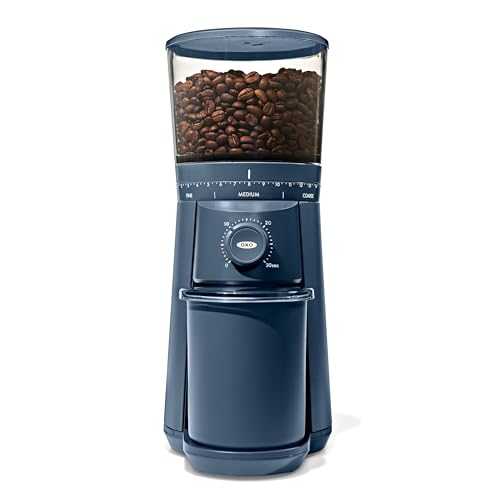
OXO Brew Conical Burr Electric Coffee Bean Grinder – 12 Oz, Storm Blue | OXO Brew Conical Burr Coffee Grinder, Coffee Bean Grinder
The Ollygrin Burr Coffee Grinder is another electric conical option with a larger number of grind settings, which may appeal to people who want finer control than a 12-setting unit provides.
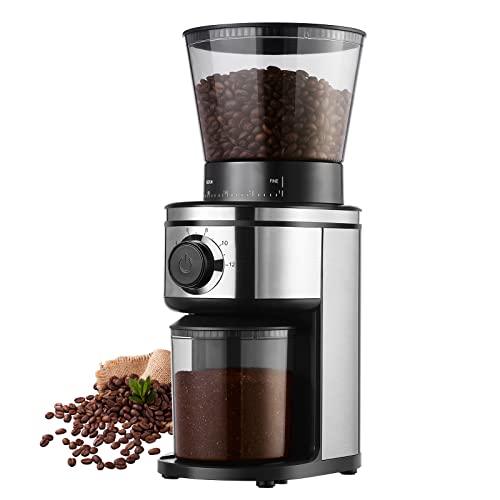
Ollygrin Burr Coffee Grinder, Electric Conical Coffee Bean Grinder With 30 Adjustable Grind Settings For 2-12 Cups, Sliver & Black
For more context on how burr geometry affects the cup, see Flat vs Conical Burr Grinders: What Actually Differs and Burr Coffee Grinders: Flat vs Conical Burrs, Consistency and Retention. If you are shopping specifically in this family of grinders, 6 Best Bodum Bistro Electric Burr Grinder Models for Home Brewing (2026) and 4 Best Bodum Bistro Conical Burr Electric Coffee Grinder Blacks (2026): Our Picks compare related models side by side. Owners who run into uneven grounds can also check Why Is My Conical Burr Coffee Grinder Producing Uneven Grounds? Causes and Fixes.
FAQ
Is the bodum bistro conical burr grinder good for espresso?
Generally, no. The 12 settings and timer-based dosing are better suited to drip, pour-over, and French press. Espresso needs finer, more adjustable control than this grinder is designed to offer.
How many grind settings does it have?
The grinder offers 12 selectable grind settings, which cover coarse through medium grinds for most common home brew methods.
Does it have a timer?
Yes, it includes a preset timer that controls how long the grinder runs, which helps you repeat the same dose.
Why do I get uneven grounds with this grinder?
Uneven grounds often come from retained coffee left in the chamber, a recently changed setting, or burrs that need cleaning. Discarding the first small dose after changing settings and cleaning the burrs regularly usually helps. Owners frequently report these as the main causes.
Is it difficult to clean?
It requires periodic cleaning of the burrs and chute, but the process is not especially complicated. Follow the manufacturer’s instructions and avoid soaking electrical components. For a general routine, see OXO Conical Burr Grinder Cleaning: A Step-by-Step Guide for Home Brewers.
Is it loud?
Conical burr grinders are generally quieter than many blade grinders, but any electric grinder produces noticeable sound while running. Owner experiences vary, so consider where you will place it.
Who is this grinder best for?
It is best for home brewers who make drip or French press coffee regularly, want a simple timer-based workflow, and prefer a compact countertop unit.
Final Verdict
The bodum bistro conical burr grinder is a sensible choice for home brewers who want more uniform grounds than a blade grinder can deliver, with a simple interface and a compact footprint. Its 12 settings and preset timer make it practical for drip, pour-over, and French press. It is not the right tool for espresso, precision tinkerers, or anyone who needs weight-based dosing. Weigh your brew methods and your tolerance for timer-based dosing before you buy, and compare it with the alternatives above.
View on AmazonRelated reading
- Conical Burr Grinder Bodum (2026): Which Should You Choose?
- Bodum Bistro Electric Burr Coffee Grinder (2026): Which Should You Choose?
About Audrey Hayes
Audrey Hayes is part of our editorial team and reviews and edits our coffee gear & accessories guides, checking product details against manufacturer specifications and owner feedback.









