 By Audrey Hayes
Updated November 2026
A burr coffee grinder works by pulling whole beans between two abrasive surfaces, called burrs, that crush and cut them into particles. The distance between the burrs sets the grind size, and because each bean passes through the same gap, the grounds come out more uniform than blade grinders produce.
Why burrs produce more even grounds
Most home burr grinders use one of two designs. Flat burrs are two ring-shaped discs facing each other. Conical burrs use a cone-shaped inner piece that spins inside a ring-shaped outer one. In both designs, one burr stays fixed while the other rotates, usually driven by a motor through a gear or direct shaft.
Shopping for one? See our guide: Oxo Brew Conical Burr Coffee Grinder: 7 Best Picks Compared (2026).
Beans fall into the top of the burr set, get pulled down by gravity and the rotation, and are fractured between the ridged, sharp surfaces. Grounds exit through the bottom once they are small enough to fall through the gap. Because the gap stays the same, the particles tend to land in a narrow size range. A blade grinder, by contrast, chops randomly and leaves fine dust alongside large chunks.
What controls grind size and consistency
Three factors matter most:
- Burr gap: A wider gap gives coarser grounds, a narrower gap gives finer ones. Many grinders use numbered or stepped settings, while others offer stepless adjustment.
- Burr geometry and condition: Sharp, well-aligned burrs cut cleanly. Dull or misaligned burrs crush more and produce extra fines.
- Feed and retention: Grounds that linger in the chute mix with fresh grounds on the next grind, which can make a single brew taste uneven.
Manufacturers generally specify that burrs should be replaced after a long service life, and the exact interval depends on use and bean type. Check your grinder’s manual for its guidance.
How to get the best results from your grinder
- Choose a grind size for your brewing method first. Pour-over often uses a medium setting, while French press uses a coarse one.
- Make one or two small adjustments at a time, then taste the result before changing again.
- Grind only what you need, since pre-ground coffee loses aroma faster than whole beans.
- Brush out the burr area and chute regularly to remove old grounds and oils.
- If grounds still look uneven, check alignment or burr wear before changing your technique.
What we’d use
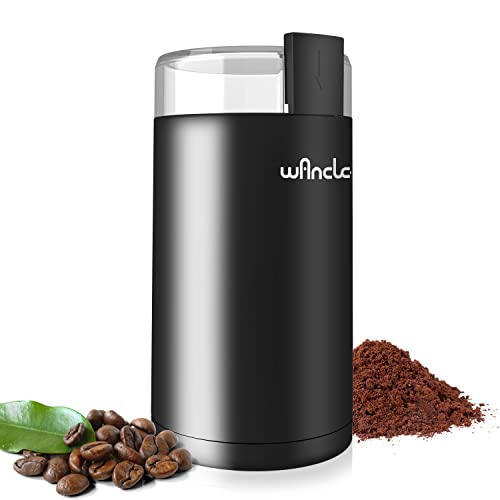
If you want a grinder with a reliable burr set and stepped settings for repeatable grind sizes, look for a conical burr model such as the View on Amazon, which many owners use for pour-over and drip brewing.
For a compact option that still uses burrs for even grounds, consider the View on Amazon, which is popular with home brewers who want a simple, stepped adjustment.
For a deeper look at uneven results on one specific model, see Why Does My OXO Burr Coffee Grinder Produce Uneven Grounds? Causes and Fixes. If you are comparing burr styles, Steel Burr Coffee Grinder: How to Choose and Use One for Better Brews covers the trade-offs, and When to Replace Coffee Grinder Burrs explains when worn burrs are the likely cause of inconsistent shots.
FAQ
What is the difference between flat and conical burrs?
Flat burrs use two facing discs and often produce a very uniform grind. Conical burrs use a cone inside a ring, which tends to run cooler and is common in home grinders.
Why do burr grinders need cleaning?
Coffee oils and fines build up on the burrs and in the chute. Regular brushing keeps flavor clean and helps the grinder feed consistently.
Can a burr grinder fix bitter coffee?
Often, yes. Bitterness can come from grounds that are too fine or from over-extraction. Adjusting to a coarser setting and checking your brew time usually helps. If you have health concerns about caffeine intake, consult a healthcare professional.
Related reading
- Oxo Conical Burr Coffee Grinder: Why Grounds Come Out Uneven and How to Fix It
- Burr Coffee Grinder Small: How to Choose a Compact Grinder That Grinds Evenly
Ready to choose one?
About Audrey Hayes
Audrey Hayes is part of our editorial team and reviews and edits our coffee gear & accessories guides, checking product details against manufacturer specifications and owner feedback.