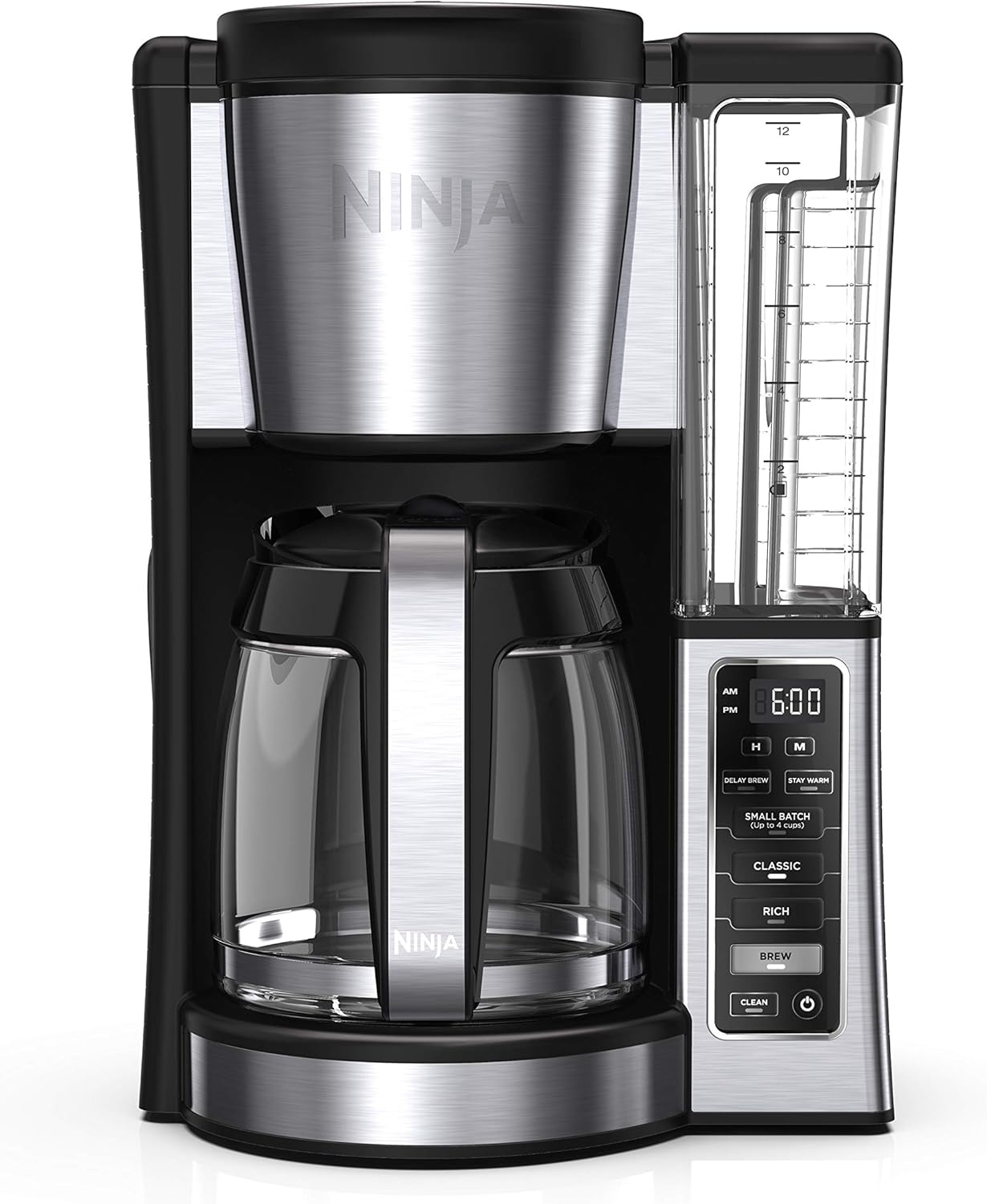
If you brew coffee for yourself or one other person, a full-size 12-cup machine often wastes counter space and leads to stale leftover coffee. Small coffee makers designed for one or two people come in several styles: compact drip machines with 4- or 5-cup carafes, single-serve pod brewers, manual pour-over cones, and small French presses. This guide explains what “cup” means on those machines, how to match brew size to your actual mug, and which features matter most for a small household.
What “4-Cup” or “5-Cup” Actually Means
Coffee maker manufacturers define a “cup” as about 5 to 6 fluid ounces, not the 8 to 12 ounces most people drink from a mug. A 4-cup drip machine therefore produces roughly 20 to 24 ounces of brewed coffee — enough for two standard mugs or one large travel mug. A 5-cup model yields about 25 to 30 ounces. Always check the carafe markings to see actual ounce lines. If you drink 12-ounce mugs, a 4-cup machine gives you less than two full mugs. For a single large mug, a 4-cup brewer works fine; for two people who each want a full mug, consider a 5-cup model or a single-serve brewer that makes 8 to 12 ounces at a time.
Main Types of Small Coffee Makers
Compact Drip Coffee Makers (4-Cup and 5-Cup)
These are the most familiar option: a small machine with a water reservoir, a filter basket, and a glass or thermal carafe. They brew a full pot in a few minutes. Many models have a pause-and-serve feature so you can pour a cup before the cycle finishes. Some are programmable, allowing you to set a timer for morning brewing. Others are simple on/off machines. The carafe is usually glass with a pouring spout and a handle. Thermal carafes are less common in this size but exist; they keep coffee hot without a hot plate, which can scorch the last cup if left on too long.
Pros: Familiar operation, can brew enough for two mugs, often inexpensive. Cons: Glass carafes can break; hot plate may overheat coffee if left on; half-batch brewing may not be optimal (some machines require a minimum water level).
Single-Serve Pod Brewers
Machines that use pre-packaged pods or capsules brew one cup at a time, with a choice of cup sizes on most models. They heat water quickly and produce coffee in under a minute. Some models also have a drip tray that can be removed to accommodate a taller travel mug. Pod brewers are very convenient for one person, but the ongoing cost of pods and the waste from used capsules are drawbacks. Some machines accept reusable pods filled with your own ground coffee, which cuts waste and lets you choose your beans.
Pros: Fast, no measuring, minimal cleanup. Cons: Pod cost and environmental impact; limited coffee strength and flavor control unless you use a reusable pod.
Pour-Over Cones
A manual pour-over setup requires a cone (plastic, ceramic, or metal), paper filters, a kettle, and a mug or carafe. The most compact option is a single-cup cone that sits directly on your mug. You boil water, wet the grounds, and pour in stages. It takes about 3 to 4 minutes of active attention but produces a clean, bright cup. For two people, you can use a larger cone that brews directly into a small carafe or simply make two separate cups.
Pros: Very small footprint, total control over brew variables, no electricity needed. Cons: Requires a gooseneck kettle for best results, more manual effort, and you need to heat water separately.
French Press (Small Size)
A French press is a cylindrical carafe with a plunger and mesh filter. Small sizes (12 to 17 ounces) serve one or two people. You add coarse ground coffee, pour hot water, steep for 4 minutes, then press. It’s simple, portable, and makes a full-bodied cup. Some models are insulated to keep coffee hot longer. Cleanup involves removing the grounds and rinsing the carafe and plunger.
Pros: No paper filters needed, rich flavor, durable. Cons: Sediment in the cup, requires a separate kettle, and the carafe is glass (unless you choose a stainless steel insulated version).
Features That Actually Matter for One or Two People
When choosing a small coffee maker, focus on these practical aspects rather than flashy extras:
- Brew size flexibility. Can the machine brew a half pot without problems? Some drip makers require a minimum water level to function properly, so you cannot make just one mug. Look for models that state a small minimum brew size or offer a half-batch setting.
- Carafe type. Glass carafes are common but fragile. If you break one, check if replacements are available. Thermal carafes keep coffee hot without a hot plate, which is better for flavor if you sip slowly. For a single person, a thermal carafe may be overkill; a glass carafe with a small hot plate works fine if you drink within 30 minutes.
- Programmability. A programmable timer lets you wake up to fresh coffee. This is especially useful if you want coffee ready when you get up. Many compact drip makers offer this feature; check the user manual for setup steps.
- Pause-and-serve. Allows you to pour a cup mid-brew. Essential if you cannot wait for the full cycle. Most drip machines in this size include it.
- Auto shut-off. Turns off the hot plate after a set time (often 2 hours). Saves energy and prevents burnt coffee. Look for this for safety and convenience.
- Water reservoir. A removable tank makes filling easier. Some compact machines have a fixed reservoir; you pour water into a top opening. Removable is more convenient.
- Filter type. Small drip machines use either small basket filters or cone filters (often size #2), so check which one your model takes. Some have a permanent mesh filter, which saves money but may let fine sediment through. Decide which you prefer.
Sizing, Fit, and Compatibility
Before buying, measure your counter space, especially the height under upper cabinets. Compare the height on each spec sheet: pour-over cones and small French presses are the shortest options, while drip machines and pod brewers vary a lot. If you plan to place the machine directly under a cabinet, ensure there is enough clearance to open the water reservoir lid and to remove the carafe. A common mistake is buying a machine that is too tall to fit under cabinets, forcing you to pull it forward every time you use it.
Also consider the footprint. A compact drip machine and a single-serve pod brewer take up a similar amount of counter space, while pour-over cones and French presses can live in a cupboard between uses. If counter space is very tight, a manual method like pour-over or French press may be the best fit.
For dorm rooms, check the appliance policy. Many dorms allow small coffee makers with automatic shut-off and no exposed heating elements, and some set wattage limits or ban certain appliances entirely. Confirm the rules before you buy. French presses and pour-over cones are almost always permitted because they require only hot water from a kettle.
Matching Brew Size to Your Daily Mugs
To avoid waste, consider how much coffee you actually drink. If you drink one 12-ounce mug in the morning, a 4-cup drip machine makes about 20 ounces, leaving 8 ounces that may go cold. You could save it for later, but reheated coffee is not as good. A single-serve pod brewer or a pour-over that makes exactly one mug is more efficient. If you and a partner each drink one 10-ounce mug, a 5-cup machine (30 ounces) gives you 10 ounces left over, which you could pour into a thermos. Alternatively, a small French press (17 ounces) makes just enough for two small mugs.
Some drip machines have a “half-brew” setting or a smaller basket for fewer cups. Read the manual to see if the machine can brew a smaller batch without sacrificing extraction. If you often brew just one mug, a single-serve method is usually more satisfying.
Common Buying Mistakes
- Ignoring the “cup” size. Assuming 4 cups means 4 mugs leads to disappointment. Always convert to ounces and compare to your mug size.
- Buying a machine that cannot brew a half pot. Some 4-cup machines require a full reservoir to function. If you only want one cup, you waste water and coffee.
- Overlooking the carafe replacement cost. Glass carafes break. Check if the manufacturer sells replacements and at what price. Some machines have unusual carafe shapes that are hard to find.
- Choosing a pod brewer without checking pod availability. Some pod systems are proprietary and may be discontinued. If you prefer reusable pods, ensure the machine accepts them.
- Forgetting about cleaning. Small machines still need regular descaling and cleaning. A drip machine with a removable water reservoir is easier to clean. Pod brewers need periodic cleaning cycles. Manual brewers are simplest to maintain.
- Not measuring cabinet height. A machine that is too tall will not fit under cabinets, forcing you to place it elsewhere or constantly move it.
Care, Cleaning, and Upkeep
All coffee makers require regular cleaning to prevent oil buildup and mineral scale. For drip machines, run a cycle with a descaling solution (or a mixture of white vinegar and water) every 1 to 3 months, depending on your water hardness. Follow the manufacturer’s instructions. Rinse thoroughly afterward. Wash the carafe and filter basket after each use. For pod brewers, run a cleaning cycle as directed; some models have a descaling mode. Replace the water filter if your machine uses one.
Pour-over cones and French presses need only a rinse after each use. Occasionally wash them with mild soap. French press mesh filters can trap coffee oils; disassemble and scrub with a brush every few weeks. For any machine, avoid using abrasive cleaners that could scratch surfaces. Always unplug before cleaning.
If you use a thermal carafe, do not put it in the dishwasher unless the manufacturer says it is dishwasher safe. Hand wash with a soft sponge. Glass carafes are often dishwasher safe, but check the manual.
FAQ
Can I use a 4-cup drip maker to brew just one cup?
It depends on the model. Some 4-cup machines need a minimum amount of water to brew properly. If you only want one mug, you may end up with a weak or incomplete brew. Look for machines that advertise “half-brew” capability or that have a smaller filter basket for fewer grounds. Alternatively, use a single-serve method.
What is the best small coffee maker for a dorm room?
Check your dorm’s appliance policy first. Many dorms allow compact drip makers with automatic shut-off, but rules and wattage limits vary. Manual brewers like a pour-over cone or French press are almost always allowed because they only need hot water from a shared kettle or microwave. A simple 4-cup drip machine with auto shut-off is a popular choice.
How do I keep coffee hot in a small carafe?
If your drip machine has a glass carafe on a hot plate, the coffee stays hot but can become bitter if left too long. Pour your cup and turn off the machine, or transfer leftover coffee to an insulated thermos. Thermal carafes keep coffee hot for a few hours without a heating element. For manual methods, preheat your mug with hot water before pouring.
Are pod brewers more expensive to use than drip machines?
Pod brewers have a higher cost per cup because you buy individual pods. Reusable pods filled with your own coffee reduce the cost but require extra effort. Drip machines use inexpensive paper filters and bulk ground coffee, making them cheaper per cup. However, the convenience of pods may be worth it for some users.
Choosing a small coffee maker for one or two people comes down to how much coffee you drink, how much counter space you have, and how much effort you want to put into brewing. A compact drip machine offers familiarity and enough volume for two mugs. A single-serve pod brewer is fast and easy. Manual methods like pour-over and French press give you control and take up almost no space. For more details on compact options, see our guide to compact coffee makers. If you want a programmable model, read about programmable coffee makers. And for a broader look at all types, visit our coffee makers page.