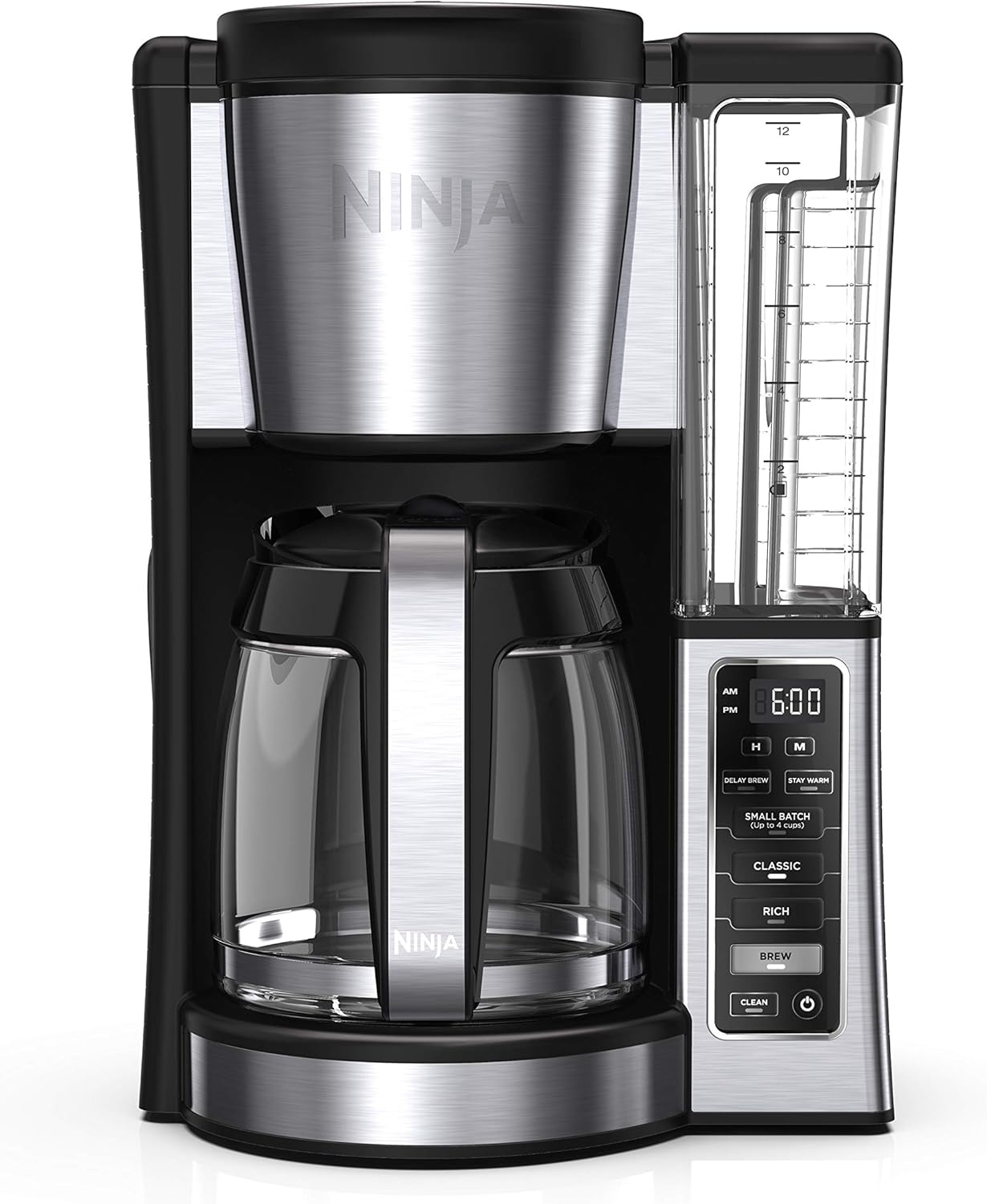
A programmable coffee maker can deliver a fresh pot at a set time, but the features that affect your cup go beyond the clock. Brew temperature, water distribution, the carafe type, and how the machine handles a partial batch all shape the flavor. This guide covers the settings worth looking for and the habits that keep your morning coffee from tasting stale.
What a programmable coffee maker is and who it suits
Programmable coffee makers are drip machines with a built-in clock and timer. You set the start time, and the machine begins brewing on its own, so coffee is ready when you wake up or when you return home. Most models also let you set an auto-off time, which switches off the hot plate after a set interval.
This type of machine suits people with a regular routine. If you brew at roughly the same time most days, the timer is genuinely useful. It also works well for households where different people want coffee at different hours, as long as each person remembers to set the timer. If you rarely know when you will want coffee next, a simple machine without a timer may be just as practical.
For a closer look at the category, see the main guide to programmable coffee makers, which explains the controls and settings in more detail.
Main types and how they differ
Programmable drip machines separate mainly by carafe type and by whether they offer small-batch brewing. The carafe choice matters more than most other features because it determines how long the coffee stays drinkable.
| Type | Keep-warm method | Best for |
|---|---|---|
| Glass carafe on a hot plate | Heated plate under the carafe | Quick drinking, easy cleanup, and a clear view of the level |
| Thermal carafe | Insulated walls with no heat source | Longer freshness and serving away from the machine |
| Small-batch programmable | Either carafe type, with a half-pot setting | Single-cup mornings or households that brew less than a full pot |
Glass carafes are inexpensive and easy to replace, but they rely on the hot plate to stay warm, which can cook the coffee. Thermal carafes keep the coffee hot through insulation without adding more heat, so the brew stays smoother for longer. For more on the differences, see the glass carafe coffee maker guide, which explains how the carafe choice affects flavor and cleanup.
Features that actually matter
The useful features on a programmable machine are the ones that protect flavor, convenience, and safety. A long list of extra settings is less important than getting these basics right.
Delay-brew timers and overnight prep
A delay-brew timer lets you load the machine the night before and wake up to fresh coffee. The convenience is real, but you need to think about what sits overnight. Fresh water in a clean reservoir is generally fine, but water that has been left for a long time can pick up off flavors. If your machine has been sitting unused, empty the reservoir and fill it with fresh water before setting the timer.
Grounds are a different matter. Coffee that sits in the filter basket overnight is exposed to air and loses aroma, so the morning pot will not taste as lively as one brewed with freshly ground beans. For the best flavor, grind in the morning and start the brew manually. If convenience matters more, at least store the grounds in an airtight container until you are ready to load the basket, and avoid leaving pre-loaded grounds in the machine for extended periods.
Auto-on and auto-off
Auto-on is the standard timer function that starts brewing at a chosen time. Auto-off is the more useful safety feature, since it cuts power to the hot plate after a set interval. This reduces the chance of leaving the machine on all day and also keeps coffee from cooking on the plate for hours. If you are choosing between models, make sure the timer is easy to set and that auto-off is adjustable rather than fixed, so you can match it to how quickly you drink your coffee.
Strength or bold settings
Many programmable machines offer a strength or bold setting. It is important to understand what this setting actually does. Most often, bold or strong slows down the drip cycle, so water spends more time in contact with the grounds. That increases extraction and gives a fuller, more intense cup. It does not add more coffee to the basket, and it is not a shortcut to a stronger brew if your ratio is off.
If you want a genuinely stronger cup, the reliable approach is to adjust the coffee-to-water ratio. A common starting point is about two tablespoons of ground coffee for every six ounces of water. Use that as a baseline, then taste and adjust. A bold setting can add body and depth, but it cannot fix a brew that is simply underdosed.
Small-batch settings
Small-batch or half-carafe settings are worth seeking out if you often brew one or two cups. A full-size machine brewing a partial pot often extracts unevenly, because a shallow bed of grounds is not what the full-pot cycle was designed for. A small-batch setting usually changes how the water is delivered, for example by pulsing or slowing the flow, so that a smaller bed of grounds is saturated evenly.
If a machine lacks a small-batch setting, you can still brew a smaller amount by using less water and a proportionally smaller amount of coffee, but the results are usually less consistent. For regular small servings, make this feature a priority.
Brew temperature
The commonly cited ideal brew temperature for drip coffee is around 195 to 205 degrees Fahrenheit. If the water is too cool, the grounds will not extract fully and the coffee tastes sour or weak. If it is too hot, the coffee can taste bitter and over-extracted. Most programmable machines are designed to hit that range, but they vary in how consistently they maintain it during the cycle.
Spec sheets sometimes list the heater wattage or other heating details, but those numbers are hard to translate into cup flavor. Instead, look at whether the machine has an adjustable temperature setting and check the manufacturer’s recommended brew temperature. If you buy a machine with an adjustable setting, set it near the upper end of the common range and taste from there.
Showerhead design
The showerhead spreads hot water evenly over the coffee grounds. A wide showerhead with many small openings saturates the grounds more uniformly than a single water nozzle, which can leave dry spots and cause uneven extraction. Even saturation is one of the simplest ways to improve the consistency of a drip pot.
When comparing machines, look for a showerhead that covers most of the basket area. You do not need to measure it, but a visible comparison can help. If the machine has a removable showerhead, that is a bonus for cleaning, since coffee oils and scale build up on the inside of the spray head over time.
Keep-warm plates and flavor over time
A keep-warm plate holds a glass carafe at serving temperature, but it keeps applying heat. Coffee left on a hot plate continues to develop bitter and burnt flavors as the compounds in the brew break down. The effect is gradual, but after a while the pot can taste harsh and flat. Common guidance is to drink a hot-plate pot within about an hour for the best flavor, and to skip the keep-warm function if you are going to be away from the machine.
If you want coffee to stay drinkable for a longer stretch, choose a thermal carafe. Because there is no heat source, the coffee does not keep cooking after brewing. A thermal carafe will keep the coffee hot, but it will not overcook it. That makes it the better match for people who pour a cup now and then rather than finishing the pot quickly.
Sizing, fit and compatibility
Before buying, think about how the machine will fit in your kitchen and how much coffee you actually brew. Counter clearance matters more than it seems, especially for machines with a tall thermal carafe and a raised brew head. If the machine will sit under an upper cabinet, check that you can open the top lid to add water and that the carafe slides out without awkward angles.
Carafe capacity varies widely, and the right size depends on your household. Some people brew a full pot every morning; others only want one or two cups. If you often brew a full carafe, a larger model makes sense. If you are brewing for one, a small-batch machine will waste less coffee and produce better-tasting small pots. Compare the spec sheet, and remember that the size listed on the box is rarely the exact amount you get in the cup.
Also check the filter type. Some machines take cone filters, others use flat basket filters, and many of the reusable filters are machine-specific. If you prefer paper filters, the filter size must match the machine. If you prefer a reusable filter, check that it is easy to clean and that it does not sit loose in the basket, since a poor fit causes water to channel around the grounds.
Common buying mistakes
One of the most common mistakes is choosing a machine for a long list of extra programs instead of for the basics. A reliable timer, a good showerhead, and the right carafe type will do more for your morning cup than a machine with many rarely used settings.
Another mistake is ignoring the carafe style. A glass carafe with a hot plate is attractive because it is familiar and easy to clean, but the coffee degrades quickly if the plate stays on. Buyers who plan to drink a pot slowly often end up frustrated with the flavor. A thermal carafe avoids that problem but costs more and is heavier to pour. Think about how fast you drink coffee before you choose.
People also overlook how stale water affects flavor. If the reservoir is not cleaned or is left full for days, the water picks up musty flavors that end up in the brew. Likewise, pre-ground coffee that sits too long, whether in the bag, in the grinder, or in the filter basket, loses most of its aroma. A programmable timer cannot fix stale ingredients; it only starts the machine on schedule.
Finally, consider how you will handle cleaning. A machine with a glass carafe is easier to keep clean in the short term, but both glass and thermal carafes need regular washing, and the brew basket and showerhead need attention too. A machine that is difficult to clean will eventually brew worse coffee, because old oils and scale build up inside.
Care, cleaning and upkeep
Hot water and steam can cause burns, so always let the machine cool before cleaning the carafe, basket, or showerhead, and follow the manufacturer’s instructions for cleaning and descaling. Most drip machines need regular descaling to remove mineral buildup from hard water. Scale not only affects flavor but can slow the brew cycle and, over time, damage the heating system.
Many programmable machines now include a cleaning or descaling indicator, which is a helpful reminder that the internal passages need attention. When the indicator comes on, run a descaling cycle with a descaling solution or a mixture the manufacturer recommends. Do not guess at the procedure, because machines differ in how the descaling cycle works and what solution is safe to use.
Between descaling cycles, keep the simple things consistent. Rinse the carafe after each use, wash the brew basket and the reusable filter regularly, and wipe the hot plate once it is cool. If the showerhead is removable, clean it occasionally to prevent clogged holes. Replacing the water in the reservoir daily is one of the easiest ways to keep the coffee tasting clean, especially if your tap water is hard or your machine sits idle for long stretches.
FAQ
Can I leave water and grounds in the machine overnight?
Fresh water in a clean reservoir is usually fine for one night, but water that has been sitting for a long time can taste stale, so empty it if the machine has been idle. Grounds left in the filter basket will lose aroma overnight. Grind in the morning for the best flavor, or store the grounds in an airtight container if you want to prepare things in advance.
What does the bold or strong setting actually do?
In most machines, the bold setting slows the drip rate so water spends more time with the coffee grounds, increasing extraction. That gives a fuller-bodied cup, but it does not add more coffee. For a genuinely stronger brew, use more ground coffee per unit of water and keep the brew ratio consistent as a starting point.
How long can coffee stay on a keep-warm plate?
Flavor degrades as the heat continues to work on the brew. As a general rule, drink hot-plate coffee within about an hour for the best taste. If you want coffee to stay fresh for longer stretches, choose a thermal carafe, which keeps the brew hot without continuing to cook it.
Why does the clock reset, and do I need to set the timer again?
Most programmable machines lose the clock after a power outage because their internal memory needs power to hold the time. Some models have a battery backup that preserves the settings, but many do not. After any outage, check the display and reset the clock and the brew timer before the next use. The manual will tell you whether your machine keeps the time during a blackout.
Choosing a programmable coffee maker comes down to matching the timer, carafe style, and brew controls to your routine. Get the basics right, keep the machine clean, and use fresh water and fresh grounds, and the machine will do its part. For more on the full range of home brewing equipment, start with the main coffee makers guide.