 By Audrey Hayes
Updated November 2026
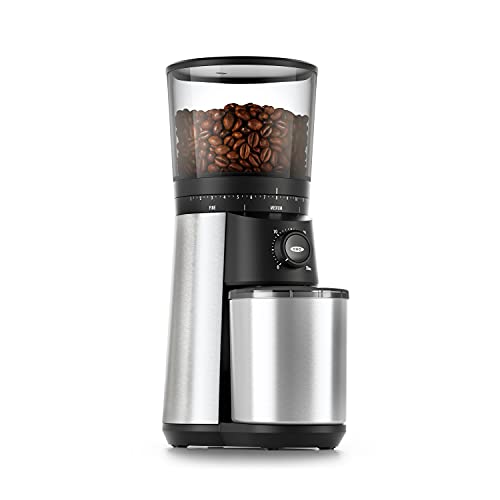
A burr mill vs blade grinder comparison comes down to one question: how much control do you want over your grind? A burr mill crushes beans between two abrasive surfaces set at a fixed gap, producing a uniform particle size that suits pour-over, French press, and espresso. A blade grinder chops beans with a spinning propeller, which is quicker to learn and easier on the budget, but gives you an uneven mix of fines and boulders. If you brew seriously and want repeatable results, a burr mill wins. If you only make coffee occasionally or mainly for spiced or flavored drinks, a blade grinder can still do the job.
Burr Mill vs Blade Grinder at a Glance
| Criteria | Burr Mill | Blade Grinder |
|---|---|---|
| Grinding mechanism | Two burrs (flat or conical) crush beans at an adjustable gap | Spinning blades chop beans into particles |
| Particle consistency | Uniform, with a narrow size range | Wide range, from dust to chunks |
| Grind adjustment | Stepped or stepless settings for precise control | Grind time only (you shake and time the grind) |
| Espresso suitability | Strong; needed for fine, consistent espresso grind | Weak; inconsistent extraction is likely |
| Heat generation | Lower with slower burrs; varies by model | Higher friction and heat from fast blade spin |
| Bean capacity | Often a hopper plus a grinding chamber | Usually a small chamber, one batch at a time |
| Ease of cleaning | More parts to brush out; burrs need periodic care | Simple; wipe the bowl and blades |
| Best for | Pour-over, drip, French press, espresso | Occasional drip coffee, spice grinding, flavored drinks |
Grind Consistency: Burr Mill Wins
Consistency is the main reason to choose a burr mill. Extraction depends on how evenly the water reaches each particle. When grounds are uniform, the water extracts them at roughly the same rate, which gives a clearer, more balanced cup. Blade grinders produce a mix of very fine powder and larger pieces. The fines over-extract and taste bitter, while the chunks under-extract and taste sour or thin. You can sometimes improve a blade grind by shaking the grinder during the cycle and sieving the output, but that is a workaround rather than a fix.
A burr mill keeps the particle distribution tight. Owners often report that switching from a blade grinder to a burr mill is the single most noticeable change in cup quality, even before they adjust their brew recipe. Winner: burr mill.
Grind Adjustment and Control: Burr Mill Wins
Burr mills let you set the gap between the burrs, usually through numbered click settings or stepless dials. Manufacturers typically specify a range from very fine, suited to espresso, to coarse, suited to cold brew or French press. Small changes matter. Moving one or two steps can shift extraction enough to fix a sour shot or a flat, muddy pour-over.
Blade grinders offer no real setting. You control the result by how long you run the motor and how much you shake the grinder. That works for rough estimates, but two grinds of the same length can differ noticeably. If you want to repeat a recipe, a burr mill with numbered settings gives you a reference point you can return to. Winner: burr mill.
Espresso Performance: Burr Mill Wins
Espresso is the least forgiving brew method. It needs a fine, even grind, and small changes in particle size affect pressure, flow, and taste. A burr mill can produce the consistent fine grind that espresso requires, which is why most home espresso setups pair an espresso machine with a dedicated burr grinder. Some setups also use a single dose flat burr grinder, which minimizes leftover grounds between shots. You can read more about that style in What Is a Single Dose Flat Burr Grinder and Is It Right for You? (see What Is a Single Dose Flat Burr Grinder and Is It Right for You?).
A blade grinder struggles here. The mix of fines and chunks leads to channeling, where water rushes through gaps in the puck, and the result is sour, weak shots alongside harsh, bitter ones. Blade grinders are not a practical choice for espresso. Winner: burr mill.
Heat and Bean Flavor: Burr Mill Has the Edge
Grinding generates heat through friction. Heat can drive off volatile aromatic compounds and flatten flavor. Blade grinders spin fast, and their friction-based cutting tends to warm the beans more. Burr mills vary, though. High-speed burr grinders can also heat grounds, while slower, low-RPM burr designs generally run cooler. Manufacturers often list motor speed, which gives you a rough sense of heat potential.
If you grind in small, frequent batches, heat is a smaller issue than most people assume. But for flavor-sensitive brewing, a slower burr mill generally produces cleaner aromatics. Winner: burr mill, with the caveat that burr speed and design matter.
Speed, Capacity and Convenience: Blade Grinder Wins
Blade grinders are quick for small amounts. Pressing the button for ten to twenty seconds gives you a cup’s worth of grounds, and the machine is compact and simple to store. Most blade grinders hold a small chamber, so you grind one batch at a time, which suits a single cup or a quick spice grind.
Burr mills take longer for the same dose, especially at fine settings, and many have larger hoppers and grinding chambers that take up more counter space. If you brew for a crowd and want a bigger batch every morning, a burr mill with a larger hopper is more practical. For quick, occasional grinding, a blade grinder is less hassle. Winner: blade grinder.
Maintenance and Cleaning: Blade Grinder Wins
Blade grinders are easy to maintain. You empty the chamber, wipe out the bowl, and brush the blades. There is little to adjust or replace. Burr mills have more components. Oils and fine particles build up around the burrs and in the grinding chamber, and most manufacturers recommend periodic brushing and occasional deep cleaning. Burrs also wear over time, and knowing when to replace them is part of ownership. You can learn more in When to Replace Coffee Grinder Burrs (see When to Replace Coffee Grinder Burrs).
If you clean regularly and follow the manual, a burr mill is not hard to care for. But on maintenance alone, a blade grinder is simpler. Winner: blade grinder.
Which Should You Choose?
- Choose a burr mill if you brew pour-over, drip, French press, or espresso and want repeatable results.
- Choose a burr mill if you have tasted sour, bitter, or muddy cups and suspect your grind is the cause.
- Choose a burr mill if you plan to brew espresso at home, where a consistent fine grind is essential.
- Choose a blade grinder if you mostly grind spices, nuts, or beans for flavored drinks.
- Choose a blade grinder if you brew one cup occasionally and do not need fine control.
- Choose a blade grinder if you want a compact, simple machine with almost no cleaning.
If you are still deciding, read Burr Grinder vs Blade Grinder Coffee (2026): Which Is Better for Home Brewing? (see Burr Grinder vs Blade Grinder Coffee (2026): Which Is Better for Home Brewing?) and Coffee Grinder Burr or Blade: Which Should You Choose? (2026) (see Coffee Grinder Burr or Blade: Which Should You Choose? (2026)) for more detail on everyday use.
Burr Mill and Blade Grinder Options to Consider
For a burr mill, the Cuisinart Supreme Grind is a widely available automatic burr grinder with multiple grind settings, and it is a common starting point for home brewers. You can compare models in Top 7 Cuisinart Burr Mill Grinders with Burr Options for Home Brewers (see Top 7 Cuisinart Burr Mill Grinders with Burr Options for Home Brewers).
View on AmazonFor a blade grinder, the Hamilton Beach Fresh Grind Electric Coffee Grinder is a common, compact option for occasional use. If you are weighing it against a burr mill, see Hamilton Beach Burr Coffee Grinder vs Blade Grinder: Which Should You Choose? (see Hamilton Beach Burr Coffee Grinder vs Blade Grinder: Which Should You Choose?).
View on AmazonFAQ
Can a blade grinder make good coffee?
It can make acceptable drip coffee if you grind in short bursts, shake the grinder, and accept some unevenness. It will not produce the clarity or consistency of a burr mill, and it is not suitable for espresso.
Is a burr mill worth it for pour-over?
Usually, yes. Pour-over shows grind differences clearly because extraction is sensitive to particle size. A burr mill makes it much easier to repeat a recipe and adjust for taste.
What is the difference between flat and conical burrs?
Flat burrs are two parallel rings, while conical burrs use a cone inside a ring. Both produce uniform grounds, but they differ in particle shape and retention. See Flat vs Conical Burr Grinders: What Actually Differs (see Flat vs Conical Burr Grinders: What Actually Differs) for a closer look.
How do I know if my burr grinder is producing uneven grounds?
Uneven grounds often show up as inconsistent flavor, such as a cup that is sour and bitter at once. Check the burrs for wear and clean out old grounds. If the problem persists, review the troubleshooting steps in your manual or in Why Does My OXO Conical Burr Grinder Produce Uneven Grounds? 6 Causes and Fixes (see Why Does My OXO Conical Burr Grinder Produce Uneven Grounds? 6 Causes and Fixes).
Does grinding speed affect flavor?
It can. Faster grinding generates more heat, which may dull aromatics. Slower burr designs generally run cooler, so checking motor speed before buying is a reasonable step.
Conclusion
For most people who care about how their coffee tastes, a burr mill is the better choice. It delivers the consistent particle size that pour-over, French press, and espresso depend on, and it gives you a repeatable setting to return to. A blade grinder remains a reasonable tool for occasional drip coffee, spices, and flavored drinks, where its speed and simplicity count for more than precision. Decide based on how often you brew and how much control you want over the result.
About Audrey Hayes
Audrey Hayes is part of our editorial team and reviews and edits our coffee gear & accessories guides, checking product details against manufacturer specifications and owner feedback.